Aland Johnson
Founder & Editor-in-Chief
Company / Organization
Workflow Tipster
Experience / Skills
Workflow automation patterns, integration design, webhook/API troubleshooting, data mapping and normalization, document generation and e-sign flows, operational checklists and playbooks for popular software.
About Aland Johnson
Aland Johnson is an Automation & RevOps Consultant and Technical Writer, and he serves as the Founder & Editor-in-Chief of Workflow Tipster (workflowtipster.top)—a resource for bite-sized workflow tips, tool guidance, and troubleshooting solutions for popular software used by modern teams. From 2008 to 2012, Aland developed his foundation in information systems and workplace productivity tools, focusing on how businesses operationalize data across CRM, project management, customer support, and marketing platforms. During this period, he began documenting repeatable processes, building simple integrations, and learning the practical constraints that shape automation outcomes—such as inconsistent field formats, user permissions, and data quality issues. In 2013, Aland moved into hands-on operational support roles where reliability and speed mattered daily. He supported teams working across cloud-based tools, addressing recurring problems like login failures, permission mismatches, missing required fields, and data sync inconsistencies. Between 2014 and 2016, he expanded into cross-application workflow design, connecting systems through APIs and webhooks and establishing a structured troubleshooting method: reproduce the failure, isolate the failing hop, validate credentials and scopes, inspect payload shape, confirm rate-limit behavior, and implement safe retries with logging. From 2017 to 2019, Aland specialized further in RevOps enablement—helping organizations map business requirements into automation-ready schemas and governance. This phase emphasized durable system design: clear ownership of fields and objects, consistent naming conventions, deduplication strategies, and measurable KPIs. In 2019, he earned the Salesforce Certified Administrator credential, reinforcing his expertise in CRM configuration, permissioning, reporting, and operational controls that keep automations stable as teams and pipelines evolve. In 2020, Aland broadened his marketing operations skill set by completing the HubSpot Marketing Software Certification, deepening his work in lifecycle stages, attribution, segmentation, and automated communications—areas where subtle property mapping and timing rules often cause downstream failures. Between 2021 and 2022, he concentrated on integration resilience at scale: reducing duplicates, adding idempotency safeguards, standardizing payload validation, and creating runbooks for incident response when webhooks fail or third-party APIs degrade. In 2023, Aland earned the Zapier Certified Expert credential and continued refining advanced automation patterns across multi-step workflows, conditional routing, and cross-tool data normalization. That same year, he formalized his editorial approach: every guide must be reproducible, version-aware, and supported by verification steps so readers can confirm success rather than “guess and hope.” Since 2024, Aland has been building Workflow Tipster as a practical knowledge base for operators, founders, and teams who need quick, reliable answers. His content emphasizes clarity and measurability—short, actionable tips when speed matters, and deeper troubleshooting playbooks when reliability is the priority. Aland’s guiding standard remains consistent: state the goal, show the exact steps, surface common failure modes, and include a prevention checklist so the workflow stays healthy after the fix.
Related topics
Latest posts by Aland Johnson


Add Google Meet Links to Google Calendar Events (and Remove Them): A Step-by-Step Guide for Teams & Individuals
Adding a Google Meet link to a Google Calendar event is the simplest way to turn a scheduled time slot into a joinable video meeting—because the invite carries one consistent meeting link, updates stay attached to the event, and guests know exactly where to click. Next, it helps to understand what “adding Meet” actually changes inside an event, including when a Meet link is created automatically, what meeting details appear for guests, and why “add vs remove” is more than a button—it’s a workflow decision.
Aland Johnson January 31, 2026 at 12:33 AMSync Google Calendar to ClickUp: One-Way vs Two-Way Setup Guide for Busy Teams
If your team lives in meetings but executes work in tasks, syncing Google Calendar to ClickUp is the fastest way to turn “we talked about it” into “it’s scheduled and owned”—with a clear setup path and fewer moving parts. Next, the biggest decision is sync direction : one-way sync keeps things simple and stable, while two-way sync unlocks richer workflows but demands stricter rules to prevent duplicates, loops, and conflicting edits.
Aland Johnson January 31, 2026 at 12:21 AM
Automate Google Calendar to Asana Sync for Teams: Turn Events Into Tasks (Without Manual Copy-Paste)
If your team lives in Google Calendar but executes work in Asana, you can automate a reliable “event-to-task” workflow so meetings, deadlines, and time blocks become actionable tasks—without manually copying titles, dates, and links. The most practical setup is a one-way automation (Google Calendar → Asana) that creates or updates tasks based on specific events, while your team keeps the “source of truth” clear and avoids duplicates.
Aland Johnson January 31, 2026 at 12:07 AM
Automate, Not Manual: Sync Google Calendar to Airtable for Teams (No-Code Setup)
Syncing Google Calendar to Airtable is the fastest way to stop manual copying because you can capture events automatically, standardize fields across a team, and keep a single, searchable schedule inside a base that supports ownership and workflow. If your next question is “Which method should we pick?
Aland Johnson January 30, 2026 at 11:56 PM
Connect & Sync Gmail to Zoho CRM for Sales Teams: Gmail API vs IMAP (and the Inbox Add-on)
Connecting Gmail to Zoho CRM is the fastest way to turn everyday email threads into trackable sales activity—so your team can see conversation history on the right record, log emails automatically, and follow up without losing context. ( help.
Aland Johnson January 30, 2026 at 11:30 PM
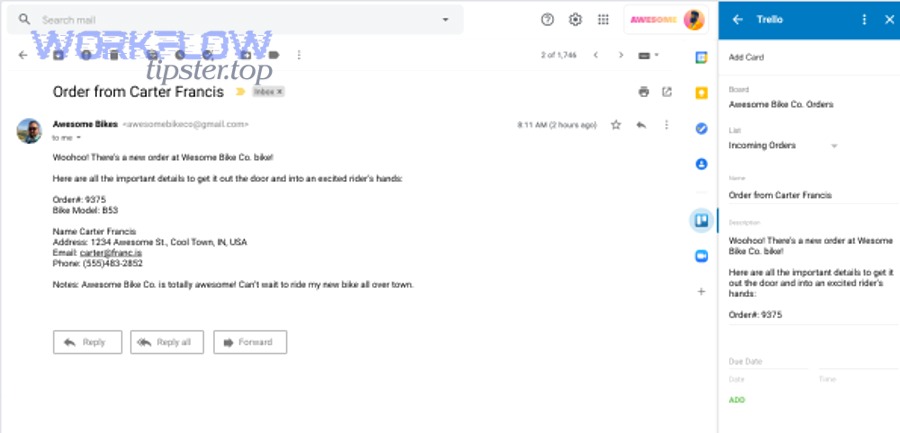
Automate Gmail to Trello for Teams: Turn Emails into Cards (No Copy-Paste)
Yes—you can automate Gmail to Trello for teams by converting incoming emails into Trello cards automatically, so requests don’t get buried in inboxes and work becomes visible, assignable, and trackable without manual copy-paste. Next, it helps to understand what “Gmail-to-Trello automation” actually means in a team workflow: you’re not just creating cards—you’re standardizing how email-based requests become structured work with owners, due dates, and status.
Aland Johnson January 30, 2026 at 11:16 PM
Automate Gmail to Smartsheet Integration for Project Teams: Capture Emails & Attachments (No Manual Copy-Paste)
If your team still copies email details into Smartsheet by hand, you can automate Gmail to Smartsheet so each relevant message becomes a structured row—with context and attachments—fast enough to keep projects moving and clean enough to report on. Next, you’ll see the practical options for doing this (the Smartsheet for Gmail add-on vs no-code automation tools), plus how to choose the right method for your team’s workflow and governance needs.
Aland Johnson January 30, 2026 at 11:05 PM
Automate Gmail-to-Slack Notifications (Not Manual Forwarding): Connect Gmail with Slack for Teams
If you want Gmail-to-Slack notifications that actually help your team, the goal is simple: automatically send the right emails to the right Slack place (channel or DM) with enough context to act—without forcing anyone to manually forward messages or constantly check Gmail. ( slack.
Aland Johnson January 30, 2026 at 10:52 PM
Set Up Gmail to Salesforce Integration for Sales Teams: Native Gmail Integration vs Einstein Activity Capture
To set up a Gmail to Salesforce integration for sales teams, you enable the Salesforce Gmail Integration, give users the right permissions, install the Gmail-side add-on, and then train reps to log emails to the correct Salesforce records consistently so pipeline context stays accurate. Next, you should understand what “Gmail to Salesforce integration” really means in day-to-day work: a Salesforce panel inside Gmail that shows CRM context, lets reps create/update records, and supports email logging so sales activity is connected to opportunities, accounts, and cases.
Aland Johnson January 30, 2026 at 9:36 PM
Connect & Sync Gmail to Pipedrive CRM: Email Sync Integration Guide for Sales Teams
If you want Gmail to stop being a “separate universe” from your CRM, the most effective approach is to connect Gmail to Pipedrive using email sync (for automatic logging) and the Gmail add-on (for in-inbox CRM actions), so every meaningful conversation ends up attached to the right contact and deal. To get that outcome reliably, you need to choose the correct sync scope, decide when to auto-log vs manually log, and understand how Pipedrive matches emails to people and deals—because those decisions determine whether your pipeline stays clean or turns into noise.
Aland Johnson January 30, 2026 at 9:21 PM
Automate Gmail to Notion Integration for Teams: Setup Guide and Workflow Templates (vs Manual Copy-Paste)
Manually copy-pasting emails into Notion works, but it doesn’t scale: you lose context, miss follow-ups, and turn your inbox into a second task manager. A Gmail to Notion integration fixes that by automatically capturing the right emails and turning them into structured Notion items—tasks, tickets, leads, or meeting notes—so your system stays searchable and consistent.
Aland Johnson January 30, 2026 at 9:08 PM
Connect Gmail to monday.com: Set Up Email-to-Task Automation for Teams (Integration Guide)
To connect Gmail to monday.com, you link your inbox to a board so incoming emails can automatically become trackable work items, complete with owners, statuses, and follow-up steps that your team can manage in one place.
Aland Johnson January 30, 2026 at 8:57 PM
Connect (Integrate) Gmail to Microsoft Teams for Instant Email Alerts — Automation Guide for Teams Admins & Support Teams
You can connect Gmail to Microsoft Teams for instant email alerts by using an automation workflow that detects a new (or labeled) Gmail message and posts a structured notification to the right Teams channel or chat. This approach turns email into visible, shared work—without forcing your support team to constantly refresh an inbox.
Aland Johnson January 30, 2026 at 8:44 PM
Connect (Integrate) Gmail to Linear for Product Teams: Email-to-Issue Automation Workflows
If your product team is drowning in customer emails, you can connect Gmail to Linear so that important messages automatically become structured issues—complete with a clean title, a readable description, the right labels, and a predictable place in Triage. Next, you’ll want to choose which email-to-issue workflows to implement first (support requests, feature requests, bug reports, and partner emails), because the highest ROI comes from routing the right messages—not from turning every email into noise.
Aland Johnson January 30, 2026 at 8:30 PM
Connect (Integrate) Gmail to Jira for Support & Project Teams — Turn Emails into Jira Issues
Connecting Gmail to Jira is absolutely possible, and it lets support and project teams turn emails into trackable Jira issues without copying, pasting, or losing context between tools. Most readers also want clarity on which integration approach fits their setup—native Gmail add-ons, Marketplace apps, or automation workflows—so they can pick the fastest, most reliable path.
Aland Johnson January 30, 2026 at 8:16 PM
Connect Gmail to HubSpot for Sales Teams: Set Up a Connected Inbox + HubSpot Sales Chrome Extension
Yes—you can connect Gmail to HubSpot by pairing a connected inbox (so HubSpot can send, log, and associate emails correctly) with the HubSpot Sales Chrome extension (so reps can work inside Gmail while still keeping the CRM updated). Next, you’ll learn what each integration layer actually does, why teams often need both, and how to choose the right defaults for logging , tracking , and CRM association so your pipeline history stays clean.
Aland Johnson January 30, 2026 at 8:04 PM
Automate Email Export from Gmail to Google Sheets for Support & Ops Teams (Sync vs Backup)
Automating email export from Gmail to Google Sheets means you reliably turn incoming (or selected) emails into structured spreadsheet rows—so Support and Ops teams can track work, report trends, and reduce manual copy-paste without losing essential context. Because “Gmail to Sheets” can mean different outcomes, this guide clarifies the first decision that shapes everything else: do you want a near-continuous sync-style log of new emails, or a backup-style export of historical emails for audits, migrations, or snapshots?
Aland Johnson January 30, 2026 at 7:52 PM
Integrate (Connect) Gmail to ClickUp to Turn Emails Into Tasks for Teams — Sync & Automation Guide
Yes—you can integrate Gmail with ClickUp so your team can reliably turn important emails into trackable tasks, keeping context, ownership, and deadlines in one place instead of letting follow-ups disappear in an inbox. Next, you’ll see the main ways teams connect Gmail to ClickUp (native email inside tasks, the Gmail Chrome extension, and automation platforms) so you can choose the fastest setup for your workflow.
Aland Johnson January 30, 2026 at 7:39 PM
Connect (Integrate) Gmail to Basecamp for Project Teams: No-Code Email-to-To-Do Automation
Connecting Gmail to Basecamp with no-code automation is the fastest way to turn “actionable emails” into trackable project work—because a labeled or filtered message can automatically become a Basecamp to-do or message with the right context attached. Next, the difference between a useful automation and a noisy one is the workflow design: you need clear rules for when an email becomes a to-do, when it becomes a message post, and how your team assigns, titles, and follows up so nothing gets lost.
Aland Johnson January 30, 2026 at 7:26 PM
Connect Gmail to Asana: Turn Emails Into Trackable Tasks for Teams (Email-to-Task Workflow Guide)
Connecting Gmail to Asana is one of the most reliable ways for teams to stop losing action items in inbox threads—because it converts email requests into assigned, due-dated, visible work with ownership and status in Asana. To make that happen smoothly, you need to understand what the Gmail to Asana integration actually does (and what it doesn’t), so you choose the right setup: the native Asana for Gmail add-on for day-to-day triage, or more advanced automation when volume and rules increase.
Aland Johnson January 30, 2026 at 7:14 PM
Connect Gmail to Airtable for Teams: Step-by-Step Email-to-Database Automation (Sync Emails & Attachments)
Connecting Gmail to Airtable is the fastest way to turn messy inbox traffic into structured records your team can search, assign, and track—by automatically capturing the right emails (and attachments) into an Airtable table. Next, you’ll learn how to choose the best integration approach—native Airtable options versus automation tools—so you can balance speed, reliability, security, and team ownership without overbuilding.
Aland Johnson January 30, 2026 at 7:02 PM
Connect Freshdesk to Zoho CRM for Helpdesk Admins: Sync Tickets, Contacts & Accounts (Step-by-Step)
Yes—you can connect Freshdesk to Zoho CRM and reliably sync tickets, contacts, and accounts by choosing the right integration method, mapping fields with clear ownership rules, and validating the sync with a small, repeatable test plan before going live. Then, the next decision is which connection path fits your team: a native connector-style setup for straightforward support-to-CRM visibility, or a workflow-based approach when you need multi-step automation, routing, and conditional logic across tools.
Aland Johnson January 30, 2026 at 6:50 PM
Connect Freshdesk to Trello for Support Teams: No-Code Ticket-to-Card Automation Integration Guide
Yes—you can connect Freshdesk to Trello so every ticket can automatically become (and stay linked to) a Trello card, which gives your support team a single, trackable workflow from intake to resolution without manual copy-paste. Next, you’ll learn what “Freshdesk to Trello automation” actually means in day-to-day support operations, including which ticket events should create cards, what details must be carried over, and how teams avoid losing context when work moves between tools.
Aland Johnson January 30, 2026 at 6:35 PM
Connect & Automate Freshdesk to Smartsheet Integration for Support Teams (Ticket-to-Row Workflows)
Yes—Freshdesk to Smartsheet integration is a practical way to automate ticket tracking because it turns incoming support tickets into structured Smartsheet rows, giving your support team a single, reportable view of work without constant manual copy-paste. Next, you’ll see when this integration is the right choice (and when it isn’t), so you can avoid building an automation that creates noise, duplicates, or weak reporting instead of real operational clarity.
Aland Johnson January 30, 2026 at 6:21 PM
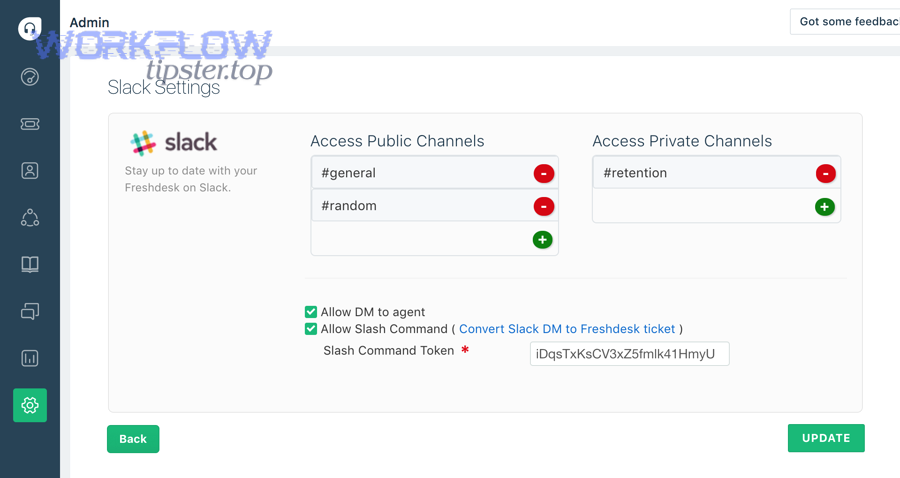
Set Up Freshdesk to Slack Integration for Support Teams: Connect Ticket Alerts to Slack Channels
Setting up a Freshdesk-to-Slack integration means your support team can receive ticket alerts in the right Slack channels, so urgent issues get visibility immediately and agents don’t have to constantly refresh Freshdesk to stay informed. (support.
Aland Johnson January 30, 2026 at 6:07 PM
Connect Freshdesk to Salesforce for Support Teams: Integration Setup, Field Mapping, and Two-Way Sync Guide
Yes—connecting Freshdesk to Salesforce is worth it for most support teams because it reduces context switching, keeps customer data consistent, and helps sales and support act on the same account reality instead of conflicting notes. Next, you’ll learn what “Freshdesk to Salesforce integration” really means in practice (widget vs data sync), and which use cases it solves best—like turning tickets into cases, syncing contacts/accounts, and surfacing CRM context inside the helpdesk.
Aland Johnson January 30, 2026 at 5:56 PM
Integrate Freshdesk with Pipedrive CRM for Support & Sales Teams: Setup Guide + Native vs No-Code Options
If you’re trying to connect Freshdesk to Pipedrive , the fastest path is to use a connector that lets agents see the right CRM context inside a ticket and keeps key fields aligned between support and sales. In practice, that means picking the integration approach (native connector vs no-code automation), setting up authentication correctly, and deciding what “sync” actually means for your workflow.
Aland Johnson January 30, 2026 at 5:41 PM
Connect & Automate Freshdesk to Notion for Support Teams (Sync Tickets vs Manual Tracking)
Freshdesk to Notion automation is not only possible—it’s often the fastest way for support teams to replace manual ticket spreadsheets with a live, searchable Notion database that stays aligned with the help desk. When you sync Freshdesk tickets into Notion, you gain shared visibility, clearer ownership, and cleaner reporting without duplicating effort.
Aland Johnson January 30, 2026 at 5:30 PM
Integrate Freshdesk to monday.com: Connect Tickets to Boards for Support & Product Teams
Freshdesk to monday.com integration works best when you treat it as a ticket-to-item pipeline : a Freshdesk ticket becomes a trackable monday.
Aland Johnson January 30, 2026 at 5:17 PMIntegrate Freshdesk with Microsoft Teams for Support Teams: Setup, Ticket Notifications & Actions
Integrating Freshdesk with Microsoft Teams is the fastest way to bring ticket work into the place your support team already collaborates—so agents can see ticket alerts, open ticket cards, and take common actions without constant tab switching. Next, the key to success is knowing what the integration can do (and what it can’t) so you set the right expectations for notifications, quick actions, and when to jump back into Freshdesk for deeper edits.
Aland Johnson January 30, 2026 at 5:03 PM
Connect (Integrate) Freshdesk to Linear for Support & Product Teams: Step-by-Step Automation Workflow Guide
If your goal is to turn customer tickets into actionable product work without losing context, the most reliable approach is to connect Freshdesk to Linear so a ticket can automatically create (and later update) a Linear issue with the right fields, owners, and status signals. That said, “Freshdesk to Linear integration” can mean different things in practice: a simple one-way “create issue” flow, a structured handoff loop between Support and Product, or a tighter two-way sync that keeps both systems aligned without creating noise.
Aland Johnson January 30, 2026 at 4:51 PM
Connect Freshdesk to Jira for Two-Way Ticket Sync: Step-by-Step Integration Guide for Support & Dev Teams
Connecting Freshdesk to Jira for two-way ticket sync means you create a single, traceable workflow where a Freshdesk ticket can become (or link to) a Jira work item, and key updates—like status and notes—stay aligned across both tools so neither team loses context. Next, you’ll see how to choose the right Jira destination (Jira Software vs Jira Service Management) based on whether your workflow is engineering backlog-first or ITSM/operations-first, because the “best” setup depends on where ownership and SLAs actually live.
Aland Johnson January 30, 2026 at 4:38 PM
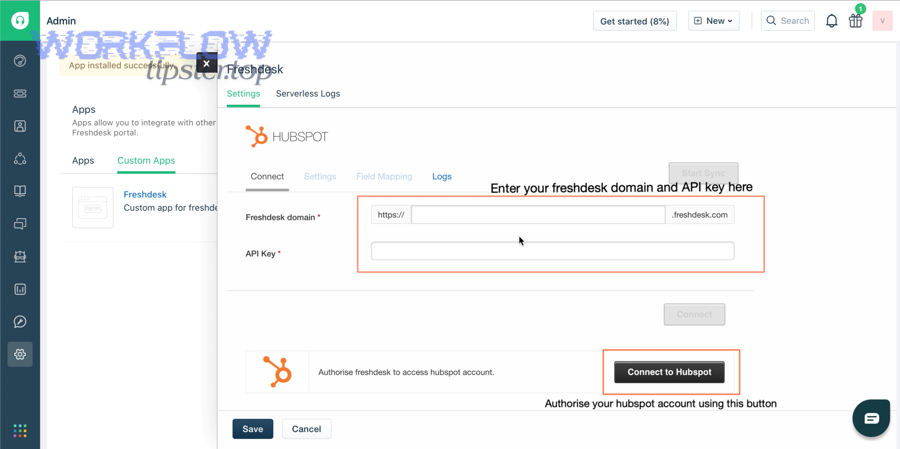
Connect Freshdesk to HubSpot: Step-by-Step Integration for Support & Sales Teams (One-Way vs Two-Way Sync)
Connecting Freshdesk to HubSpot is the fastest way to stop copy-pasting customer context between a helpdesk and a CRM—so agents resolve tickets with full contact history, and sales teams see support signals that affect deals. Next, you’ll see what “Freshdesk–HubSpot integration” really means in practice (contacts, companies/accounts, tickets, and timelines), and how to define “success” so the integration supports both service outcomes and revenue outcomes.
Aland Johnson January 30, 2026 at 4:24 PM
Connect (Integrate) Freshdesk to Google Sheets for Support Teams — Sync Tickets & Build Reports
Connecting Freshdesk to Google Sheets is a practical way to automatically sync ticket data into a spreadsheet so your support team can track workload, monitor SLA performance, and build lightweight reports without manually copying and pasting. Next, you’ll see which Freshdesk-to-Google-Sheets workflows matter most for support operations—like logging every new ticket, keeping rows updated when statuses change, and calculating response and resolution time so your reporting stays trustworthy.
Aland Johnson January 30, 2026 at 4:13 PM
Sync Freshdesk to ClickUp for Support & Project Teams: Step-by-Step Integration Setup Guide (Integrate = Sync)
To sync Freshdesk to ClickUp, connect the two tools, map Freshdesk ticket fields to ClickUp task fields, and run a controlled rollout so tickets reliably become tasks (and updates stay visible) without creating duplicates or workflow noise. Next, you also need to choose the right integration method for your reality—native sync features if you want structured, ongoing synchronization, or a connector/automation approach if you only need specific triggers like “new ticket → new task.
Aland Johnson January 30, 2026 at 4:00 PM
Connect Freshdesk to Basecamp for Support Teams: Integration (Automation) Setup Guide
Connecting Freshdesk to Basecamp is most useful when your support team needs a clean, repeatable way to turn escalated tickets into trackable project work—typically by creating Basecamp to-dos from Freshdesk tickets, linking back to the original request, and keeping internal updates organized. Next, you also need a fast “fit check” before you automate anything: some teams benefit immediately, while others create more noise than value if they sync everything instead of only escalations and structured categories.
Aland Johnson January 30, 2026 at 3:47 PM
Set Up Freshdesk to Asana Integration for Customer Support Teams (Tickets-to-Tasks Connector Guide)
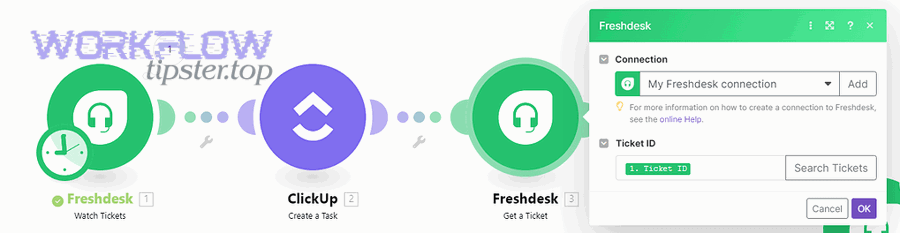
A Freshdesk to Asana integration is the fastest way to turn customer support tickets into trackable work, because it connects ticket context (owner, status, request date, updates) to the exact Asana task where the team executes the fix. ( asana.

Aland Johnson January 30, 2026 at 1:28 PM
Automate Freshdesk to Airtable Integration for Support Teams (No-Code Manual-to-Automated Sync Guide)
Automating Freshdesk to Airtable is the fastest way for support teams to turn live ticket activity into structured, searchable data—without manual exporting—by using a no-code workflow that captures ticket events and writes clean records into the right Airtable tables. The next piece is getting the data design right, because a Freshdesk to Airtable integration only stays useful when fields map consistently, duplicates are prevented, and updates follow a clear “source of truth” rule instead of overwriting the wrong values.
Aland Johnson January 30, 2026 at 11:11 AM
Connect Dropbox to Smartsheet for Project Teams: Setup, Attachments, and Workflow Automation
Connecting Dropbox to Smartsheet means you keep files in Dropbox while managing tasks, timelines, and approvals in Smartsheet—so project work stays organized without forcing your team to “choose one tool” for everything. In practice, most teams want two outcomes: attach the right Dropbox files to the right Smartsheet rows (so every task has its proof, spec, or deliverable), and automate repetitive updates (so nothing gets lost when files change or new folders appear).
Aland Johnson January 30, 2026 at 10:59 AM
Connect (Integrate) Dropbox to Slack for Teams: File Sharing, Save-to-Dropbox & Notifications
Connecting Dropbox to Slack is the most direct way to let teams share Dropbox files inside channels and DMs while keeping the file’s “single source of truth” in Dropbox, so collaboration happens faster and version confusion drops. According to Dropbox’s help guidance, the integration is designed to connect your Slack workspace with your Dropbox account so you can share and collaborate around Dropbox content in Slack.
Aland Johnson January 30, 2026 at 10:48 AM
Automate Dropbox to Notion Integration for Teams: Sync Files & Folders (No-Code Guide)
If you want to automate a Dropbox to Notion integration for a team, the fastest path is to connect the apps (native embedding or a no-code automation tool), define one clear trigger (like “new file in a folder”), and write results into a Notion database so everyone can find, filter, and act on them. The next thing most teams need is clarity on what “sync” really means here—because Dropbox stores files, while Notion organizes work and knowledge.
Aland Johnson January 30, 2026 at 10:37 AM
Convert Dropbox to Microsoft Word for Teams: Set Up “Dropbox as a Place” (Save/Open) vs Export to .DOCX
You can convert “Dropbox to Microsoft Word” in two practical, fast ways: (1) open and save Word files directly in Dropbox from inside Word by adding Dropbox as a Place, or (2) export certain Dropbox content (like Paper docs) into a .docx file you can edit in Microsoft Word.
Aland Johnson January 30, 2026 at 10:27 AM
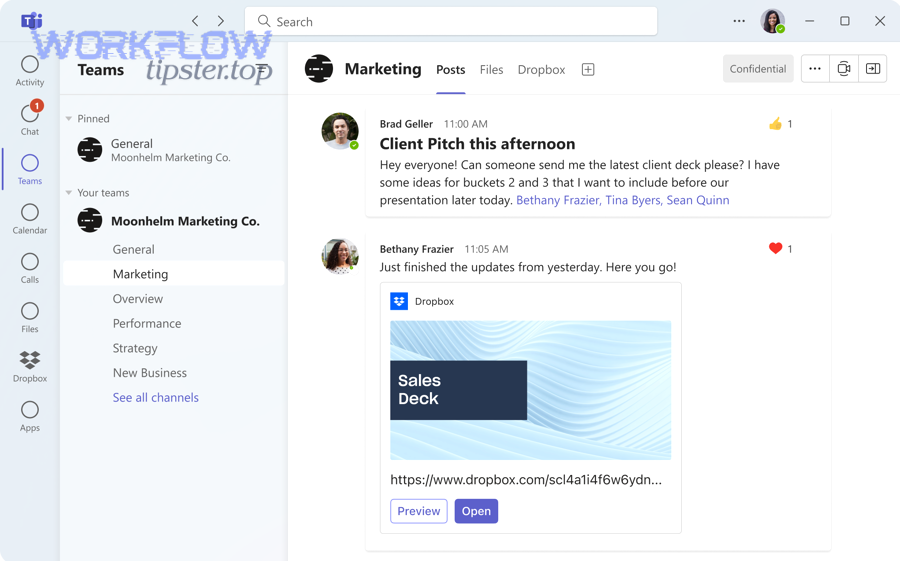
Connect & Integrate Dropbox to Microsoft Teams for Teams Admins and Users — Step-by-Step File Sharing Setup
Connecting Dropbox to Microsoft Teams is the fastest way to share, preview, and collaborate on Dropbox files inside Teams without forcing everyone to download and re-upload documents into a new storage system. If you follow a simple setup flow—install the Dropbox app, sign in, and verify permissions—you can post Dropbox links in chats and channels that remain a single source of truth.
Aland Johnson January 30, 2026 at 10:16 AM
Connect (Integrate) Dropbox to Microsoft Excel for Automated Imports & Collaboration — Dropbox-Excel Workflow Guide for Teams
You can connect Dropbox to Microsoft Excel by making Dropbox the “home” for your Excel workbooks—so your team can open, edit, and save spreadsheets in a single, shared location without losing control of versions or access. You can also automate Dropbox → Excel imports when your reporting depends on files landing in Dropbox (like CSV exports, invoices, or weekly data drops) and you want Excel to refresh on a schedule instead of relying on manual copy-paste.
Aland Johnson January 30, 2026 at 8:26 AM
Connect & Integrate Dropbox to Google Slides for Teams: Setup Guide + Automation Workflows
Teams can connect Dropbox to Google Slides by linking Dropbox with Google so you can create, organize, and share Slides from Dropbox while editing in Google’s editor—meaning your team gets one organized workspace without giving up real-time collaboration. ( help.
Aland Johnson January 30, 2026 at 8:16 AM
Automate Dropbox to Google Sheets Sync for Teams — Manual vs Automated Integration Methods
Automating Dropbox to Google Sheets sync for teams is the fastest way to turn file activity into a living spreadsheet log—because an automated workflow captures changes consistently, reduces manual mistakes, and keeps everyone working from the same source of truth. Next, this guide shows what “sync” really means (and what it doesn’t), so you can avoid confusing “storing Google files in Dropbox” with “writing Dropbox events into Google Sheets rows” and choose the right outcome for your team.
Aland Johnson January 30, 2026 at 8:05 AM
Connect Dropbox to Google Workspace Docs for Teams: Integration & Sync (Migration Options Included)
If your team wants “Dropbox to Google Docs” to work smoothly, the most reliable approach is to use the Dropbox–Google integration so people can create, organize, and share Google Docs from Dropbox while the files live in Google and appear in Dropbox as shortcuts . ( help.
Aland Johnson January 30, 2026 at 7:54 AM
Sync (Connect) Dropbox to Airtable for Teams: No-Code Automation Integration Guide
You can sync Dropbox to Airtable by automatically capturing Dropbox file links and metadata in Airtable records, so your team can track documents, approvals, owners, and next steps in one shared system—without manual copying. Next, you’ll see which integration approach fits your reality: a simple native connection when you only need file organization, or an automation platform when you need triggers, routing, and record updates across teams.
Aland Johnson January 30, 2026 at 3:15 AM
Set Up Dropbox Sign to Slack Notifications for Teams (eSignature Updates & Signature Requests)
Dropbox Sign to Slack notifications let your team see eSignature progress in the same place you already coordinate work—Slack—so you can follow up faster when a document is viewed, signed, or completed. The quickest path is to connect Dropbox Sign to your Slack workspace and route status updates to the right channel or person, then verify the flow with a test request.
Aland Johnson January 30, 2026 at 3:02 AM