Fix HubSpot Troubleshooting Problems: A Step-by-Step Diagnostic Workflow for Admins & Marketers (Debugging Guide)
HubSpot issues are fixable when you diagnose them in the right order: confirm the symptom, isolate the layer (account, tool, or data), reproduce the problem, and only then change settings. That sequence prevents “random toggling” and helps you find the real root cause.
This guide will help admins and marketers narrow down whether the break is caused by permissions and plan limits, a specific HubSpot tool (automation, forms, email, tracking, CMS), or the underlying data and integrations that feed those tools.
You’ll also learn practical checks for the most common failures—automation that doesn’t run, submissions that don’t appear, emails that don’t send or track, and content that throws errors—so you can restore normal operations fast and document what you did.
Introduce a new idea: once you adopt one repeatable diagnostic workflow, most HubSpot problems stop feeling “mysterious” and start behaving like predictable patterns you can recognize and resolve.
What does “HubSpot troubleshooting” mean for admins and marketers?
HubSpot troubleshooting is a structured process for identifying, isolating, and fixing issues across HubSpot’s CRM, marketing, sales, service, and CMS tools—while preserving data integrity and preventing repeat incidents.
Next, it helps to define what “counts” as a HubSpot issue so your team diagnoses the right layer instead of guessing.

What does “troubleshooting” include inside HubSpot (CRM, Marketing Hub, Sales Hub, Service Hub, CMS)?
Inside HubSpot, the scope is broader than “a button didn’t work.” It includes the CRM layer (records and properties), the Marketing Hub layer (forms, lists, email, tracking, attribution), the Sales Hub layer (inbox connections, sequences, meetings, pipelines), the Service Hub layer (ticket routing and inbox behaviors), and the CMS layer (domains, redirects, SSL, caching, and rendering).
A practical definition is simple: if HubSpot doesn’t reflect what should have happened (data), doesn’t execute what should run (automation), or doesn’t display/deliver what should appear (channels), you troubleshoot it.
What outcomes should you expect (resolution, root cause, prevention, documentation)?
A high-quality resolution has four outputs: resolution (the issue stops), root cause (you can explain why), prevention (you add guardrails), and documentation (your team can repeat the fix). More specifically, if two people cannot repeat your fix steps from notes, you do not have a durable solution—you have a one-time rescue.
Can you diagnose most HubSpot issues with a standard troubleshooting workflow?
Yes—most HubSpot issues are diagnosable with a standard workflow because HubSpot problems usually cluster into a few layers, the platform logs many key events, and controlled tests reveal whether the issue is logic, data, or delivery.
To begin, you need a repeatable checklist so the diagnosis remains consistent across tools and teams.

What are the 7 steps of a reliable HubSpot troubleshooting workflow?
A reliable workflow is simple enough to use under pressure, but strict enough to prevent “random clicks.” Use these seven steps: state the symptom precisely, confirm scope and impact, reproduce with a controlled test, identify the layer (account/tool/data), check the logs and built-in diagnostics, make one change at a time with rollback, and document root cause plus prevention.
This structure keeps you from solving symptoms while leaving the real cause untouched.
Which data should you capture before you change anything?
Before any change, capture the time window, record identifiers, user context, tool context, screenshots and exports, and browser/network clues if relevant. More importantly, once you change triggers or mappings, the “state at failure time” can disappear, making root-cause analysis much harder.
What are the most common categories of HubSpot issues and their fastest fixes?
There are 3 main categories of HubSpot issues—account-level, tool-level, and data-level—based on where the failure originates and what kind of fix resolves it fastest.

More specifically, classifying the issue early prevents you from debugging the wrong part of the system.
This table contains a quick classification that shows what each category typically looks like, the fastest first check, and the most common fix pattern.
| Category | What it looks like | Fastest first check | Common fix pattern |
|---|---|---|---|
| Account-level | A feature is missing, blocked, or inconsistent across users | Permissions/role + subscription access | Adjust roles, seats, limits, or enable tool access |
| Tool-level | A specific tool fails (automation, forms, emails, CMS) | Tool logs, error panels, settings | Fix triggers, settings, delivery requirements |
| Data-level | Logic “should work” but data prevents it | Property values, associations, mappings | Repair mappings, data hygiene, duplicate rules |
What are account-level problems (permissions, roles, subscription limits)?
Account-level issues often show up when the wrong person tries to do the work. Common patterns include permissions blocking actions, role-based access hiding features, and subscription limits preventing execution. To illustrate, the fastest fix approach is to reproduce using an admin seat versus the affected user seat, compare role permissions, and confirm whether the feature exists in your subscription level before assuming it is broken.
What are tool-level problems (workflows, forms, emails, tracking, integrations)?
Tool-level problems occur when a specific HubSpot tool fails even though the account is fine. Typical examples include workflows enrolling some records but not others, forms submitting but not appearing in the CRM, email tracking inconsistencies, CMS warnings, and integration sync failures for certain objects. More importantly, the fastest fix approach is to start with the tool’s own diagnostics such as enrollment history, error panels, sending health, tracking verification, and integration logs.
What are data-level problems (property logic, duplicates, sync mapping)?
Data-level issues happen when the logic is correct but the inputs are not. Examples include triggers depending on properties that are not populated reliably, duplicates causing overwrites, integration mappings sending values that cannot be accepted, and missing associations that block dependent logic. Next, pick one failing record and one working record, then compare their key properties and associations side-by-side.
Why do workflows and automation fail in HubSpot, and how do you fix them?
Fixing HubSpot automation works best as a method: verify triggers, verify enrollment settings, read enrollment history, and resolve logged errors—then retest with a controlled record to confirm the workflow runs end-to-end.
Then, focus on the exact point where expected logic diverges from actual execution so you avoid rebuilding everything unnecessarily.

Is the workflow trigger correct, and is the workflow turned on?
Most automation failures come from one of two basics: the workflow is off, or the trigger never evaluates to true for the record you expect. Specifically, confirm the workflow is turned on, review enrollment triggers against the target record, and use enrollment diagnostics to see exactly which condition failed.
Besides, HubSpot provides workflow enrollment views and enrollment history details that help explain “why did this enroll?” and “why didn’t this enroll?” when diagnosing automation behavior.
Are re-enrollment rules, suppression lists, and delays causing “hubspot trigger not firing”?
When the symptom feels like hubspot trigger not firing, the real cause is often re-enrollment being disabled, suppression or unenrollment rules blocking enrollment, or timing delays shifting evaluation windows.
More specifically, your fastest fix is to confirm re-enrollment and unenrollment criteria, inspect enrollment history for the record’s values at enrollment time, and validate timing windows for date-based conditions.
How do you debug automation errors from the “Review automation issues” panel?
Errors are often not in triggers—they are in actions failing mid-run, so the best method is to open Review automation issues, inspect the logged error, fix the underlying cause, and retest with one record to confirm the action completes.
Next, treat each error message as a precise instruction about what data or permission the action lacked, and avoid broad changes until you verify the smallest fix works.
How do you troubleshoot HubSpot forms and submissions not showing up?
The most reliable method is to confirm the form type and tracking requirements, reproduce a submission on a controlled test page, and verify whether the submission reached HubSpot (browser layer) and then attached to the correct record (CRM layer).
Next, isolate whether the failure is capture, attribution, or display so you fix the correct checkpoint.
Are you using the right form type (embedded, pop-up, non-HubSpot) and tracking code?
Form troubleshooting starts by confirming the form type and its requirements. An embedded HubSpot form needs correct placement and script execution, pop-up capture depends on targeting rules and cookies, and non-HubSpot forms usually require extra configuration to send data into HubSpot. To better understand the failure, verify the tracking code on the page, confirm the form is active, and test on a page that loads the form script correctly.
What blocks form submissions (ad blockers, cookie consent, browser issues, validation rules)?
Even when the form is correct, browser environment and policies can block capture. Common blockers include ad blockers and privacy extensions, cookie consent mode delaying tracking, caching serving old scripts, silent validation failures, and cross-domain misalignment. In addition, test in a clean browser profile, incognito mode, and a different device/network to remove environment variables.
How do you test form submission end-to-end and confirm it hit the CRM?
An end-to-end test should prove three checkpoints: the browser submit completes, the submission appears in HubSpot submission views, and the event attaches to the correct contact timeline. Next, use a brand-new test email, submit once, search the contact, and compare against a known-good form to determine whether the issue is page-specific, form-specific, or portal-wide.
How do you troubleshoot tracking, email tools, and the HubSpot browser extension?
A dependable approach is to validate tracking installation, confirm email sending prerequisites and tracking behavior, and then isolate browser-extension or inbox-connection variables using controlled tests.
Besides, these issues often share one root cause: the browser environment or authentication state.
Is the HubSpot tracking code installed correctly and firing on the right pages?
Tracking issues usually fall into installed-but-not-firing versus firing-but-not-attributing. Specifically, confirm the tracking code exists on every target page, verify it loads without script errors, and validate it fires on the correct domain and subdomains. More importantly, if you use staging and production environments, confirm the tracking code is not swapped or conditionally loaded in a way that breaks in some scenarios.
Why do marketing emails fail to send, render, or track clicks?
Marketing email problems cluster into three buckets: send failure, render issues, and tracking gaps. To illustrate, send failures often relate to suppression and eligibility rules, render issues vary by client behavior, and tracking gaps can be caused by privacy protections and blocked endpoints. Meanwhile, pick the correct fix path by identifying which bucket matches your symptom before changing templates or settings.
According to a study by the University of California, Los Angeles from the Department of Family Medicine, in 2016, navigation was the most frequently discussed design element for user engagement (22 studies; 62.86%), highlighting why clear pathways and consistent system structure reduce user drop-off when diagnosing and resolving platform issues.
How do you troubleshoot the HubSpot browser extension and inbox connection?
Extension and inbox issues are often authentication- or browser-policy-related. Common causes include being logged into multiple portals, blocked cookies, stale sessions, and disconnected inbox credentials. More specifically, confirm the extension is connected to the intended portal, test in a clean browser profile, and reconnect the inbox if the auth state is inconsistent or expired, especially when the symptom resembles hubspot oauth token expired.
What causes HubSpot CMS/content issues like 404s, caching, and HTTPS warnings—and how do you resolve them?
You resolve most CMS issues by identifying whether the failure is routing/redirect logic, cache or delivery-layer mismatch, or theme/module rendering—then applying the smallest safe fix and validating on a staging URL first.
Especially for CMS issues, small misconfigurations can create site-wide symptoms, so controlled testing matters.
What does a HubSpot 404 page mean, and how do you fix routing and redirects?
A HubSpot 404 typically means the requested path does not resolve to a published page, a valid redirect, or a routed content endpoint. Specifically, confirm the page is published and assigned to the correct domain, validate canonical URLs, review redirect rules to avoid loops, and ensure domain configuration and DNS settings point to the correct content host.
How do you troubleshoot caching, SSL/HTTPS, and mixed content warnings?
Caching and HTTPS warnings often look like HubSpot is broken, but they are usually delivery-layer issues such as browser caching, CDN or proxy caching, mixed content, or SSL mismatch. More importantly, purge relevant caches, ensure assets load over HTTPS, and confirm SSL provisioning matches the domain and subdomains that serve the page.
How do you resolve CMS theme/module issues without breaking production?
A safe CMS fix strategy is to reproduce in a staging page, isolate whether the problem is module, theme, or override, roll back to the last known-good version if needed, and deploy changes during low-traffic windows. Next, validate key templates immediately after publish to confirm the fix did not introduce new rendering errors.
How do you troubleshoot integrations and sync issues (e.g., Salesforce) without guessing?
The winning method is to separate integration transport errors from HubSpot configuration errors, interpret error responses precisely, and then fix mappings, permissions, or tokens before you retry sync.

Meanwhile, assume sync failures are rule-based until proven otherwise, because logs and status codes usually point directly to the cause.
How do you isolate the integration layer vs HubSpot configuration layer?
To isolate, treat the integration layer as delivery and authentication (API responses, webhook delivery, tokens, rate limiting) and treat HubSpot configuration as mapping and rules (field mappings, required properties, object rules, permissions). Next, run a minimal test payload or smallest sync scope and observe whether delivery succeeds; if delivery succeeds but the record is wrong, mapping/configuration is likely the cause.
What do these API/webhook errors mean: hubspot webhook 400 bad request, hubspot webhook 401 unauthorized, hubspot webhook 403 forbidden, hubspot webhook 404 not found, hubspot webhook 429 rate limit, hubspot webhook 500 server error?
These status codes act as diagnostic signals: hubspot webhook 400 bad request usually means an invalid payload or schema mismatch, hubspot webhook 401 unauthorized indicates failed authentication, hubspot webhook 403 forbidden means the app is authenticated but lacks required permissions or scopes, hubspot webhook 404 not found points to an incorrect endpoint path, hubspot webhook 429 rate limit means requests exceed the allowed window, and hubspot webhook 500 server error suggests a server-side failure that often needs retry with backoff. In addition, related patterns include hubspot api limit exceeded and hubspot oauth token expired, which require batching/backoff and token refresh handling rather than repeated retries.
How do you fix sync mapping issues and “hubspot permission denied” errors?
Sync mapping issues happen when field types mismatch, required destination fields are missing, ownership mapping fails, or overwrite rules conflict. More importantly, hubspot permission denied errors require you to confirm the integration user/app has the correct scopes, object permissions, and property-level access where enforced, then rerun the smallest sync test before expanding scope.
When should you escalate to HubSpot Support, and what should you send them?
You should escalate when the issue is reproducible but not explainable from logs, when it involves platform behavior you cannot control (system errors, UI failures), or when risk is high such as data loss, widespread automation failures, or security concerns.

To better understand what good escalation looks like, focus on sending a complete diagnostic package rather than a vague symptom.
What information makes HubSpot Support resolve cases faster?
Send a support-ready bundle that includes a clear problem statement, exact reproduction steps with expected versus actual behavior, affected assets, record examples (one failing and one working), timestamps with timezone, screenshots or short video evidence, and relevant logs such as enrollment history and action errors. Next, if the issue involves integrations or authentication, include token and webhook/API error messages like hubspot webhook 401 unauthorized or hubspot webhook 429 rate limit to help Support isolate the failing layer quickly.
When do you use community, partners, or your integration vendor (e.g., WorkflowTipster.top) instead?
Choose the channel based on ownership: HubSpot Support for platform/tool behavior and portal-level issues, the community for best practices and sanity checks, partners for architecture refactors and governance playbooks, and your integration vendor (for example, WorkflowTipster.top) for issues inside their integration logic, mappings, webhook receiver, or retry strategy. In short, escalate to whoever controls the layer that is failing.
What advanced HubSpot troubleshooting techniques help with rare, hard-to-reproduce issues?
There are 4 advanced techniques that help with rare HubSpot issues: network-layer isolation, deep browser diagnostics (devtools and HAR), controlled environment testing (sandbox/staging), and preventive playbooks—each targeting a different class of intermittent failures.

Next, use these techniques when symptoms are user-specific, environment-dependent, or too inconsistent for basic checks.
What rare “ghost issues” happen due to caching, DNS, and network layers?
Rare issues often happen when HubSpot is fine but the path to HubSpot is not. Examples include DNS propagation inconsistencies, corporate firewall or proxy rewriting, CDN edge nodes serving stale assets, and browsers caching old scripts even after publish. To illustrate, test from a different network, a different device, and a clean browser profile to confirm whether the issue is environmental rather than configuration-based.
How do you troubleshoot with browser devtools, HAR files, and server logs?
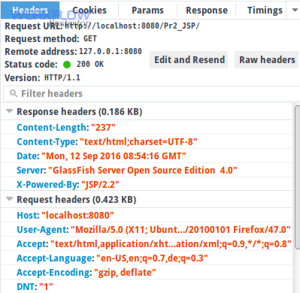
When UI behavior differs by user or browser, devtools becomes the most reliable evidence source. Specifically, inspect failed requests and status codes in the Network tab, export a HAR file for Support or vendors, and review console errors for script conflicts, CSP issues, or blocked resources. More importantly, this is essential for form capture and CMS issues because it proves whether the browser actually sent and received the required requests.
How do you run controlled tests with sandbox accounts and staging domains?
Controlled tests reduce risk and increase certainty by isolating variables. Use a sandbox or staging domain, clone workflows/forms/pages, test with clean records and emails, and change one variable at a time. Next, this method turns “it sometimes breaks” into a reproducible case you can fix permanently.
What preventive playbooks reduce future HubSpot incidents?
Prevention playbooks reduce repeated incidents through naming conventions, change control, monitoring, and standardized test scripts. More specifically, schedule a weekly review of automation issues, monitor integration error dashboards for recurring hubspot webhook 500 server error patterns, add backoff logic to avoid hubspot api limit exceeded, and document release checklists so changes are validated before launch.
According to a study by the University of East Anglia from Norwich Business School, in March 2021, a conceptual model tested with 644 participants found that information quality, system quality, and service quality improve trust, which in turn supports outcomes like intention and sustained engagement—reinforcing why consistent platform quality and predictable diagnostics improve long-term performance.