


Notion data formatting errors usually happen when the value you send doesn’t match the database property’s expected shape (object vs array), type (date vs string), or allowed options—and Notion rejects the request with a validation error instead of creating or updating the page. (developers.notion.com)
You can fix these errors quickly by treating your Notion database like a strict contract: confirm the property type in the schema, send the correct wrapper for that type (rich_text, select, date, people, files, etc.), and isolate the single property that breaks validation before you “fix everything at once.” (developers.notion.com)
Once you’ve stabilized the mapping, you can prevent recurring failures with lightweight pre-validation (normalize dates/numbers, enforce enums, handle nulls), plus simple operational checks for token problems such as 401 unauthorized and “token expired” events that can look like random failures in an automation run. (developers.notion.com)
Introduce a new idea: the rest of this guide moves from macro troubleshooting into micro edge cases (timezone, locale, rich text, and tool-specific serialization) so you can stop these errors permanently.
What are “Notion data formatting errors” in database properties?
Notion data formatting errors are schema validation failures that occur when an API or automation sends a property value that doesn’t conform to the Notion database property’s required structure, usually surfacing as a 400 validation_error like “body failed validation.” (developers.notion.com)
Then, because Notion validates requests against its expected schema, the fix is rarely “try again”—it’s almost always “send the right shape for the right property type.” (developers.notion.com)
Which parts of a payload usually cause property validation issues?
There are 5 main sources of Notion data formatting errors: property naming, type wrapper mismatch, nesting/shape mismatch, invalid option/ID references, and null/empty handling, based on where the payload diverges from the database schema. (developers.notion.com)
- Property naming mismatch (keys don’t match the schema)
- You send
"Status"but the database property is"Task Status". - You send a property that was renamed last week (schema drift).
- You’re using the wrong level (e.g., including a
typekey where it’s not expected). (stackoverflow.com)
- You send
- Type wrapper mismatch (correct value, wrong container)
- You send
"2025-04-15"as a raw string where Notion expects adateobject wrapper. - You send a select “value” instead of a select
name/ structured select object. (stackoverflow.com)
- You send
- Nesting/shape mismatch
- Arrays vs objects are flipped (e.g.,
rich_textexpects an array of rich text objects, not a single string). - You send a partial structure missing required sub-keys. (developers.notion.com)
- Arrays vs objects are flipped (e.g.,
- Invalid references (options, people, relations)
- Select option doesn’t exist, or casing differs.
- Person/relation IDs are missing, wrong, or not shared with the integration token. (github.com)
- Null/empty handling
- You send
nullwhere Notion expects an empty array—or vice versa. - You send empty strings into typed fields (date, number) expecting “unset.” (developers.notion.com)
- You send
Are Notion formatting errors always caused by the API payload?
No—Notion data formatting errors are not always caused by the API payload, because (1) the database schema can change (renames/type edits), (2) permissions and sharing can block valid-looking references, and (3) missing version headers or invalid tokens can surface as failures that teams misread as “formatting.” (developers.notion.com)
In addition, you’ll fix faster if you first classify the failure as validation vs authorization vs configuration, then choose the right troubleshooting path. (developers.notion.com)
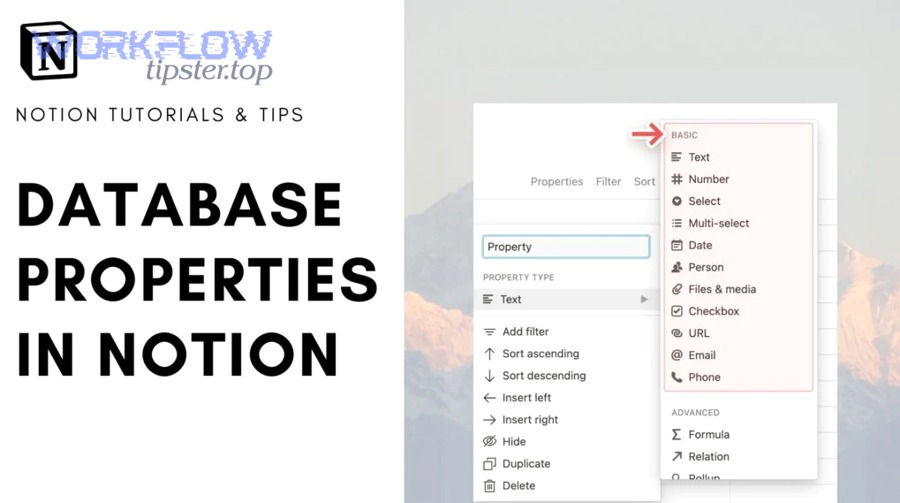
Can schema changes or renamed properties break previously working automations?
Yes—schema changes can break previously working automations, because Notion validates requests against the current property schema and names, and renames/type edits make your old mapping incorrect even if the source data hasn’t changed. (developers.notion.com)
Specifically, schema drift usually shows up in three patterns:
- Property rename drift
- Your automation still writes to
"Owner"but the property is now"Assignee".
- Your automation still writes to
- Property type drift
- A “Text” property became “Select,” and your old string no longer fits.
- New constraints
- A property becomes effectively required in your workflow logic (even if Notion doesn’t mark it “required,” your downstream steps do). (developers.notion.com)
A practical prevention move: store a “schema snapshot” (property names + types) in documentation, and whenever you edit the database, re-verify your mapping.
Can permissions and workspace access trigger validation-like failures?
Yes—permissions and access can trigger failures that feel like formatting problems, because the token might not have access to the database, related pages, or people objects, causing errors in the same run where you’re also mapping data. (developers.notion.com)
Here’s how to separate them during Notion Troubleshooting:
- If the run fails with 401, treat it as auth first (this is where you’ll see strings like notion webhook 401 unauthorized in logs when a webhook step calls Notion with an invalid bearer token). (developers.notion.com)
- If the run fails with 403 or object_not_found, suspect sharing/permissions (database not shared with the integration). (developers.notion.com)
- If the run fails with 400 validation_error, treat it as formatting/schema mismatch. (developers.notion.com)
And if you see “token expired” patterns in your platform, track them explicitly as notion oauth token expired events so the team doesn’t waste hours “fixing payloads” that were never sent successfully. (developers.notion.com)
How do you diagnose the exact field causing the validation error?
Diagnosing the exact failing field means treating the Notion request as a typed contract: read the error message, identify the property path that failed, and reproduce the call with a minimal payload so you can isolate the single property whose shape/type is invalid. (developers.notion.com)
Next, once you identify the property, you can fix the mapping precisely instead of “editing everything and hoping,” which is where most debugging time gets burned.

What information in the error response tells you the failing property and expected type?
The error response tells you the failing property and expected type by giving a path-like description of what should be present and what should not, often listing specific keys (e.g., “should be defined”) and unexpected keys (e.g., “type should not be present”). (stackoverflow.com)
To extract the signal:
- Look for the first “Fix one:” line
The first item is usually your fastest win because it’s the earliest schema mismatch. - Identify the property name in the path
Example patterns:body.properties.Priority...body.properties.Name...(stackoverflow.com)
- Read the “should be defined / should not be present” pairs
- “
name should be defined” usually means select/status expectsname. - “
type should not be present” means you’re adding schema metadata where only values should be sent. (stackoverflow.com)
- “
If your platform hides the raw error, switch the step to “debug” mode and capture the full response JSON—because the message field is the map.
What is the fastest “binary search” method to isolate a bad field mapping?
The fastest isolation method is a binary search reduction: send a minimal request with only the title/name property, then add half of your properties, test, and repeat until you find the single field that triggers validation. (developers.notion.com)
A reliable workflow looks like this:
- Start with the smallest valid payload
- Parent database id + title.
- Add properties in batches
- Add half, run. If it fails, the bad field is in that half.
- Split again
- Keep halving until you isolate the property.
- Lock the fix
- Replace the mapping for that one property type only.
- Regression check
- Re-run with all properties.
This method also plays nicely with “busy systems” where you have notion tasks delayed queue backlog in your automation platform—fewer test runs, faster isolation, less waiting.
Which Notion property types fail most often, and how do you fix each?
There are 6 main high-failure property types in Notion requests—date/datetime, number, select/multi-select/status, rich text, people, and relation/files—based on how often payloads deviate from their expected wrappers and reference rules. (developers.notion.com)
Below, you’ll fix them by matching (a) the property type, (b) the correct wrapper structure, and (c) the allowed value rules.
How do you fix date and datetime formatting errors (ISO vs locale)?
Dates win when you use ISO 8601, locale strings are best avoided, and “date-only” values are optimal when you don’t need time—because Notion integrations and APIs consistently expect machine-readable date formats rather than human formats like 04/15/2025. (timeanddate.com)
Then, to fix the issue systematically:
- If your source is a human-formatted date (locale):
Convert it to ISO 8601:- Date-only:
YYYY-MM-DD - Date-time:
YYYY-MM-DDTHH:MM:SSZor with offset+02:00(timeanddate.com)
- Date-only:
- If your source uses timezones:
Decide your “truth”:- Store UTC everywhere, or store local time with offset.
- Avoid ambiguous DST transitions by always including offsets for datetime. (timeanddate.com)
- If you need “unset”:
Don’t send a fake date like""or0. Instead, omit the property or set it according to your tool’s supported “clear” behavior.

How do you fix number formatting errors (string vs numeric, commas, currency)?
Numbers win when you send raw numeric values, formatted strings are best avoided, and normalized decimals are optimal—because any commas, currency symbols, or locale decimal separators turn a valid number into an invalid payload. (developers.notion.com)
Then, apply this normalization checklist before sending:
- Strip thousands separators:
"1,234.56" → 1234.56 - Strip currency symbols:
"$99.00" → 99 - Convert locale decimals if needed:
"1.234,56" → 1234.56 - Guard against non-numbers:
NaN, empty strings, and whitespace - Decide rounding rules (especially for money): keep two decimals or integers only
If you’re using an automation mapper, put this in a “formatter” step before the Notion write step.
How do you fix select/multi-select errors (unknown options vs option IDs)?
There are 3 main types of select-related validation errors: unknown option names, wrong structure for select vs multi-select, and status/select confusion, based on whether Notion can match your input to its configured options. (developers.notion.com)
To fix them:
- Unknown option name
- Confirm the option exists in the database.
- Match casing and exact spelling (treat them as enums).
- Select vs multi-select structure
- Select is one value; multi-select is a list of values.
- Status vs select
- Status is its own type; don’t send a “select-like” payload to a status property unless you confirm the schema expects it. (developers.notion.com)
When you’re building robust mappings, create an “allowed values list” in your workflow config so the mapper rejects unknown values early.
How do you fix people, relation, and files property errors?
There are 3 main types of reference property errors—people identity, relation target validity, and files object structure—based on whether Notion can resolve what you referenced to an accessible object in the workspace. (developers.notion.com)
Fix them with these rules:
- People
- Ensure the integration has access to the user and the workspace context.
- Use correct person identifiers as required by your tool/SDK (avoid “pretty names”).
- If it fails for only some users, it’s often sharing/permissions, not formatting. (github.com)
- Relations
- The related page must exist and be accessible.
- If you’re relating across databases, confirm both are shared with the integration.
- Files
- Use valid external URLs where supported.
- Ensure URLs are reachable and not expiring immediately (temporary signed URLs can fail later).
A quick operational note: if files fail intermittently, check for 409 conflict-like behavior and retry guidance in Notion’s status code documentation. (developers.notion.com)
What’s the best way to prevent Notion formatting errors before deploying a workflow?
The best prevention strategy is a data contract pipeline: normalize source data into valid typed values, validate against your Notion property schema, test with a minimal staging database, and monitor error classes so formatting errors don’t return silently. (developers.notion.com)
Next, you’ll prevent 90% of failures by implementing a simple “pre-flight gate” before the Notion write step.
Should you normalize data (valid) before mapping it to Notion (invalid)?
Normalization wins for valid writes, “send as-is” is best only for already-clean sources, and a hybrid approach is optimal when upstream data quality varies—because Notion rejects invalid types instead of guessing what you meant. (developers.notion.com)
Then, adopt a hybrid contract:
- Always normalize these:
- Dates → ISO 8601 strings (or proper date objects in your tool)
- Numbers → numeric primitives
- Enums (select/status) → whitelisted options
- Conditionally normalize these:
- Rich text: escape weird characters, remove hidden formatting
- URLs: validate schema, remove tracking garbage if needed
- Fail fast on these:
- Missing required identifiers (relation IDs, people resolution)
- Unknown enum values that you don’t want auto-created
Evidence matters here: According to a study by the University of Luxembourg from the Interdisciplinary Centre for Security, Reliability and Trust (SnT), in 2021, researchers analyzing JSON schema compatibility reported their approach revealed 43 previously unknown data compatibility bugs, showing how strict schema thinking helps catch data-shape errors earlier. (software-lab.org)
What pre-flight checks should run for every update/create request?
There are 7 pre-flight checks you should run for every Notion write: schema match, property name match, type wrapper match, enum validation, date/number normalization, null/empty rules, and auth/version headers—based on the most common failure modes in Notion validation and request handling. (developers.notion.com)
Before the table below, here’s what it does: it maps common Notion property types to the most frequent formatting mistake and the pre-flight check that prevents it.
| Notion Property Type | Most common formatting mistake | Pre-flight check that prevents it |
|---|---|---|
| Date | Locale date string / missing timezone logic | Convert to ISO 8601; decide UTC vs offset |
| Number | “$1,234.00” string / commas | Strip symbols + separators; parse to number |
| Select/Status | Unknown option / wrong key structure | Whitelist allowed values; enforce exact names |
| Multi-select | Sending a single value | Always wrap in an array of values |
| Rich text | Sending plain string where structured objects expected | Convert to rich text array or use plain_text field safely (developers.notion.com) |
| People | Using display names instead of resolvable identifiers | Resolve user IDs; verify workspace access |
| Relation | Linking to missing/unshared page IDs | Validate target exists; verify sharing |
Finally, keep an operational monitor for response codes:
- 400 validation_error → formatting/schema issues
- 401 unauthorized → token invalid/expired (notion oauth token expired patterns)
- 403 restricted_resource → sharing/permissions
- missing_version → header/config issue (developers.notion.com)
Zapier-style mapping vs code-based mapping: which reduces formatting errors more?
Zapier-style mapping wins in speed and standard field coverage, code-based mapping is best for strict typing and complex transforms, and a hybrid “mapper + code pre-validation” is optimal for reliability—because formatting errors often require both UI convenience and precise control of payload structure. (developers.notion.com)
Then, choose based on three criteria: control, observability, and change resilience.
When is a low-code mapper safer, and when is custom transformation safer?
Low-code is safer when your fields are simple and stable, custom transformation is safer when your data needs normalization and strict contracts, and the hybrid is safest when upstream sources are messy—because the more the payload depends on exact shapes (rich text, relations, people), the more you need explicit typing. (developers.notion.com)
Use low-code mapping when:
- You’re writing basic types (text, number, simple select)
- You want faster iteration and non-engineer ownership
- Your schema doesn’t change often
Use custom transformation when:
- You need ISO date logic with timezones and offsets
- You must normalize locale numbers/currencies
- You’re building rich text with links/mentions
- You must enforce enums and reject unknowns deterministically
Use hybrid when:
- You want UI mapping for 80% of fields
- You add a “contract step” before Notion writes that coerces and validates
- You want consistent logs when failures happen (critical when runs pile up and you get a tasks backlog)
If you want a practical starting point, this beginner-friendly Notion API write tutorial can help teams visualize what “correct write payloads” look like before they implement a contract layer:
Why do Notion formatting errors persist even after “correct” mappings?
Notion formatting errors persist after “correct” mappings when hidden constraints still break the contract—most often timezone/locale conversions, rich text structure differences, tool-specific serialization, or intermittent auth/permission issues that change what the API can resolve at runtime. (timeanddate.com)
Next, let’s switch to micro-level debugging: the edge cases that keep teams stuck in a loop of “but the mapping is correct.”
Which timezone and locale edge cases turn valid dates/numbers into invalid values?
There are 4 main edge-case categories that turn “valid-looking” values into invalid payloads: DST ambiguity, missing offsets, locale separators, and hidden whitespace/characters, based on how tools transform data between steps. (timeanddate.com)
- DST ambiguity
- A local time may not exist (spring forward) or may be duplicated (fall back).
- Missing offsets
2025-04-15T09:30:00withoutZor+02:00can be interpreted inconsistently.
- Locale numbers
1.234,56vs1,234.56—same human meaning, different machine parsing.
- Hidden characters
- Non-breaking spaces, smart quotes, and copy/paste artifacts can break parsing.
A defensive move: normalize all dates/numbers at the earliest possible step, not right before Notion—because upstream conversions can reintroduce the problem.
What is the difference between “rich text formatting” and “plain text,” and why does it break?
Rich text wins for links/mentions/annotations, plain text is best for simple content, and a mixed approach is optimal when you want reliable writes plus formatting—because rich text requires structured objects while plain text can be sent without complex nesting. (developers.notion.com)
Here’s why it breaks in real workflows:
- Some automation tools flatten rich text into a string, losing structure.
- Some tools wrap a string incorrectly as a single object instead of an array.
- Some tools drop required fields (like
plain_textexpectations in read models) or confuse “block content” with “property value” structures. (developers.notion.com)
If your use case doesn’t require links/mentions, plain text reduces failure surface dramatically. If you do require formatting, keep a tested “rich text builder” snippet (or a dedicated step) and reuse it.
How do different automation tools serialize Notion fields differently?
Zapier is often best for straightforward mappings, n8n is strong for explicit transforms, and Make is flexible for multi-step shaping—because each platform serializes arrays, objects, and typed fields differently, which changes whether Notion sees a valid property value or a malformed one. (community.zapier.com)
A practical way to handle this:
- Always inspect the “sent payload”
- Don’t trust the UI preview—trust the raw JSON that actually hit Notion.
- Standardize a contract step
- Convert everything into a known internal format (ISO date strings, numeric primitives, enum names).
- Add platform-specific adapters
- If one platform wraps
rich_textdifferently, adapt there—not in Notion.
- If one platform wraps
This is also where your incident patterns show up:
- Token issues: 401 unauthorized (often appears as notion webhook 401 unauthorized in webhook-driven flows) (developers.notion.com)
- Retry storms: when a step fails and retries, your system can build notion tasks delayed queue backlog, making debugging feel slower than it is.
When should you switch strategies—CSV import, manual edit, or schema redesign—instead of forcing the API?
There are 4 situations where you should switch strategies: unstable schema, heavy human judgment, complex rollups/relations, and high-volume writes under rate/queue pressure—based on total cost of reliability vs engineering effort. (developers.notion.com)
Switch to CSV/import/manual when:
- Schema changes weekly
- You’ll chase drift forever.
- Humans must validate content
- Editorial QA beats automation.
- Your database design is fighting your workflow
- Redesigning properties (e.g., replacing overloaded text with typed selects/dates) reduces errors long-term.
- Operational pressure is high
- High-volume retries + slow debugging = lower ROI than a simpler ingestion method.
When you redesign, align the schema with your upstream data realities: if the source produces messy date strings, use a “Raw Date” text field plus a separate normalized date field, and only write to the normalized date when it passes your contract checks.