


Connecting Google Docs to PandaDoc is the fastest way to turn a collaborative draft into a trackable eSignature workflow—so your sales team can prepare a proposal in Google Docs, send it via PandaDoc, and close the loop with clear signing status and proof of completion.
Next, the same setup becomes more valuable when you standardize how deals move from “draft” to “ready to sign,” because it reduces back-and-forth, limits version confusion, and keeps every stakeholder aligned on who signs what and when.
Then, once you understand the core path (connect → send → sign → track), you can choose the best operating model for your team—staying in Google Docs for early collaboration, switching to PandaDoc templates for scale, or combining both in a repeatable process.
Introduce a new idea: the real advantage appears when you shift from manual steps to an automated workflow that triggers the right document at the right time, while still keeping permissions, formatting, and accountability under control.
What does it mean to connect Google Docs to PandaDoc for eSignature workflows?
Connecting Google Docs to PandaDoc is an integration workflow that moves a Google Doc from collaborative editing into a signing-ready, trackable eSignature process, typically through a Google Workspace add-on that bridges authoring, sending, and status tracking. (support.pandadoc.com)
Specifically, most sales teams struggle with the same problem: a “final” Google Doc is rarely final because stakeholders keep editing, forwarding, and renaming versions. The integration solves that by creating a clean handoff point—your team collaborates in Google Docs, then intentionally transitions the document into PandaDoc where roles, fields, and signing steps create a controlled close-out flow.
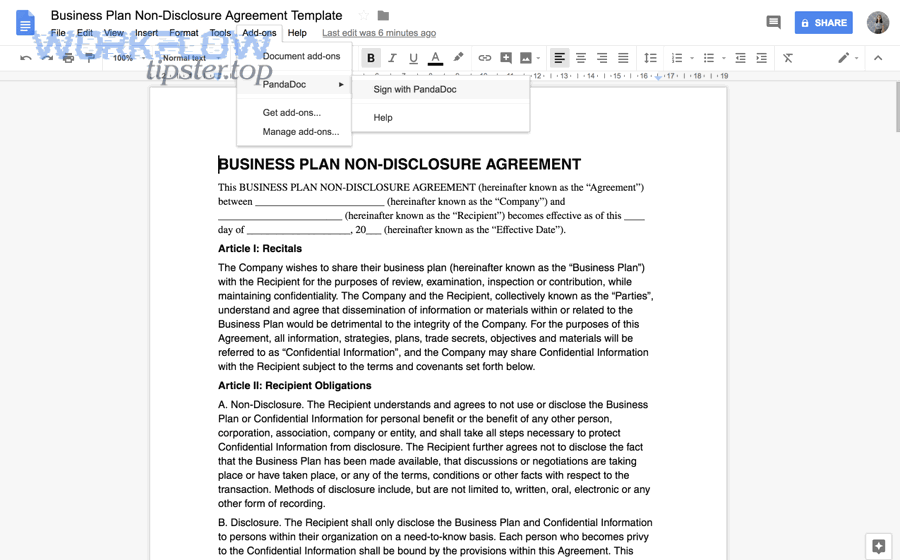
What happens to a Google Doc after you send it through PandaDoc?
When you send a Google Doc through PandaDoc, the document stops being “just a file” and becomes a controlled signing transaction with defined recipients, assigned fields, and an activity history you can use to manage follow-up.
More specifically, you should think of the workflow as two layers:
- Authoring layer (Google Docs): your team writes, edits, comments, and collaborates quickly.
- Execution layer (PandaDoc): your team assigns roles, places signature/approval fields, sends the document, and monitors outcomes.
That shift matters because sales execution has different requirements than writing:
- You need a single source of truth for who signed and when.
- You need frictionless signing for the buyer.
- You need visibility to prioritize follow-up.
In practical terms, once a doc enters the execution layer, your sales rep can stop “chasing files” and start “managing a deal stage.” The signing workflow becomes the object you track—not the filename.
According to a study by the University of Ottawa from the School of Epidemiology and Public Health, in 2022, researchers found no significant difference in response rates between hand-signed and electronically signed letters, supporting e-signatures as a time-saving alternative without harming outcomes. (pmc.ncbi.nlm.nih.gov)
Which sales documents are best suited for this integration?
There are 4 main types of sales documents that benefit most from Google Docs → PandaDoc, based on how often they are reused and how much signature accountability they require: proposals, quotes/order forms, MSAs, and NDAs.
To illustrate why these four dominate, match each to the “authoring vs execution” split:
- Proposals (high collaboration + high polish)
- Write collaboratively in Google Docs, then send via PandaDoc for signature or approval.
- Quotes / order forms (high repetition + field-heavy)
- Often better as PandaDoc templates, but still drafted in Docs for custom narrative sections.
- MSAs (high risk + strict signing)
- Needs controlled roles, signing order, and completion records.
- NDAs (high volume + speed matters)
- Great candidates for automation once the base workflow is proven.
If you’re not sure where to start, begin with the document type that most often blocks revenue—usually the proposal or order form—because improving that single choke point typically creates the biggest visible impact.
Can you connect Google Docs to PandaDoc directly inside Google Workspace?
Yes, you can connect Google Docs to PandaDoc directly inside Google Workspace because the PandaDoc add-on supports in-document sending, it uses an authorization step to link accounts, and it provides a guided flow to add recipients and fields without leaving Google Docs. (support.pandadoc.com)
Then, the key is to treat the setup like a system rollout rather than a one-time install, because sales teams often have mixed account types, shared drives, and admin restrictions that can break the experience if you ignore them.
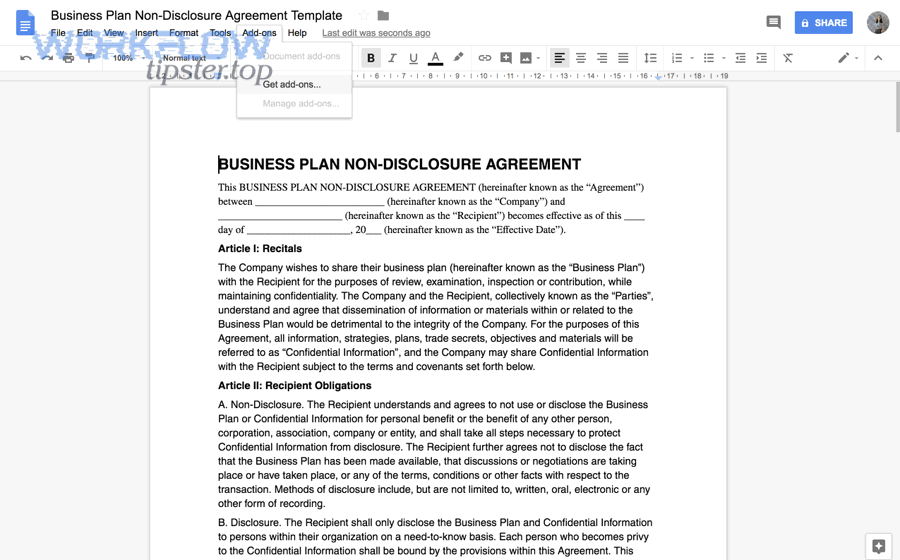
What do you need before installing the PandaDoc add-on for Google Docs?
There are 6 essentials you need before installation, based on access control and account matching:
- A PandaDoc user account (and the right workspace)
- A Google account that matches your PandaDoc email (or a clear plan to map identities)
- Permission to install Google Workspace add-ons (user-level or admin-approved)
- A browser environment that supports add-ons (and allows pop-ups/auth flows)
- Access to the relevant Google Docs / shared drives your team will send from
- A simple test document to validate the flow end-to-end
Next, treat the “email matching” requirement as non-negotiable. If your team uses multiple emails (personal Gmail + corporate workspace), create a clean policy: which account is the signing operator, and which account owns the source files. That clarity prevents the most common “it works for me but not for them” problem.
How do you authorize PandaDoc safely without breaking company access policies?
Authorization is the process where Google grants PandaDoc access to the document workflow you’re initiating, and you keep it safe by limiting access to required scopes, standardizing who authorizes in your org, and documenting the expected permission prompts.
Moreover, safety here is less about “fear of authorization” and more about repeatability and governance. The difference between a clean integration and a risky one is whether your organization can answer these questions consistently:
- Who is allowed to install the add-on?
- Who is allowed to send documents externally?
- Which shared drives are approved sources for signing workflows?
- Where are signed copies stored, and who can access them?
If your environment is regulated or security-sensitive, align your rollout with your admin team so they can approve the integration intentionally rather than reactively.
In the United States, electronic signatures generally cannot be denied legal effect solely because they’re electronic under the E-Sign Act framework, as summarized by the National Credit Union Administration’s guidance on the E-Sign Act. (ncua.gov)
How do you send a Google Doc to PandaDoc for signature step by step?
Use the PandaDoc Google Docs add-on in 6 steps—install, authorize, launch “Send via PandaDoc,” add recipients, place fields, and send—to convert a Google Doc into a signing workflow with trackable status and a clear completion outcome. (support.pandadoc.com)
To begin, remember the hook from the title: your goal is not “sending a file,” but moving from manual deal paperwork to an automated, trackable eSignature workflow that sales can run consistently.
Here’s the step-by-step flow that maps to how reps actually work:
- Open the Google Doc you want to send (ideally the “final draft” version).
- Launch the PandaDoc add-on from the add-ons/extensions menu.
- Authorize access if it’s your first time linking the accounts.
- Choose the sending path (sign yourself, add recipients, finalize).
- Add recipients and assign roles so PandaDoc knows who must act.
- Place fields and send so the signer experiences a frictionless completion path.
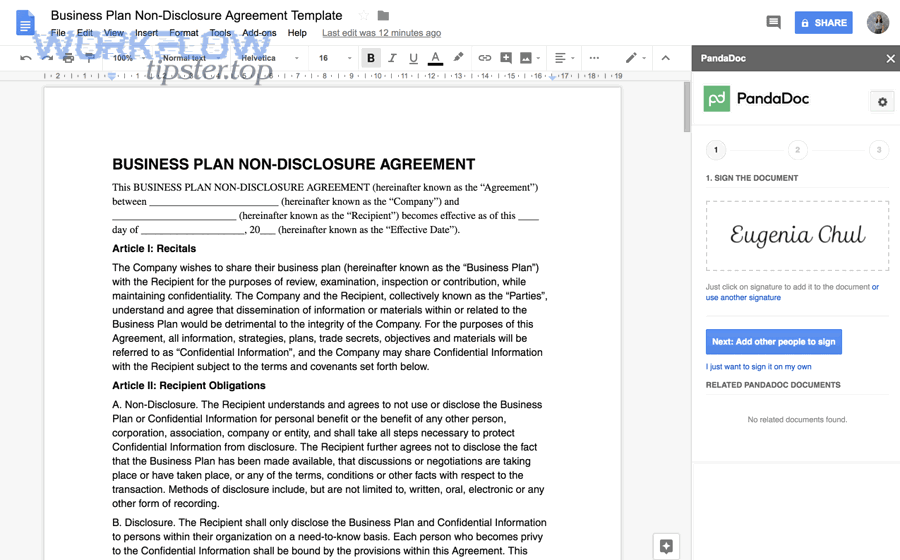
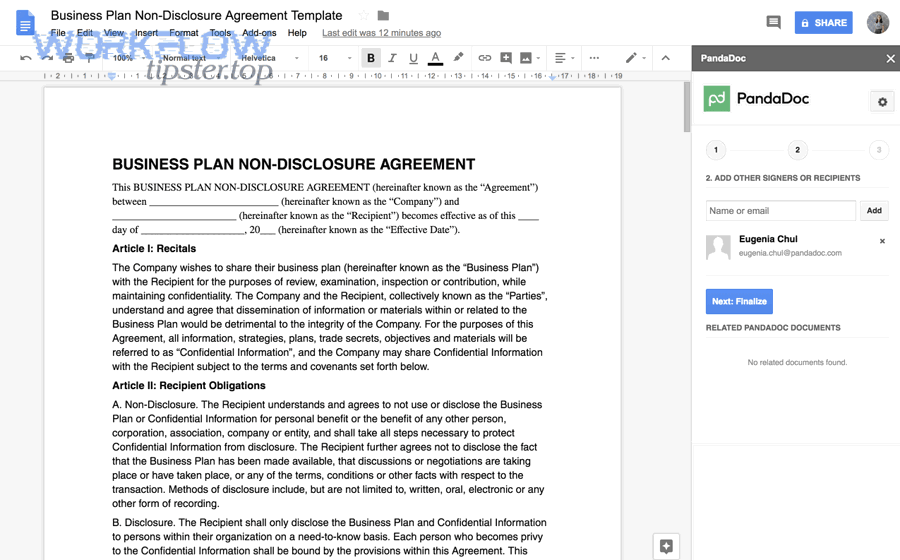
How do you assign recipients, roles, and signing order in PandaDoc?
There are 3 main recipient roles you assign in PandaDoc—signer, approver, and CC/viewer—and you choose signing order based on one criterion: whether completion depends on sequence (legal/approval) or speed (parallel signing).
Next, treat roles like a deal checklist:
- Signer: the person who must legally sign (customer, vendor, internal executive).
- Approver: someone who must review/approve before sending or finalizing (often internal).
- CC/Viewer: stakeholders who need visibility but should not slow the process.
Then choose signing order:
- Sequential order when one signature should happen before another (common in compliance-heavy flows).
- Parallel order when speed is more important than sequence (common for multi-stakeholder customer sign-off).
A practical sales workflow example: Rep sends proposal → customer signer signs → internal counter-signer signs → doc completed. This creates predictable accountability, especially when deal sizes increase and handoffs become riskier.
What fields should you add for a sales-ready signing experience?
There are 6 core field types you should add—signature, date, full name, title/company, checkbox, and initial—based on whether the field is legally required, operationally necessary, or helpful for clarity and fewer buyer questions.
Moreover, the best sales teams use fields to reduce friction, not to “collect everything.” A clean buyer experience usually follows these rules:
- Put the signature + date where the signer expects them (end of doc, clearly labeled).
- Use required fields only for what truly blocks execution (avoid unnecessary form fatigue).
- Pre-fill what you already know (when allowed) so the buyer finishes faster.
- Keep optional fields minimal and clearly marked.
If your team frequently negotiates scope or pricing, separate “editable negotiation sections” (Google Docs phase) from “signing-lock sections” (PandaDoc phase). That separation prevents last-minute edits after the doc is already in a signing transaction.
How do you track, remind, and prove completion after sending from Google Docs?
You track completion in PandaDoc by monitoring document status, using reminders to prompt action, and relying on the system’s activity history to prove who did what and when—turning a sent Google Doc into a measurable closing workflow. (pandadoc.com)
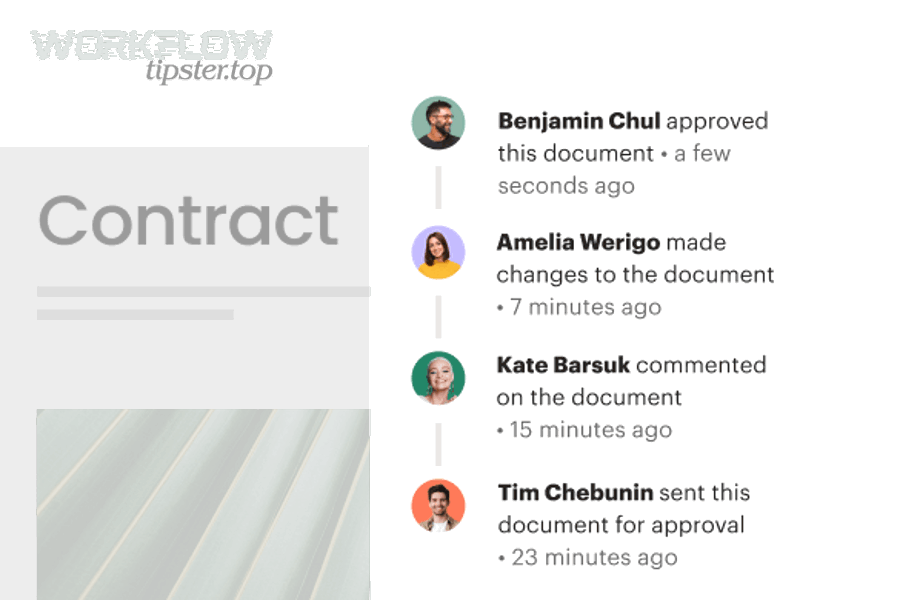
In addition, tracking is where sales leaders get leverage. When every rep uses the same workflow, managers can spot stalled deals quickly because “viewed but not signed” becomes a clear signal, not a vague guess.
What are the key document statuses you should monitor in PandaDoc?
There are 6 key statuses you should monitor—draft, sent, viewed, completed, declined, expired—based on one criterion: whether the buyer has taken a meaningful action that changes your next step.
Then map each status to a sales action:
- Draft: rep is still preparing; the workflow is not yet live.
- Sent: buyer has access; follow-up clock starts.
- Viewed: buyer engaged; reps should follow up with context (“Any questions?”).
- Completed: signed; move to onboarding/fulfillment.
- Declined: objections surfaced; route to negotiation.
- Expired: timing slipped; renew or re-issue with updated terms.
This system turns follow-up from emotional guessing into operational execution.
How do reminders and expiration rules compare to manual follow-up?
Automated reminders win in consistency, manual follow-up is best for relationship nuance, and a hybrid approach is optimal for high-value deals where you want both predictable nudges and human persuasion.
Next, use reminders as your baseline, not your entire strategy:
- Automated reminders ensure nothing gets forgotten, especially at scale.
- Manual follow-up works better when the buyer has questions or needs reassurance.
- Hybrid follow-up pairs reminders with human outreach triggered by status signals (viewed, idle, declined).
A simple hybrid pattern:
- Reminder after 24–48 hours if not viewed
- Human follow-up after first view
- Reminder near expiration
- Human follow-up if declined
According to a study by the University of Ottawa from the School of Epidemiology and Public Health, in 2022, researchers used repeated reminders in their randomized trial design and still observed similar response rates between e-signed and hand-signed groups, supporting electronic signing as a practical, low-friction alternative in repeated outreach contexts. (pmc.ncbi.nlm.nih.gov)
What’s the best way to standardize proposals: Google Docs templates vs PandaDoc templates?
Google Docs templates win in collaborative drafting, PandaDoc templates are best for scalable, field-driven sending, and a hybrid model is optimal for sales teams that want Docs for narrative flexibility and PandaDoc for consistent eSignature execution.

Moreover, this comparison matters because standardization is the bridge from “one rep’s process” to “the team’s process.” If you standardize the wrong layer, you’ll either slow collaboration or lose governance at the sending stage.
Before the table below, note what it contains: it compares the two template approaches across the criteria sales teams use to scale—collaboration speed, control, consistency, and operational reporting.
| Criteria | Google Docs templates | PandaDoc templates | Hybrid approach |
|---|---|---|---|
| Best at | Draft collaboration | Sending + signing execution | Both, with a clean handoff |
| Governance | Medium (version drift risk) | High (controlled template + fields) | High if you define the boundary |
| Repeatability | Medium | High | High |
| Ideal doc type | Narrative-heavy proposals | Repeatable proposals/order forms | Complex proposals with consistent signing |
| Scaling impact | Helps writing speed | Helps closing speed | Helps full pipeline speed |
When should a sales team keep writing in Google Docs instead of switching to PandaDoc templates?
A sales team should keep writing in Google Docs when the document requires heavy collaboration, fast iteration, and complex narrative editing—because Google Docs comments, suggestions, and real-time co-authoring reduce friction before terms are locked.
Meanwhile, the key is to define your “locking moment.” Good teams keep the workflow simple:
- Draft in Docs until stakeholder feedback is done
- Finalize structure and language
- Then hand off to PandaDoc for signing workflow execution
This prevents the worst-case scenario: editing the same content in two systems at once.
When do PandaDoc templates outperform Google Docs for speed and governance?
PandaDoc templates outperform Google Docs when you send the same structure repeatedly, require consistent fields, and need clear process control—because templates reduce rep effort and enforce a standardized signing experience deal after deal.
More importantly, this is where your title’s “Manual → Automated” concept becomes real. Templates enable operational scaling:
- reps stop rebuilding the same doc from scratch
- managers can enforce the minimum requirements (fields, clauses, signers)
- the business gets cleaner reporting and less risk from missing elements
This is also where many teams connect broader Automation Integrations across their stack, because standardized templates make it easier to trigger consistent workflows downstream—similar to how teams automate “gmail to monday” notifications or operational flows like “google sheets to aha” updates once the core content object is stable.
What are the most common Google Docs → PandaDoc issues, and how do you fix them?
There are 5 common issue categories—installation, account matching, permissions, formatting drift, and recipient friction—and you fix them by validating setup with a test doc, standardizing account identity, and simplifying the document before sending.
Besides, troubleshooting is not a “support task”; it’s a scaling task. If one rep struggles, the team will struggle, so your goal is to create a predictable checklist that makes the workflow reliable for everyone.
Why isn’t the add-on showing up (or why can’t you install it)?
The add-on usually doesn’t show up because an admin policy blocks Marketplace installs, you’re in the wrong Google account, or the browser/session is preventing the add-on from loading correctly.
Next, fix it with a systematic sequence:
- Confirm account context: are you signed into the correct Google Workspace identity?
- Check admin restrictions: does your organization limit add-ons or require approval?
- Try a clean environment: incognito window, cleared cache, different browser profile.
- Validate PandaDoc account match: ensure PandaDoc email aligns with Google identity.
- Test with a simple doc: reduce variables while diagnosing.
If you’re rolling this out to a team, document the exact setup path and make the “first successful send” the milestone before declaring the integration complete.
Why do tables/fonts/layout change after import—and how do you reduce formatting drift?
Tables and layout change because complex Docs formatting doesn’t always translate perfectly into a signing-ready rendering layer, and you reduce drift by simplifying tables, using consistent fonts, and testing a “template-ready” version of the doc before scaling.
To better understand the problem, think like a designer and a sales operator at the same time. Formatting drift usually comes from:
- nested tables
- inconsistent heading styles
- manual spacing instead of structured formatting
- copied content from other sources that brings hidden styling
Practical fixes that work well in sales documents:
- Use fewer table styles and avoid heavy nesting.
- Standardize headings (H2/H3 styles) instead of manual font changes.
- Replace fragile spacing with consistent paragraph spacing.
- Export a PDF for comparison (as a reference) when you’re debugging drift.
- Create a “signing-ready” version of the template that reps reuse.
If you standardize this once, you reduce “format surprise” across every future send.
According to PandaDoc’s documentation on its Google Docs integration, the add-on workflow includes an authorization step and a guided process to add recipients, add fields, and send—so most “it doesn’t work” issues can be isolated to identity matching, permissions, or setup steps. (support.pandadoc.com)
How can you automate Google Docs → PandaDoc to reduce manual steps (Manual → Automated)?
There are 4 practical automation paths—trigger from a new doc, trigger from a deal stage, trigger from a form submission, or trigger from approval completion—and each path reduces manual sending by turning repeatable moments into reliable eSignature workflows.

More importantly, automation only works when the underlying process is stable. If your team still changes roles, fields, or document structure every time, automation will simply repeat chaos faster.
Which automation workflows are most useful for sales teams (and what triggers them)?
There are 4 high-impact automation workflows sales teams use most, grouped by trigger type:
- New document created in a shared folder
- Trigger: a “Ready to Send” folder receives a finalized Google Doc
- Outcome: PandaDoc document is created and assigned to the right rep
- Deal stage changes in the CRM
- Trigger: deal moves to “Proposal Sent” or “Contracting”
- Outcome: PandaDoc doc is generated from a template and sent
- Form submission creates a contract packet
- Trigger: customer submits onboarding or procurement details
- Outcome: PandaDoc doc auto-populates and routes for signature
- Internal approval completion releases the doc
- Trigger: legal/finance approval complete
- Outcome: doc sends automatically with the correct signing order
These patterns are the signing equivalents of automations many teams already trust—like routing updates from “airtable to outlook calendar” when schedules change—because the value comes from eliminating repetitive coordination.
What’s the difference between add-on sending vs Drive-based import vs automation platforms?
Add-on sending wins for simplicity, Drive-based import is best for file-centric workflows, and automation platforms are optimal for repeatable, trigger-driven systems that need scale across tools.
Then choose based on how your team works:
- Add-on sending is ideal when reps live in Google Docs and want minimal change.
- Drive-based import is ideal when you treat documents as objects in folders and want a consistent storage pattern.
- Automation platforms are ideal when you want “if this happens, then send for signature” logic across your stack.
If you’re optimizing a revenue engine, automation platforms often create the cleanest “manual → automated” transition because they turn deal stages into actions.
How do you keep automation secure with permissions, shared drives, and role-based access?
You keep automation secure by controlling who can trigger workflows, limiting which folders are eligible sources, and enforcing role-based access so the system never sends documents from unapproved locations or to unintended recipients.
Especially in sales, “secure automation” is really “predictable automation.” Build guardrails:
- Use a dedicated folder structure (Draft / Final / Ready to Send / Signed)
- Restrict the “Ready to Send” folder to trained users
- Require a minimum approval step for high-risk documents
- Ensure signed copies land in a controlled location
This prevents automation from becoming a shadow process nobody can audit.
When should you move beyond automation into API-based document generation?
Yes, you should move to API-based generation when you have high volume, highly structured data, and strict governance needs, because APIs enable programmatic creation, consistent population, and tighter control than manual or no-code workflows.
Thus, treat APIs as the “third level” of maturity:
- manual sending (fast start)
- automation workflows (scale operations)
- API generation (scale with governance and data integrity)
If you reach the point where reps spend more time copying details than selling—or where compliance requires stronger control—API-based generation becomes the logical next step.