


Connecting Airtable to Pipedrive works best when you treat Airtable as your flexible operating database and Pipedrive as your deal-focused CRM, then sync only the fields that move revenue forward.
Most teams start by defining what “done” looks like—new leads created automatically, deals updated without manual copying, and activities (follow-ups) consistently logged in the right pipeline stage.
From there, the fastest path is usually a no-code connector (like Zapier or Make) that turns Airtable record changes into Pipedrive actions, while keeping data quality rules in place so you don’t create duplicates.
Introduce a new idea: once you can reliably sync Airtable and Pipedrive, you can expand into broader Automation Integrations that connect your calendar, tasks, and reporting—without breaking your CRM.
What does an Airtable to Pipedrive integration achieve for sales teams?
An Airtable to Pipedrive integration is a workflow sync that automatically moves and updates sales data (leads, contacts, deals, and activities) between Airtable tables and Pipedrive pipelines so sales teams stop doing manual copy-paste and start selling faster.
To better understand why this matters, focus on the operational outcome: fewer data entry steps, more consistent pipeline hygiene, and quicker follow-up when a record changes.
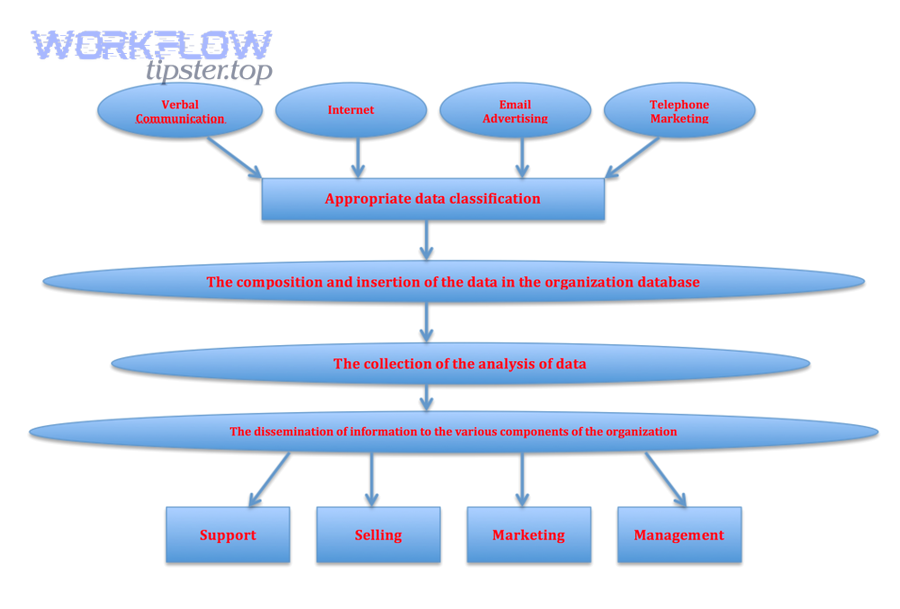
In practice, this integration usually delivers four business results:
- Speed: New inquiries can become Pipedrive deals instantly instead of waiting for someone to “enter them later.”
- Consistency: Your team sees the same stage, value, and owner logic across deals because updates follow rules.
- Visibility: Airtable can hold rich operational context (campaign source, qualification notes, product fit scoring) while Pipedrive stays clean and pipeline-first.
- Focus: Sales reps spend less time re-typing the same fields across tools and more time on conversations that move deals forward.
A broader reason this matters is that many jobs (especially office/admin-heavy tasks) are considered highly susceptible to computerisation—reinforcing why automating repetitive CRM updates is a practical advantage. According to a study by the University of Oxford from the Oxford Martin School, in 2013, researchers estimated that about 47% of US employment is in the high-risk category for computerisation.
How do Airtable bases map to Pipedrive deals, people, and organizations?
Airtable bases map to Pipedrive by treating tables as objects (or sources of objects) and fields as properties, then applying a consistent ID strategy so one Airtable record corresponds to one Pipedrive entity.
Next, the key is choosing a “system of record” for each entity—because two systems writing to the same field without rules will cause overwrites.
A common mapping that works well:
- Airtable “Leads” table → Pipedrive Leads or Deals (depending on your process)
- Airtable “Companies/Accounts” table → Pipedrive Organizations
- Airtable “Contacts” table → Pipedrive Persons
- Airtable “Opportunities” table → Pipedrive Deals
- Airtable “Tasks/Next Steps” table → Pipedrive Activities
The mapping becomes reliable when you add:
- A unique key (email for people, domain for orgs, or an internal UUID)
- A stored Pipedrive ID in Airtable once created
- A clear rule for what triggers create vs update (e.g., “Status = Qualified” creates a deal)
Which sales workflows benefit most from syncing Airtable to Pipedrive?
There are 4 main workflow types that benefit most from Airtable-to-Pipedrive syncing: lead capture, qualification routing, pipeline updates, and post-demo follow-up, based on where manual data entry currently slows your team down.
Then, prioritize the workflow with the highest frequency and highest revenue impact.
High-impact examples:
- Lead intake → deal creation: form submissions or inbound requests in Airtable create a deal in the right pipeline/stage in Pipedrive.
- Qualification scoring: Airtable calculations (fit score, engagement score) update a Pipedrive custom field so reps can triage faster.
- Stage automation: when Airtable status changes (e.g., “Proposal sent”), Pipedrive stage updates automatically.
- Handoff workflows: when an SDR marks “booked meeting,” Pipedrive owner changes to AE and an activity is created.
Can you connect Airtable to Pipedrive without code?
Yes—you can connect Airtable to Pipedrive without code because tools like Zapier and Make provide prebuilt connectors that trigger on Airtable record events and perform Pipedrive actions, without writing API scripts.
However, the best no-code choice depends on your data complexity, transformation needs, and how strictly you need to control duplicates.

Most teams succeed fastest when they start simple:
- One trigger (Airtable “record created” or “record updated”)
- One action (Pipedrive “create/update deal/person/org”)
- One guardrail (dedupe by email/domain + store Pipedrive ID back in Airtable)
Is Zapier the simplest option for non-technical users?
Yes—Zapier is often the simplest option for Airtable-to-Pipedrive because it favors quick setup, guided steps, and a straightforward trigger→action model that non-technical teams can maintain.
Next, the practical decision is whether your workflow needs advanced branching or heavy field transformation.
Zapier tends to be best when you want:
- Fast “happy path” automations (create a deal, create a person, update a field)
- Easy maintenance by sales ops (minimal logic)
- A small set of integrations that don’t require deep data shaping
Is Make better when you need complex logic and data transforms?
Yes—Make is usually better when you need multi-step scenarios, routers/branches, conditional updates, formatting, and stronger control over how records are searched, matched, and updated across both systems.
Meanwhile, the biggest advantage is visibility: you can see each step and handle exceptions more explicitly.

Make tends to be best when you need:
- Complex branching (different pipelines by region/product line)
- Data transformation (normalize phone numbers, parse names, compute values)
- Multi-object sync (create org → create person → create deal → create activity)
- More granular error handling (retry, route to error table, notify ops)
How do you set up Airtable to Pipedrive sync step by step?
The best setup method is a 3-step no-code build: prepare your data model, configure trigger/action mapping in Zapier or Make, then test with real edge cases before going live—so records sync reliably without duplicates.
Below is the exact sequence most sales ops teams can follow to launch a stable integration in days, not weeks.
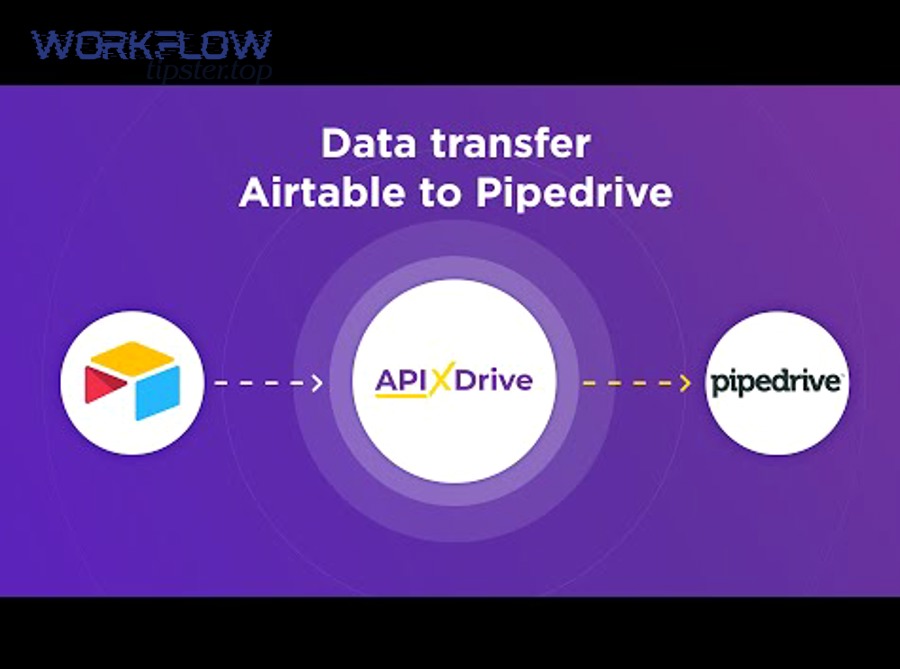
Step 1: Prepare your Airtable base and fields
Prepare Airtable by standardizing fields and adding unique identifiers so your integration can confidently decide whether to create a new Pipedrive record or update an existing one.
To begin, treat this as “data readiness,” not “tool setup,” because most integration failures come from inconsistent field design.
Recommended Airtable preparation checklist:
- Create stable unique keys
- People: email (best), or email + company combo
- Orgs: company domain (best), or normalized company name
- Deals: internal opportunity ID or Airtable record ID + prefix
- Add sync control fields
- Sync Status (Ready / Synced / Error)
- Last Synced At (timestamp)
- Pipedrive Person ID, Pipedrive Org ID, Pipedrive Deal ID
- Normalize data
- Ensure required fields are never blank (deal title, currency, pipeline/stage rules)
- Use consistent picklists for statuses (avoid free-text where possible)
A simple but powerful pattern is: Airtable calculates readiness, and the integration only runs when Sync Status = Ready.
Step 2: Configure the integration trigger and actions
Configure the automation by using one trigger + a small chain of actions that searches first, then creates/updates second—so you don’t flood Pipedrive with duplicates.
Next, ensure every action has a clear matching rule.
A proven action chain (works in both Zapier and Make):
- Trigger: Airtable record created OR record updated when Sync Status = Ready
- Search Person in Pipedrive: by email
- If found → store Person ID
- If not found → create Person → store Person ID
- Search Organization in Pipedrive: by domain/name
- If found → store Org ID
- If not found → create Org → store Org ID
- Create or Update Deal in Pipedrive:
- Create if no Deal ID
- Update if Deal ID exists
- Write back to Airtable: store IDs + set Sync Status = Synced
Important configuration rules:
- Always search before create (Person/Org especially)
- Write IDs back so future updates become safe updates
- Keep stage logic explicit (avoid “default stage” surprises)
Step 3: Test, monitor, and go live
Test the sync by running 10–20 realistic records (including messy edge cases), then monitor errors for a week before scaling to higher volumes.
Then, your goal is to convert unpredictable failures into predictable exception handling.
A practical go-live testing plan:
- Test cases to include
- Missing phone number
- Company name variations (e.g., “Acme Inc” vs “ACME”)
- Duplicate emails
- Deals with no value yet (should value be optional?)
- Stage changes that should trigger activity creation
- Monitoring approach
- Route errors into an Airtable “Integration Errors” table
- Send Slack/email alerts only for critical failures
- Track retry count and resolution time
If you want a simple reference tutorial format, a YouTube walkthrough on syncing Pipedrive data to Airtable can help you visualize the flow before implementing your own version.
What data should you sync between Airtable and Pipedrive?
There are 5 main data groups you should sync between Airtable and Pipedrive: contacts, organizations, deals, deal metadata, and activities, based on which fields directly affect selling actions and pipeline reporting.
Specifically, syncing fewer—but more meaningful—fields usually produces a cleaner CRM and fewer errors.
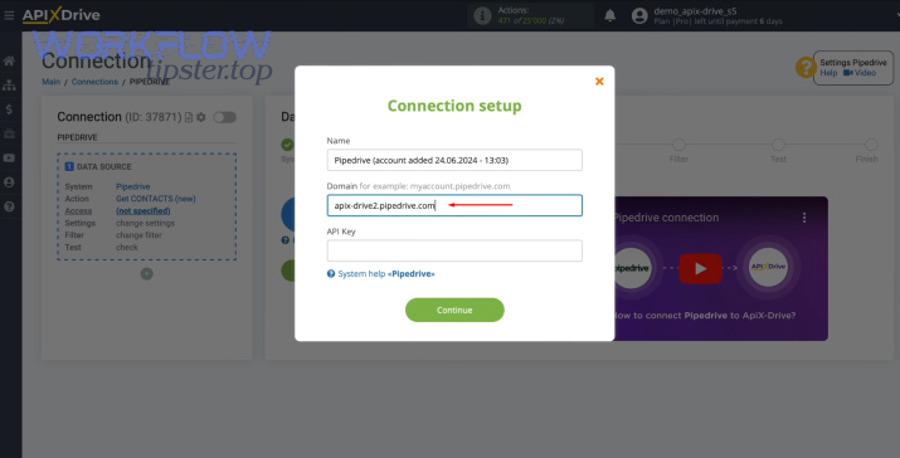
A recommended “start small” sync scope:
- Persons: name, email, phone, role/title, lead source
- Organizations: name, domain, industry, size segment, territory
- Deals: title, value, currency, pipeline, stage, owner, expected close date
- Deal qualifiers: product line, fit score, priority, notes summary
- Activities: next step type, due date, assigned user, linked deal/person
A “don’t sync at first” list (often causes complexity):
- Attachments/files (do later)
- Free-form long notes (summarize instead)
- Multi-select fields with inconsistent values
- Two-way syncing on fields that humans frequently overwrite
Which fields should be one-way vs two-way?
Airtable wins in structured enrichment, while Pipedrive wins in pipeline execution, so Airtable should be the one-way source for enrichment fields and Pipedrive should be the one-way source for sales-activity fields; two-way should be reserved for a small set of shared truths.
However, two-way sync only works when you define conflict rules.
A practical one-way/two-way model:
- One-way Airtable → Pipedrive (enrichment):
- Lead source details (campaign, content path, UTMs)
- Fit score, segmentation labels
- Data from operations (inventory readiness, onboarding status)
- One-way Pipedrive → Airtable (execution + outcomes):
- Stage changes and timestamps
- Activity completion status
- Deal won/lost status + reason
- Two-way (only if disciplined):
- Deal value (if both teams update it)
- Expected close date (if forecasting is shared)
- Owner (if assignment can happen in either tool)
To prevent conflicts, decide: “If both changed since last sync, which system wins?”
How should you handle attachments, notes, and activities?
You should handle attachments, notes, and activities by syncing them selectively: keep attachments/long notes in their primary system and sync only references or summaries, while activities should be created in Pipedrive because that’s where reps execute follow-ups.
In addition, this keeps the CRM lightweight while preserving context.
Recommended approach:
- Attachments: store in one place (often Pipedrive or a drive), then sync a link into Airtable.
- Notes: write a short “Sales Summary” field in Airtable and sync that into a Pipedrive note field or custom field.
- Activities: create/update activities in Pipedrive based on Airtable triggers:
- “Demo booked” → create meeting activity
- “Proposal sent” → create follow-up call activity due in 2 days
- “No response” → create reminder task
If you need activities to reflect scheduling, later expansions like google calendar to zoom can automate meeting creation and video links across your stack.
Is Airtable-to-Pipedrive automation safe and reliable for CRM data?
Yes—Airtable-to-Pipedrive automation is safe and reliable when you implement role-based permissions, API-safe syncing (search-before-create), and data-quality guardrails, because these three controls prevent leaks, duplicates, and destructive overwrites.
More importantly, reliability is not about the connector—it’s about how you design ownership, rules, and exception handling.
Core reliability principles:
- Least privilege access: connectors should only access what they need
- Stable identifiers: store Pipedrive IDs in Airtable once created
- Deterministic triggers: only sync records with a clear “Ready” state
- Auditability: log every create/update with timestamps and scenario/zap IDs
- Fail safe behavior: errors should halt and alert, not silently drop updates
The strategic rationale is that automation can remove repetitive work at scale; the Oxford Martin School’s findings about large portions of work being susceptible to computerisation supports why investing in controlled automation is rational—not risky—when done with governance.
What permissions, API limits, and rate limits matter?
Permissions and limits matter because your connector acts like a user, and both Airtable and Pipedrive enforce access scopes and request limits that can throttle or block sync if you scale too fast.
Next, you should design for predictable load.
What to control:
- Connector user role
- Use a dedicated service account where possible
- Restrict access to only relevant bases/pipelines
- API usage patterns
- Prefer “search then update” instead of “create blindly”
- Batch operations where supported
- Rate limiting strategy
- Add delays or queues for high-volume updates
- Use incremental sync windows for bulk backfills
A simple operational rule: if your team is importing thousands of historical rows, do that as a separate migration project—not your day-to-day automation.
How do you prevent duplicates and maintain data quality?
Prevent duplicates by using 3 layers of defense: unique matching keys, ID write-back, and controlled creation rules—so every record has one “identity” across both tools.
Then, enforce quality at the point of entry (Airtable) instead of cleaning later (Pipedrive).
Duplicate prevention checklist:
- Match people by email (fallback: phone, then name+org only if necessary)
- Match orgs by domain (fallback: normalized name)
- Store Pipedrive IDs in Airtable immediately after create
- Use one record as the “creator” (e.g., Airtable creates; Pipedrive only updates)
- Add a “duplicate review queue”
- If match confidence < threshold → send to review table
- Don’t auto-create in ambiguous cases
Data quality guardrails:
- Required fields enforced with Airtable validations
- Controlled vocabulary for stages/statuses
- A “do not sync” flag for test/spam records
How do you troubleshoot common Airtable to Pipedrive integration issues?
You troubleshoot Airtable-to-Pipedrive issues by checking 3 things in order: trigger conditions, field mapping/data types, and create-vs-update logic—because most failures come from one of these layers.
Below are the most common breakdowns and the fastest fixes used by sales ops teams.
A quick troubleshooting flow:
- Confirm the Airtable record actually met the trigger rules (Sync Status = Ready)
- Confirm the connector pulled the newest record values (no caching/mismatched view)
- Confirm required fields exist and match Pipedrive’s expected types
- Confirm the scenario searched before it created
- Inspect logs for the first failing step, not the last
Why aren’t new Airtable records creating deals in Pipedrive?
New records usually don’t create deals because the trigger didn’t fire, the filter blocked the record, or a required Pipedrive field was blank—so the connector quietly failed or stopped at validation.
Next, isolate whether the issue is “not triggered” or “triggered but failed.”
Fast checks:
- Trigger uses the correct Airtable base/table/view
- Record actually appears in the view used by the automation
- Filter conditions match exactly (status, checkbox, last modified time)
- Pipedrive required fields are present (deal title, pipeline, stage, owner rules)
Fix pattern:
- Add an Airtable formula field “Ready to Sync = 1/0”
- Trigger only when it flips to 1
- Log failures to an “Errors” table with the record ID and message
Why are updates looping or overwriting each other?
Looping happens when both systems trigger updates to each other without a “source of change” rule, causing the automation to re-run repeatedly.
However, you can stop loops by tagging updates and ignoring changes made by the integration.
Anti-loop techniques:
- Write-back suppression
- When the automation updates Airtable, set Last Updated By = Integration
- Trigger only when Last Updated By != Integration
- Timestamp gating
- Only sync if Last Modified Time is newer than Last Synced At
- One-way design for high-churn fields
- Don’t two-way sync “notes” fields that humans change constantly
- Keep stage changes one-way from Pipedrive to Airtable (or the reverse), not both
How do you fix errors from formulas, data types, and required fields?
Fix data-type and required-field errors by aligning field formats (text vs number vs date), removing ambiguous values, and applying transforms before sending data to Pipedrive.
In addition, treat formulas as “display,” not always “API-ready.”
Common mismatches and fixes:
- Dates
- Ensure ISO-friendly date outputs
- Avoid localized formats like “01/02/2026” without clarity
- Numbers
- Convert currency strings (“$1,200”) into numeric values (1200)
- Ensure decimals match Pipedrive expectations
- Select fields
- Map Airtable single-select values to Pipedrive’s allowed values
- Use a translation table when values differ (“Qualified” → “SQL”)
- Required fields
- Add Airtable validation that prevents Sync Status = Ready unless required fields are present
A resilient pattern: add a “Prepared Payload” section in Airtable (fields that are already formatted exactly as Pipedrive expects), then map those fields directly.
How do you measure ROI and performance after integrating Airtable with Pipedrive?
You measure ROI by tracking 3 outcomes: time saved on CRM admin, faster lead-to-contact speed, and improved pipeline accuracy—because these directly influence revenue efficiency and forecast confidence.
Then, you translate those outcomes into a simple scorecard your team reviews weekly.
A practical ROI model:
- Time saved per rep per week = (manual updates eliminated) × (avg minutes per update)
- Speed-to-lead improvement = time from “lead captured” to “deal created/assigned”
- Data quality improvement = % deals with required fields complete + fewer duplicates
- Conversion lift (optional) = any improvement in stage conversion once follow-ups are consistent
The macro point is straightforward: if automation reliably removes repetitive steps, it increases capacity for higher-value work—exactly the kind of shift the Oxford Martin School’s computerisation findings imply will matter across modern work.
Which metrics prove the integration is working?
There are 7 core metrics that prove your Airtable↔Pipedrive integration is working: sync success rate, duplicate rate, lead-to-deal time, field completeness, activity creation rate, stage latency, and error resolution time.
Next, focus on leading indicators (speed + completeness) before lagging indicators (revenue).
Recommended metric list:
- Sync Success Rate (%) = successful runs / total runs
- Duplicate Rate (%) = duplicates created / total new entities
- Lead-to-Deal Time (median minutes)
- Field Completeness (%) for key deal fields
- Activity Coverage (%) = deals with next activity scheduled
- Stage Latency (avg days per stage)
- MTTR for Integration Errors (mean time to resolve)
Even one metric—Lead-to-Deal Time—often reveals immediate impact, because automation turns delays into instant action.
How do you build a simple dashboard in Airtable or Pipedrive?
Build a dashboard by creating a single source table (either in Airtable or Pipedrive reporting) and visualizing the sync KPIs with grouped views, charts, and weekly snapshots.
Then, make it operational: dashboards should drive decisions, not just look nice.
Airtable dashboard approach:
- Create a “Deals (Synced)” table that stores Pipedrive deal ID, stage, owner, value, timestamps
- Add rollups:
- deals per stage
- avg days in stage
- completeness score
- Add a weekly “Ops Snapshot” table that records KPIs every Monday
Pipedrive dashboard approach:
- Use Pipedrive’s pipeline reporting to track stage conversion and velocity
- Add custom fields populated from Airtable (fit score, source category) for segmentation
- Create saved filters (e.g., “High fit score + no activity scheduled”)
If your reporting needs expand beyond this, teams often connect task tools and spreadsheets to keep leaders aligned—for example, pushing weekly outcomes into clickup to microsoft excel for standardized executive reporting.
Contextual Border: At this point, you have everything needed to execute the core Airtable-to-Pipedrive integration reliably. Next, the focus shifts from “make the sync work” to “expand the automation ecosystem” so your entire go-to-market workflow becomes connected.
What are advanced automation ideas beyond Airtable ↔ Pipedrive?
Advanced automation expands Airtable↔Pipedrive into a connected system where forms, scheduling, tasks, and reporting all update automatically—so your team runs one consistent process across tools instead of managing disconnected islands.
Next, these ideas help you broaden micro-semantics without changing the core integration foundation.
How do Automation Integrations connect your full stack?
Automation Integrations connect your full stack by chaining triggers and actions across apps so one event (like “deal moved to demo”) automatically schedules meetings, updates tasks, alerts stakeholders, and logs outcomes in your reporting layer.
More specifically, a good stack integration reduces “handoff friction” between marketing, sales, and ops.
Examples that work well:
- New lead in Airtable → create person + deal in Pipedrive → notify Slack → create follow-up activity
- Deal reaches “Proposal Sent” → generate a templated email task → assign AE → update forecast sheet
- Deal marked “Won” → create onboarding project → populate customer table in Airtable → start NPS workflow
How can you extend to clickup to microsoft excel for reporting?
You can extend to clickup to microsoft excel by exporting structured task and milestone data into Excel on a schedule, then combining it with pipeline metrics so leadership sees execution + revenue movement in one place.
Then, this becomes your weekly operating cadence.
A practical extension:
- When a deal hits a stage, create a ClickUp task list for onboarding or implementation
- Every week, export ClickUp task status into Excel
- Join Excel task completion data with Pipedrive stage/velocity metrics to spot bottlenecks
This is especially useful when teams want a “single executive spreadsheet” that stays updated without manual compilation.
How can you connect google calendar to zoom for meeting automation?
You can connect google calendar to zoom so meetings automatically generate Zoom links, invite attendees, and reflect meeting status back into your CRM workflow—reducing scheduling errors and improving follow-through.
In addition, this complements Pipedrive activities: the meeting exists as both a calendar event and a CRM activity.
A clean flow:
- Pipedrive activity “Schedule demo” → create Google Calendar event
- Google Calendar event created → automatically add Zoom link
- Meeting completed → update deal stage or log outcome back in Airtable/Pipedrive
This removes a common sales friction point: forgetting to add links, missing invites, or losing meeting context across tools.