


If you want a reliable Calendly → Outlook Calendar → Microsoft Teams → Asana scheduling workflow, the most effective approach is to integrate each handoff so a booking automatically checks availability, writes an Outlook event, creates a Teams meeting link, and triggers an Asana task for prep and follow-up—without humans copying details between apps.
Next, the foundation of this workflow is calendar accuracy: you need Outlook Calendar to be the correct source of availability and the correct destination for event creation, so bookings don’t collide with existing meetings and reschedules don’t fragment your schedule across multiple calendars.
Then, meeting delivery depends on conferencing consistency: you want Microsoft Teams links created the same way every time, placed into the right invite fields, and resilient to common changes like rescheduling, canceling, or updating attendee lists.
Introduce a new idea: when you connect the scheduling outcome to Asana, you turn time on the calendar into accountable work—so the meeting doesn’t end as an isolated event but becomes a tracked process with owners, deadlines, and context that remote teams can execute.
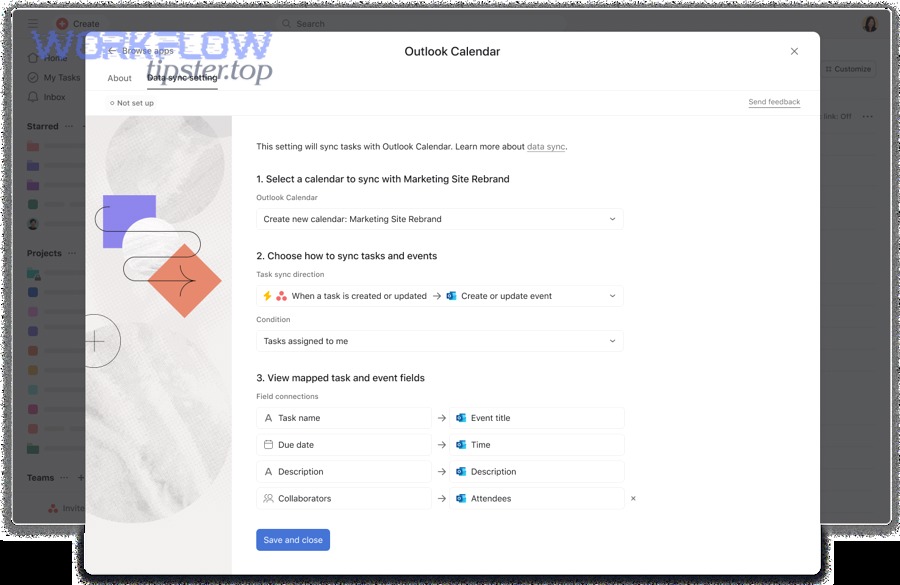
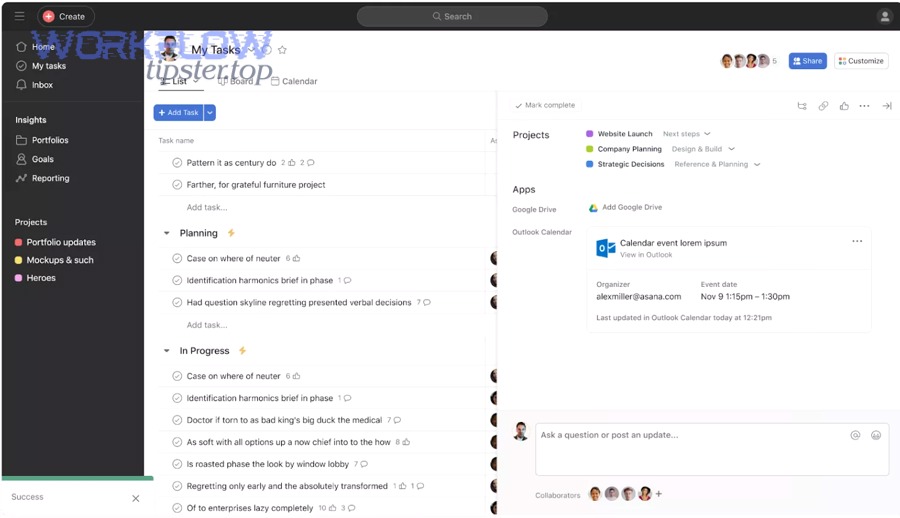
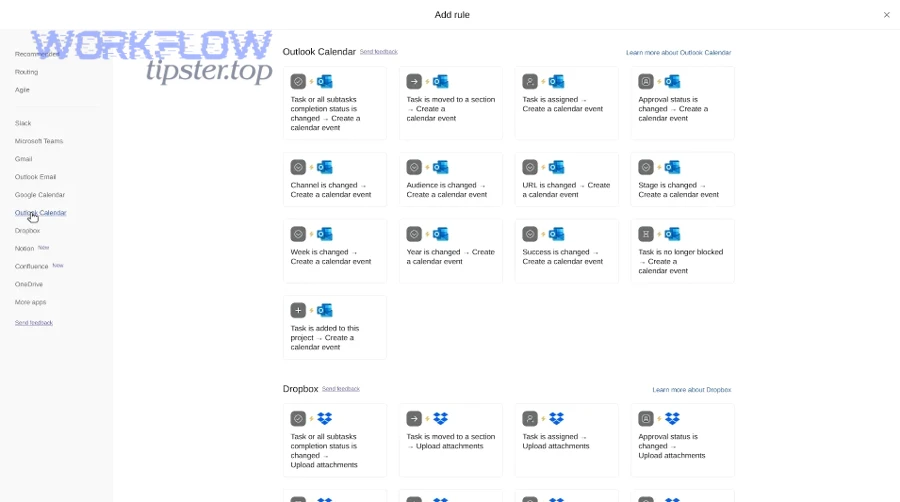
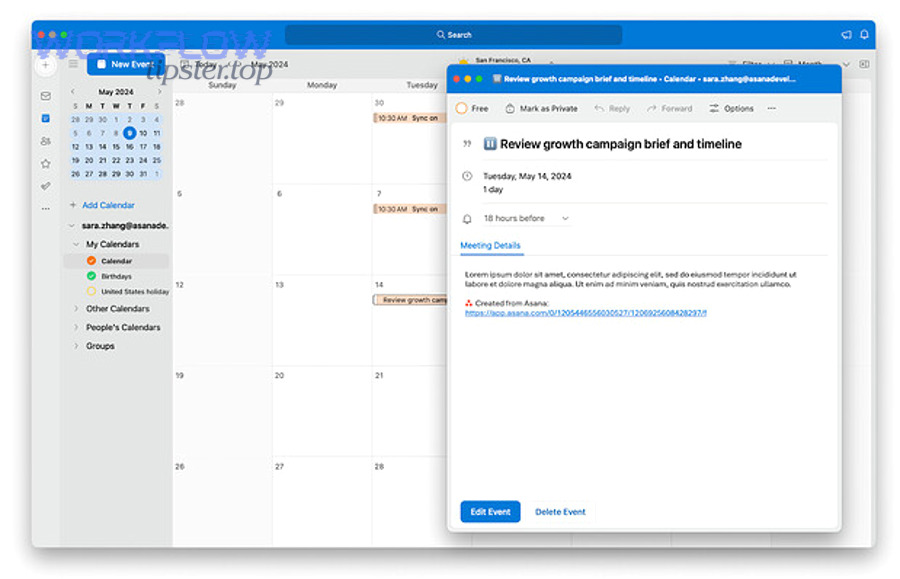
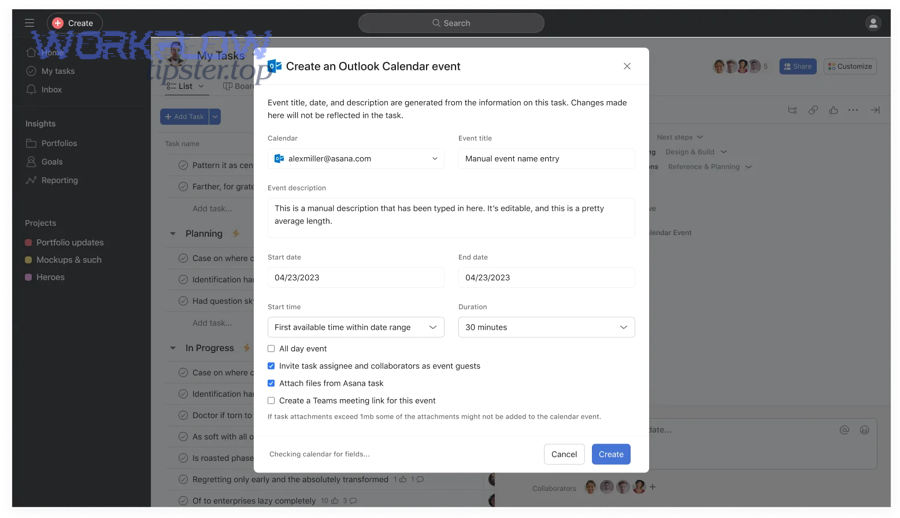
What is the Calendly → Outlook Calendar → Microsoft Teams → Asana scheduling workflow, and what does it automate?
The Calendly → Outlook Calendar → Microsoft Teams → Asana scheduling workflow is an end-to-end scheduling automation system that turns one booking into four outcomes—confirmed time, clean calendar data, a Teams meeting link, and an Asana work record—so remote teams can run meetings as repeatable operations instead of manual coordination.
To better understand why this matters, it helps to treat the workflow like a “handoff chain” where each app owns a specific responsibility: Calendly handles booking logic, Outlook holds calendar truth, Teams provides the meeting room, and Asana tracks the work that makes the meeting valuable.
Which events and data move through the workflow (invitees, time, timezone, meeting link, notes)?
There are two types of objects moving through this chain—calendar objects (availability + events) and work objects (tasks + project context)—and the workflow succeeds only when your team standardizes the data shared between them.
A practical data set to standardize includes:
- Identity data: organizer, host, attendee name, attendee email, company name (if captured)
- Time data: start time, end time, timezone, buffer time, meeting duration
- Event data: event title, event type, location field, description field, cancellation reason (if any)
- Conferencing data: Teams meeting URL, dial-in details (if enabled), meeting ID
- Workflow data: meeting purpose, agenda prompt, intake questions, tags, routing rules (round robin), owner assignment
- Change data: reschedule timestamp, cancel timestamp, “new event vs update event” marker
If you run customer meetings, the intake form in Calendly is your strongest lever: it turns vague bookings into structured context that later becomes the Asana task description and reduces follow-up questions that fragment remote coordination.
Does this workflow reduce double-bookings and scheduling errors?
Yes—this Calendly → Outlook Calendar → Microsoft Teams → Asana scheduling workflow reduces double-bookings and scheduling errors for three reasons: (1) Outlook availability prevents conflicting bookings, (2) the booking writes an event into the correct calendar automatically, and (3) the downstream Asana task preserves meeting intent so details aren’t lost in chat threads.
More specifically, the biggest reduction comes from turning “hidden conflicts” into visible rules. When Outlook is connected correctly, it becomes the gatekeeper that says, “This time is not available,” before Calendly confirms anything. That eliminates the most common manual error: confirming a time that was already taken on another calendar.
The second reduction comes from event consistency. Instead of a person creating an event in Outlook after a booking, the workflow writes the event the same way every time—same title structure, same location format, same time zone logic—so your team stops debugging one-off invite mistakes.
The third reduction happens after scheduling. When the workflow creates an Asana task with the purpose and requirements, your team doesn’t compensate with extra messages like “What was this meeting for?” or “Can you resend the Teams link?”—messages that cause context switching and increase coordination overhead.
According to a study by the University of California, Irvine from the Department of Informatics, in 2008, interrupted work led people to compensate by working faster but with higher stress, frustration, and time pressure, showing why reducing coordination back-and-forth can meaningfully improve the working experience. (ics.uci.edu)
What is the difference between “calendar sync” and “task sync” in this setup?
Calendar sync wins in availability and scheduling accuracy, task sync is best for execution and accountability, and the combined chain is optimal for remote teams who must turn meetings into outcomes.
Next, here’s the key distinction:
- Calendar sync answers: When is the meeting, and can it happen without conflict?
It manages time blocks, invites, conferencing location, and change propagation (reschedule/cancel). - Task sync answers: What must be done before and after the meeting, and who owns it?
It manages preparation checklists, follow-ups, deliverables, and team visibility.
When you rely on calendar sync alone, meetings happen—but the work around them becomes invisible and inconsistent. When you rely on task sync alone, tasks exist—but meetings still get scheduled manually, creating errors and duplicated communication. The workflow’s real advantage is that it treats time and work as one connected system.
How do you set up Calendly with Outlook Calendar so availability and events stay accurate?
Setting up Calendly with Outlook Calendar is a connection-and-rules process where you (1) link the correct Microsoft account, (2) choose the right availability calendar(s), (3) choose the correct event insertion calendar, and (4) define scheduling rules so Outlook remains the single source of truth.
Then, the most important principle is simple: one calendar should represent availability truth for the scheduling chain, even if you maintain multiple calendars for other purposes.
Which Outlook Calendar connection options should you choose for availability and event insertion?
There are two core configuration choices you need to make—availability selection and event insertion—and both choices should match how your team actually operates.
Availability selection (conflict checking):
- Choose the Outlook calendar(s) that contain real commitments.
- Include personal “busy blocks” that would break a booking if ignored.
- If you maintain separate work and personal calendars, decide whether personal busy time should block work bookings (many remote teams say yes, but hide details).
Event insertion (where Calendly writes events):
- Choose the calendar where events should reliably appear for visibility, reminders, and compliance.
- If your organization uses shared calendars for team scheduling, confirm that event insertion to that shared calendar is supported and consistently visible to stakeholders.
A useful operational rule is: availability calendars can be multiple, insertion calendar should usually be one. Multiple availability calendars prevent hidden conflicts; one insertion calendar reduces confusion about where the “official event” lives.
Should you connect a shared mailbox calendar or a personal calendar for team scheduling?
A personal calendar wins in ownership and simplicity, a shared mailbox calendar is best for centralized team scheduling visibility, and a hybrid model is optimal for remote teams that need both governance and flexibility.
Next, choose based on your scheduling model:
- Personal calendar (best for distributed ownership)
Use it when each host owns their own meetings, their workload varies, and accountability is individual. - Shared mailbox / shared calendar (best for centralized operations)
Use it when meetings are operational assets (support calls, interviews, onboarding), coverage must be transparent, and scheduling is a team responsibility. - Hybrid (best for scaling)
Use personal calendars for host availability, but insert operational meetings into a shared calendar for visibility and reporting—if your tools and permissions support it cleanly.
For remote teams, shared mailbox setups often fail not because the idea is wrong, but because permissions are incomplete. If stakeholders can’t see the inserted event or Teams link, the chain breaks socially even if it works technically.
Can you prevent conflicts if you already use Outlook meetings created outside Calendly?
Yes—you can prevent conflicts even when Outlook meetings are created outside Calendly for three reasons: (1) Calendly reads Outlook busy status, (2) Outlook remains the system of record for availability, and (3) buffer rules can prevent back-to-back overload.
More importantly, you prevent conflicts by aligning policies:
- Ensure Outlook events are marked as Busy (not Free) when they should block time.
- Use buffer times (before/after) for context switching, prep, and travel between calls (even virtual travel).
- Standardize “protected blocks” like focus time, lunch, and deep work hours.
If your team uses recurring meetings heavily, treat those as “first-class constraints.” Recurring blocks are the most common reason a scheduling tool looks broken—because the tool is working, but the organization hasn’t decided what should be bookable.
How do you ensure every Calendly booking generates a Microsoft Teams meeting link automatically?
To ensure every booking generates a Microsoft Teams link automatically, you need one consistent conferencing rule—Teams must be the conferencing location for the event type—and you must ensure the meeting link is inserted into the invite in a predictable place.
Below is the practical reason this matters: a remote meeting without a reliable link is functionally a canceled meeting, and teams compensate with chat messages that recreate manual scheduling.
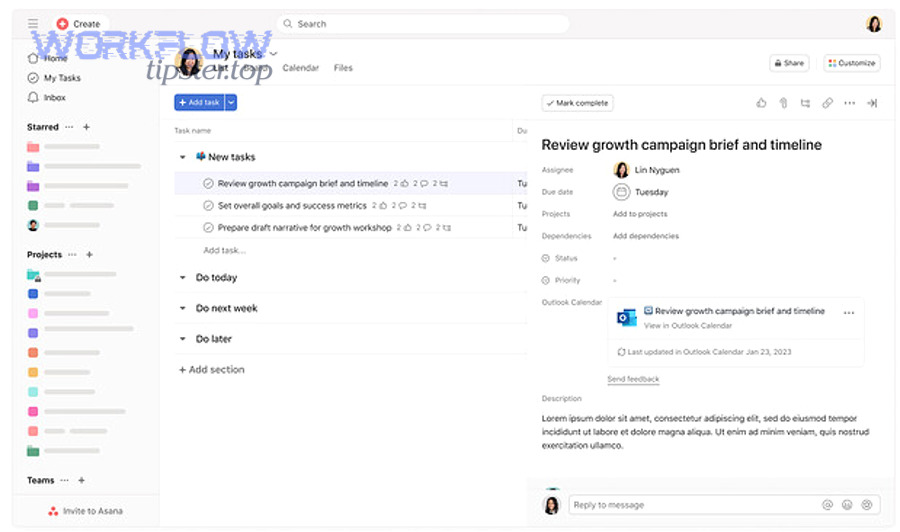
What are the common ways Teams links get duplicated or missing—and how do you fix them?
There are 5 common failure modes for Teams links—each tied to ownership confusion in the chain:
- Two systems try to create conferencing links
Fix: choose one “link authority” (Teams via Calendly integration, or Outlook/Teams policy), then disable competing link generators. - Teams conferencing is not enabled for the Calendly event type
Fix: set Teams as the default conferencing provider for that event type and test a booking end-to-end. - Invite template edits overwrite the location field
Fix: preserve the field where Teams inserts the link; keep a standard “Location:” line or dedicated placeholder. - Permissions block Teams link creation
Fix: confirm the Microsoft account has permission to create Teams meetings and that tenant settings allow it. - Reschedules create new events rather than updating existing ones
Fix: ensure your configuration updates the existing Outlook event and carries the link forward; avoid “new event every reschedule” setups unless you intentionally want that behavior.
A remote team’s fastest test is simple: book, reschedule, cancel. If the Teams link survives reschedule and disappears appropriately on cancel (or clearly marks canceled), you have a resilient chain.
Is it better to create the Teams link from Calendly or from Outlook/Teams directly?
Calendly wins in booking consistency, Outlook/Teams is best for Microsoft-native governance, and a Microsoft-first approach is optimal for organizations with strict tenant policies.
Next, decide based on what you optimize for:
- Create Teams links from Calendly when you want “booking always equals meeting room,” minimal manual steps, and consistent invite formatting.
- Create Teams links from Outlook/Teams when your org mandates specific policies (lobby settings, recording defaults, meeting options) and wants centralized control.
- Use a Microsoft-first governance layer when security settings must be enforced uniformly and audited.
If your organization operates in the Microsoft ecosystem with strict controls, you’ll usually prefer Teams link creation aligned with tenant policy. If your organization prioritizes speed-to-ship and consistent booking experience, you’ll usually prefer Calendly as the trigger point.
Do rescheduled meetings keep the same Teams link across the workflow?
Yes, rescheduled meetings can keep the same Teams link across the Calendly → Outlook Calendar → Microsoft Teams → Asana scheduling workflow for three reasons: (1) reschedules update an existing meeting object, (2) the location/link field remains the same meeting room, and (3) downstream updates reference the same event identity.
However, the “yes” depends on one operational choice: whether your setup updates an existing Outlook event or creates a new one on reschedule. Updating preserves continuity; creating new events increases the odds of duplicated links and duplicated Asana tasks.
To make reschedules safe, treat identity as sacred:
- Use a stable event title pattern.
- Preserve the same meeting ID when possible.
- Avoid manual edits inside Outlook that detach the event from the automation.
According to a study by Stanford University from its Human-Computer Interaction research community, in 2021, remote meetings were associated with measurable patterns of multitasking and distractions, reinforcing why stable meeting links and fewer reschedule frictions can matter for remote execution. (hci.stanford.edu)
How do you route scheduling outcomes into Asana so meetings create work automatically?
Routing scheduling outcomes into Asana is a task-mapping strategy where you define what should be created (task, subtask, project item), when it should be created (booking vs after meeting), and how it should update (reschedule/cancel) so meetings become accountable workflows instead of isolated calendar blocks.
In addition, this step is where many “automation workflows” fail—not because the tools can’t connect, but because teams haven’t defined what “work” means after a meeting is scheduled.
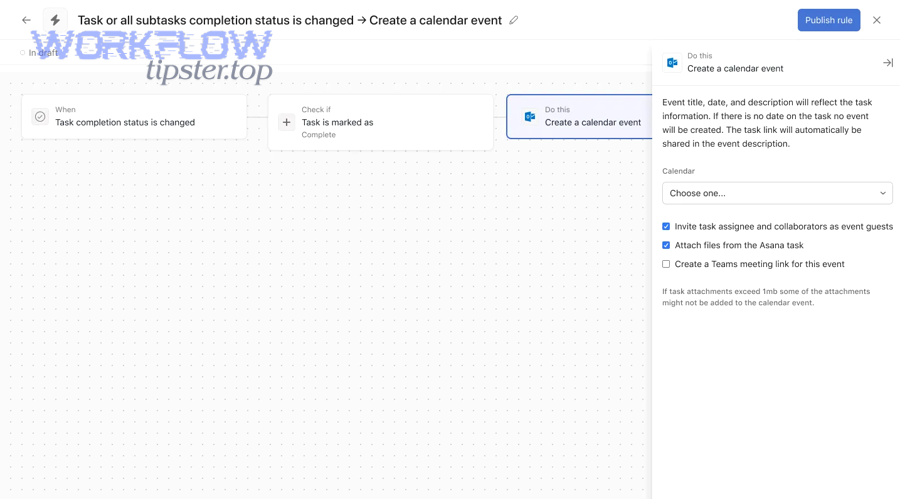
Which Asana task patterns work best for meetings (prep task, follow-up task, agenda task)?
There are 4 practical Asana task patterns for meetings, based on the meeting’s purpose and risk:
- Prep Task (before the meeting)
Best for sales calls, interviews, onboarding, stakeholder reviews.
- Due: 1–24 hours before meeting
- Fields: attendee, objective, doc links, required artifacts
- Subtasks: research, agenda draft, slides, confirmation
- Agenda Task (shared during the meeting)
Best for recurring team meetings and project checkpoints.
- Description: agenda outline + decision log structure
- Subtasks: topics with owners
- Benefit: creates a meeting memory that survives chat apps
- Follow-up Task (after the meeting)
Best for customer success, operations, delivery.
- Due: same day or next business day
- Subtasks: send recap, update CRM, create next steps, schedule follow-up
- Decision/Outcome Task (when meeting creates commitments)
Best for leadership and cross-functional planning.
- Fields: decision owner, deadline, dependencies
- Benefit: prevents meetings from becoming “status theater”
A remote-team best practice is to create one “meeting anchor task” that holds all meeting context (link, notes, outcomes) and then generate subtasks from it, instead of creating multiple disconnected tasks that fragment accountability.
Should you create Asana tasks on booking, on meeting end, or on reschedule/cancel?
Creating tasks on booking wins for preparation, creating tasks on meeting end is best for outcome-driven work, and creating updates on reschedule/cancel is optimal for keeping your project system clean.
Next, here’s how to choose:
- On booking: choose this when preparation is critical and you want owners assigned immediately.
- On meeting end: choose this when outcomes matter more than prep, and you want tasks to reflect what actually happened.
- On reschedule/cancel update: choose this when you want to prevent duplicates and avoid stale tasks.
If you are building a chain for operational clarity, the cleanest model is: create an anchor task on booking, then update its due date/time on reschedule, and mark it canceled/closed with a reason on cancellation.
Can Asana automatically update when a meeting is rescheduled or canceled?
Yes—Asana can automatically update when a meeting is rescheduled or canceled for three reasons: (1) reschedule/cancel events can trigger updates, (2) a unique identifier can match the original Asana task, and (3) update rules can change due dates, statuses, and descriptions consistently.
More specifically, you need a matching strategy so the automation edits the original task rather than creating a new one. The most practical matching key is:
- Event ID (preferred) + attendee email, or
- Event type + original start time + attendee email (fallback)
Then define what “update” means:
- Reschedule → update due date/time, update description with new link/time, add comment “Rescheduled from X”
- Cancel → set status to canceled/closed, add cancellation reason, optionally remove assignee notification spam by using a single update comment
This is where teams often create accidental “work noise.” The fix is not more automation—it’s better identity and idempotency.
What is the best tool path for integrating these apps: native integrations vs Zapier vs Power Automate?
Native integrations win in simplicity, Zapier is best for cross-app flexibility, and Power Automate is optimal for Microsoft-governed environments—so the best tool path depends on whether you prioritize speed, control, or customization.
Let’s explore how that choice plays out in the Calendly → Outlook Calendar → Microsoft Teams → Asana scheduling workflow, because your integration tool determines how you handle edge cases like reschedules, retries, and governance.
What are the typical integration architectures for this workflow?
There are 3 common architectures, based on where you place “integration authority”:
- Native-first + automation bridge
- Calendly ↔ Outlook (calendar sync)
- Calendly ↔ Teams (meeting link)
- Automation tool → Asana (tasks)
Best when you want stability on the calendar side and flexibility for tasks.
- Automation hub
- Calendly triggers automation tool
- Automation tool writes Outlook events, Teams links, and Asana tasks
Best when you want one logic layer, but it requires careful governance and testing.
- Microsoft-first governance
- Outlook/Teams policies control conferencing
- Power Automate handles events and task creation
Best when your organization demands Microsoft tenant control and auditability.
A simple way to pick: if your biggest pain is task follow-through, choose architecture #1. If your biggest pain is scattered logic across tools, choose architecture #2. If your biggest pain is compliance and control, choose architecture #3.
When should remote teams choose Zapier over Power Automate (or vice versa)?
Zapier wins in breadth and speed-to-ship, Power Automate is best for Microsoft-native control, and a hybrid approach is optimal when Teams governance matters but Asana flexibility is required.
Next, choose Zapier when:
- You need fast iteration and wide app coverage.
- You want easy branching logic for multiple event types.
- Your team wants lighter admin overhead.
Choose Power Automate when:
- You need tenant-level governance and standardized policies.
- You must integrate deeply with Microsoft identity and administration.
- You want consistent enforcement of meeting settings and audit trails.
Hybrid is common: let Microsoft govern Outlook + Teams behavior, then use Zapier for Asana task routing where the work taxonomy evolves quickly.
To keep semantic continuity with your operational stack, this is also where teams often connect adjacent workflows—like github to clickup to microsoft teams devops alerts—so schedule-driven work and delivery-driven work share the same collaboration surface without duplicating notifications.
Do you need a paid plan or admin access to make the full workflow work reliably?
Yes, you often need paid plan features or admin access to make this workflow reliable for three reasons: (1) conferencing and enterprise calendar permissions are commonly restricted, (2) automation tools may require premium connectors, and (3) governance settings frequently require tenant-level approval.
More importantly, your need for admin access increases when:
- You use shared mailboxes or shared calendars.
- Teams meeting policies are locked down.
- Your security model requires SSO, conditional access, or approved apps.
If you can’t get admin approval, you can still run a simplified version of the chain—just expect more manual steps and less resilience during reschedules and permission changes.
How do you validate, monitor, and troubleshoot the workflow so it stays clean over time?
You validate and monitor this scheduling chain by testing three lifecycle events (book, reschedule, cancel) and verifying four outputs (Outlook availability, Outlook event, Teams link, Asana task update), because most workflow failures appear during change—not during the initial booking.
Then, you keep the system clean by designing for reality: retries happen, webhooks replay, people edit invites manually, and remote teams operate across time zones.
To make troubleshooting practical, the table below summarizes what each stage “should” produce so you can spot breaks quickly.
Table context: The table maps each stage of the Calendly → Outlook Calendar → Microsoft Teams → Asana scheduling workflow to the expected output, the most common failure symptom, and the fastest fix.
| Stage | Expected output | Common symptom | Fastest fix |
|---|---|---|---|
| Calendly booking | Confirmed time + attendee data | Wrong timezone in confirmation | Standardize timezone settings + test across regions |
| Outlook availability | Conflicts blocked | Double booking still happens | Ensure correct availability calendars selected + events marked Busy |
| Outlook event insertion | Event created/updated | Event goes to wrong calendar | Set one insertion calendar + verify account connection |
| Teams conferencing | Teams link present | Missing/duplicated link | Choose one link authority + fix invite template fields |
| Asana routing | Anchor task created/updated | Duplicate tasks on reschedule | Add unique key matching + update-not-create logic |
What are the most common failure points across Calendly, Outlook, Teams, and Asana?
There are 7 high-frequency failure points, and each can be handled with a predictable response:
- Authentication expiry (tokens expire, permissions change)
Fix: re-auth, standardize admin consent, monitor failures. - Wrong calendar selected for availability
Fix: include the calendar that actually contains busy time. - Wrong calendar selected for event insertion
Fix: enforce one insertion destination for clarity. - Timezone mismatch (especially DST weeks)
Fix: normalize time zones, test DST transitions, standardize locale settings. - Teams link insertion breaks due to template edits
Fix: preserve the location field and avoid manual formatting that removes placeholders. - Asana mapping creates noise (too many tasks or wrong project)
Fix: define routing rules by event type, attendee type, or intake form answers. - Duplicate creation on retries/webhook replays
Fix: idempotency keys + update rules.
This is also where remote teams often unify multiple notification chains. For example, if your engineering team runs gitlab to asana to slack devops alerts, you’ll want the meeting workflow to avoid generating the same kind of alert noise—so scheduling tasks remain actionable instead of flooding channels.
How do you avoid duplicate Asana tasks when multiple systems emit updates?
Avoiding duplicate Asana tasks requires an identity-first design where every meeting maps to exactly one anchor task, and every change updates that task instead of creating a new one.
Next, the simplest duplication-proof model looks like this:
- Create one anchor task on booking
- Name includes meeting type + attendee + date
- Description stores Teams link + Outlook event details
- Custom field stores unique key
- Update the anchor task on reschedule
- Update due date/time
- Append a reschedule note as a comment
- Keep the same unique key
- Close or mark canceled on cancel
- Update status to canceled
- Preserve data for audit and learning
- Optionally create a follow-up task only if needed
The unique key can be something like: event_id + attendee_email, which is stable enough to handle reschedules, retries, and partial failures.
Is manual scheduling ever the better option than integration?
Yes, manual scheduling can be better than integration for three reasons: (1) the volume is low and exceptions are high, (2) compliance rules restrict automation access, and (3) stakeholders frequently change meeting structure in ways that would create automation debt.
However, manual scheduling is “better” only when you intentionally accept its costs:
- More back-and-forth messages
- Higher double-booking risk
- Less consistent meeting follow-through
- More context switching
If you choose manual, protect your team by standardizing templates: one invite template, one naming convention, one shared place for meeting notes, and one default follow-up task pattern. That way you keep some of the workflow benefits even without automation.
Contextual Border: You now have a complete, end-to-end answer for integrating and operating the Calendly → Outlook Calendar → Microsoft Teams → Asana scheduling workflow (including setup, link reliability, task routing, architecture choices, and troubleshooting). The next section expands into micro semantics—edge cases, governance, and rare failure modes that affect remote teams at scale.
What advanced edge cases and governance rules should you plan for in Calendly → Outlook → Teams → Asana automation?
Advanced edge cases and governance rules matter because automation at scale fails most often due to policy, identity, and rare change events, not because the “happy path” booking is hard—so planning for controls is how you keep the workflow reliable over months, not just days.
Besides, this is where the “Integrate vs Manual” antonym becomes operational: integration saves time, but governance determines whether integration is allowed, safe, auditable, and consistent across the organization.
Which enterprise governance controls affect this workflow (SSO, admin consent, data retention, guest access)?
There are 4 governance control groups that commonly change the behavior of this scheduling chain:
- Identity and access (SSO, conditional access, admin consent)
- Controls which apps may connect to Microsoft accounts
- Determines whether service accounts and shared calendars are allowed
- Often breaks integrations after security policy updates
- Meeting policy (Teams meeting options, guest access, lobby settings)
- Controls whether external attendees can join smoothly
- Affects whether recordings/transcripts are allowed by default
- Can alter meeting link behavior and attendee experience
- Data governance (retention, eDiscovery, audit logs)
- Determines whether meeting records, chat, and calendar entries must be retained
- Shapes how you store meeting notes and outcomes in Asana
- Notification governance (channel noise, alert routing)
- Determines where confirmations and updates should live
- Prevents your workflow from becoming another source of distraction
A simple remote-team policy is: keep sensitive meeting details in systems with proper retention and access controls, and use Asana task descriptions for structured, non-sensitive execution context when possible.
How do timezone, daylight saving time, and multi-region teams create scheduling drift—and how do you prevent it?
Scheduling drift happens when the same meeting time is interpreted differently across systems or people, usually due to timezone defaults, DST transitions, or inconsistent locale settings.
More specifically, drift shows up as:
- A meeting appears one hour off for some attendees during DST weeks
- Outlook displays correct time, but downstream tasks use a different timezone interpretation
- Teams link exists, but the calendar invite time causes late joins and missed meetings
Prevent drift with a three-part rule set:
- Standardize timezone handling: set the organizer’s timezone as the authoritative timezone in Calendly and ensure Outlook respects it.
- Include timezone explicitly in confirmations and Asana tasks: “10:00 AM ET / 7:00 AM PT.”
- Run DST regression tests twice per year: create test bookings around the DST boundary to confirm correct behavior.
This isn’t just technical hygiene—it reduces human coordination overhead and lowers the number of “Are we starting now?” messages that derail remote focus.
What are the rare but high-impact duplication scenarios (webhooks, retries, edits from multiple calendars), and how do you design for them?
There are 3 rare but high-impact duplication scenarios, and each requires idempotent design:
- Webhook replay or retry storms
When a service times out, it may retry the same event, creating duplicate tasks.
Design fix: unique keys + “update if exists” logic. - Manual edits inside Outlook
A human edits the invite, changing title/location fields, and the automation no longer matches the event.
Design fix: store immutable identifiers in hidden fields or custom fields in Asana and rely on IDs rather than titles. - Multi-calendar edits
An event is moved between calendars or copied, and both “original” and “copy” trigger downstream actions.
Design fix: define one insertion calendar; treat other calendars as read-only constraints.
These scenarios are “rare” only until you scale. Once multiple coordinators, multiple event types, and multiple regions exist, rare becomes routine unless identity and ownership are explicit.
What is the difference between “integration reliability” and “workflow governance” for remote teams?
Integration reliability is about whether the automation runs correctly; workflow governance is about whether the automation is allowed, safe, auditable, and consistent across the organization.
In addition, remote teams need both:
- If you have reliability without governance, the workflow may work today but break tomorrow due to policy changes, security rollouts, or compliance audits.
- If you have governance without reliability, the workflow may be approved but unused because it creates friction and fails in real work conditions.
The strongest remote teams design for both from the start: they document ownership, define policy constraints, standardize identity keys, and test lifecycle events—so scheduling automation stays a competitive advantage instead of becoming another fragile system to maintain.