


If you want a Calendly booking to reliably create a Google Meet link and turn that scheduled conversation into a tracked Linear issue, the most dependable approach is to treat scheduling as a data pipeline: trigger → validate → map fields → create/update issue → monitor failures.
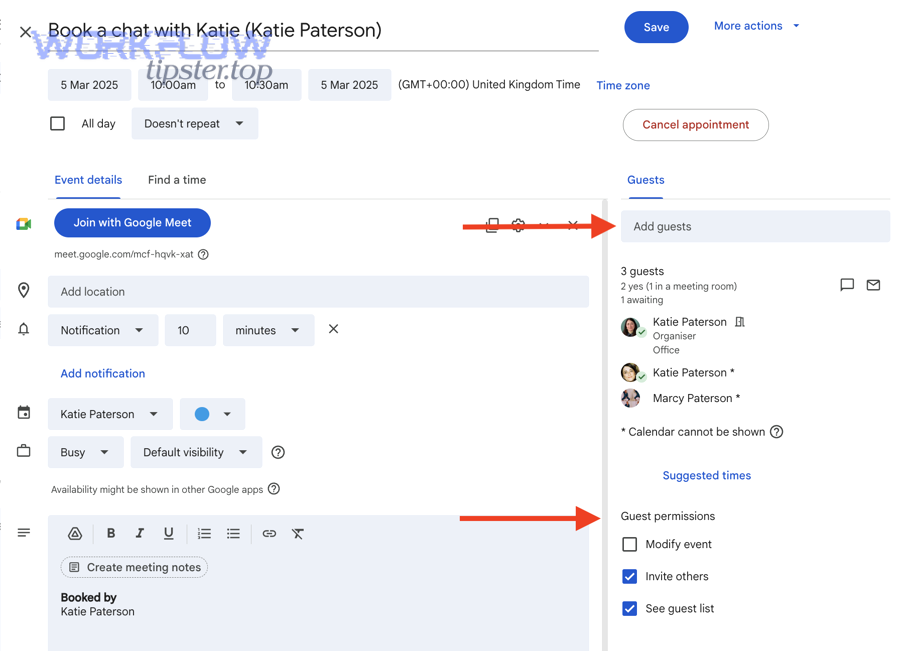
The first thing to get right is the Google Meet side: you must connect Google Calendar so Calendly can automatically add Google Meet conferencing details to the scheduled meeting, otherwise your “meeting link” step becomes inconsistent and breaks downstream automation. (help.calendly.com)
Next, you need a predictable path from “event scheduled” to “issue created/updated,” which usually means using an automation layer that can listen for scheduling events and then call Linear actions—especially if you want deduplication, reschedule handling, and consistent labeling.
Introduce a new idea: once you view scheduling as a workflow that creates work artifacts (not just calendar blocks), you can design automation that stays stable as your team scales—without flooding Linear with duplicates or losing context when meetings move.
What does “Calendly-to-Calendly → Google Meet → Linear scheduling automation” mean in practice?
“Calendly-to-Calendly → Google Meet → Linear scheduling automation” is a workflow chain that converts booked meetings into structured work items by automatically attaching Google Meet details to the calendar event and then creating or updating a Linear issue with the same meeting context. (help.calendly.com)
To begin, it helps to picture the flow as three linked outputs:
- Scheduling output (Calendly): an event is created (scheduled/rescheduled/canceled) with a unique identity and consistent metadata.
- Meeting output (Google Meet): the conferencing link is generated and attached to the invite + notifications.
- Work output (Linear): a trackable issue is created/updated so the meeting results in action, not memory.
In product teams, the practical “why” is simple: meetings are expensive, and tracking is fragile. When scheduling automatically creates a work artifact (a Linear issue), you get:
- A single source of truth for agenda, owners, and follow-ups
- A consistent triage process (labels, priority, status)
- A searchable history for decisions and customer context
Which events should trigger the automation: scheduled, rescheduled, canceled, or no-show?
There are 3 main trigger types you should implement—Scheduled, Rescheduled, and Canceled—based on the meeting lifecycle, and each trigger should map to a distinct update behavior in Linear to avoid duplicates and confusion. (zapier.com)
Then, connect the trigger choice to the operational outcome:
- Scheduled → Create issue (or update if already exists)
Create the Linear issue once, using a durable dedupe key. - Rescheduled → Update the same issue
Update time fields, add a comment, and keep the issue ID stable. - Canceled → Close or label + comment
Avoid deleting; instead, close the issue or apply a “canceled” label.
If you want to handle no-shows, treat them as a derived status rather than a trigger (because most scheduling tools don’t emit a “no-show” event reliably). A simple pattern is: if the meeting time passes and no notes/outcome are recorded, add a “needs follow-up” label.
Trigger design guardrails that prevent noise:
- Exclude internal test event types (e.g., names containing “TEST”)
- Add a “minimum lead time” rule (ignore bookings created <2 minutes ago if you see double-fires)
- Route only external invitees to Linear if your team meets internally at high frequency
What data must flow from the booking into the Linear issue to keep it actionable?
There are 2 layers of data that should flow into the Linear issue—minimum viable context and enrichment—based on whether the issue needs to be actionable immediately or simply trackable. (zapier.com)
Minimum viable context (do not skip):
- Meeting title / event type name
- Start time, end time, timezone
- Invitee name + email (or account identifier)
- Host/owner
- Meeting link (Google Meet URL)
- Scheduling source link (booking/reschedule URL if available)
Enrichment (adds leverage, not clutter):
- Agenda / questions captured during booking
- UTM/source fields (marketing attribution)
- Company/domain extracted from invitee email
- “Purpose tag” (demo, discovery, triage, interview, customer call)
- Notes or intake form responses
A practical writing pattern for the Linear issue description is:
- Top: who / when / where (Meet link)
- Middle: agenda + intake answers
- Bottom: structured checklist for outcomes (decision, next step, owner, due date)
Do you need an automation platform (Zapier/Make/n8n), or can this be done natively?
Yes—you typically need an automation platform to create/update Linear issues consistently, because while Calendly can automatically add Google Meet conferencing details, Linear work creation usually requires a connector or API-based action layer for reliable “event → issue” workflows. (help.calendly.com)
More importantly, “native” setups break the moment you need any of these:
- Deduplication (idempotency)
- Conditional routing (different event types → different Linear teams)
- Reschedule/cancel synchronization
- Monitoring, retries, and failure alerts
If you’re comparing options, most teams start with no-code because it’s fast, then move to API/webhooks only when requirements become strict.
Which approach is best: no-code connectors vs custom API/webhooks?
No-code connectors win in speed, custom API/webhooks win in control, and a hybrid approach is best when you need both fast iteration and strict reliability. (zapier.com)
Here’s the comparison in operational terms:
- No-code (good default):
- Faster to ship
- Easier for non-engineers to maintain
- Built-in retries (varies by platform)
- Limits: advanced branching, complex dedupe, detailed observability
- Custom API/Webhooks (best for strict systems):
- Full control over dedupe keys and update logic
- Better logging and audit trails
- Can enforce data minimization and security policy
- Costs more to build and maintain
Decision rule most product teams can use:
- Start with no-code if your goal is “working automation in a day.”
- Go custom when duplicates, reschedules, or compliance requirements start costing real time.
What permissions and accounts are required to connect everything safely?
You need least-privilege access across three systems—calendar/conferencing, scheduling, and issue tracking—so the automation can read event metadata and create/update issues without granting broad admin control. (help.calendly.com)
Use these principles:
- Prefer a shared service account for automation ownership when possible (so workflows don’t break when an employee leaves).
- Avoid “god-mode” permissions when a narrower scope exists.
- Document the ownership model: who rotates tokens, who owns failures, who approves changes.
Calendly’s help guidance for multi-user organizations highlights that each user must connect their Google account and Google Calendar before using Google Meet for events, which is an important governance detail for teams. (help.calendly.com)
How do you build the end-to-end workflow step by step?
The best method is a 6-step build process—prerequisites → connect accounts → choose triggers → map fields → create/update Linear issues → test and monitor—so your automation produces consistent Google Meet links and a single Linear issue per meeting. (help.calendly.com)
Below is a practical build sequence that works across most platforms.
Step 1: Set prerequisites (so Meet links are predictable)
- Connect Google Calendar so Calendly can add Google Meet details automatically. (help.calendly.com)
- Ensure event types are standardized (names, durations, buffers).
- Decide what “success” means (e.g., issue created within 2 minutes).
Step 2: Choose a trigger matrix (so lifecycle is covered)
Use triggers for:
- Event Scheduled
- Event Rescheduled
- Event Canceled (zapier.com)
Step 3: Map fields (so the issue is actionable)
Create a mapping doc that includes:
- Title template
- Description template
- Labels/priority rules
- Team/project routing rules
Step 4: Create the Linear issue (and store a dedupe key)
You’ll either:
- Create issue (first time)
- Update issue (if meeting already has one)
Linear supports extending functionality via API/webhooks, which is why an automation layer can reliably build this integration behavior. (linear.app)
Step 5: Write back identifiers (so updates are stable)
Store one of these back into your automation storage:
- Linear issue ID
- Meeting unique key
- Calendar event ID (if available)
Step 6: Test failure modes (so it stays stable)
Run tests for:
- Same invitee books twice
- Reschedule 3 times
- Cancel after reschedule
- Timezone edge cases
To illustrate the flow, here’s a simple table showing what each lifecycle event should do. (This table maps scheduling lifecycle events to Linear behaviors so the automation stays consistent as meetings change.)
| Scheduling lifecycle event | Linear behavior | Notes |
|---|---|---|
| Scheduled | Create issue (or update if exists) | Use dedupe key to prevent duplicates |
| Rescheduled | Update same issue + comment | Never create a new issue |
| Canceled | Close or label + comment | Keep history for reporting |

How do you ensure the Google Meet link is generated and captured reliably?
You ensure reliability by requiring a connected Google Calendar and using Google Meet as the event location, because Calendly can then automatically add Google Meet conferencing details to the scheduled meeting and include them in notifications and calendar events. (help.calendly.com)
Then, apply three practical safeguards:
- Standardize location settings per event type
Ensure the event type explicitly uses Google Meet as location (not “ask invitee”). - Validate the Meet link before issue creation
If your platform supports filters, block the Linear step unless the meet URL field exists. - Add a fallback path
If no Meet link is present, label the Linear issue “needs meeting link” and notify an owner.
Calendly documents that the Meet details are automatically included once the connection is set up; treat that as your baseline contract for “link exists.” (help.calendly.com)
How do you create the right Linear issue automatically (team, project, priority, labels)?
There are 4 main routing rules—team, project, labels, and priority—based on meeting type and invitee context, and these rules let you create a Linear issue that lands in the right workflow without manual triage. (zapier.com)
A practical routing model:
- Event type → Team
“Customer discovery” → Product, “Bug triage” → Engineering, “Hiring screen” → Recruiting. - Invitee domain/account → Project
Enterprise accounts → “Strategic Accounts” project, trials → “Onboarding” project. - Intake answers → Labels
“Integration request” label, “pricing” label, “security” label. - Seniority/impact → Priority
If the meeting is with leadership or a high-value customer, set higher priority.
If you need a fast template, add a “Meeting Outcome Checklist” to every issue:
- [ ] Decision captured
- [ ] Next step defined
- [ ] Owner assigned
- [ ] Due date set
- [ ] Summary posted to stakeholders
How do you prevent duplicates and keep updates consistent when meetings change?
You prevent duplicates by making the automation idempotent, meaning the same meeting always maps to the same Linear issue via a stable deduplication key, and reschedules/cancellations update that issue rather than creating a new one. (zapier.com)

Specifically, duplicates usually come from one of these causes:
- Multiple triggers firing (polling + webhook)
- “Create issue” step running without a prior lookup
- Reschedules treated as “new bookings”
- Two organizers running the same automation in parallel
A helpful mental model is: one meeting = one issue = many updates.
Evidence: According to a study by University of California, Irvine from the Department of Informatics, in 2008, researchers found people completed interrupted tasks faster with no difference in quality, but at the cost of higher stress and frustration—exactly the tradeoff you see when teams manage scheduling changes manually instead of systematizing them. (ics.uci.edu)
What is the best deduplication key: event UUID, calendar event ID, or invitee email + start time?
Event UUID wins for uniqueness, calendar event ID wins for calendar consistency, and invitee email + start time is a fallback that’s easiest to implement but most fragile under reschedules. (zapier.com)
Compare the options:
- Event UUID (best if available):
- Survives reschedules
- Doesn’t collide across invitees
- Works even when multiple people schedule the same host
- Calendar event ID (great if you treat calendar as canonical):
- Reliable when Meet link and conferencing details live there
- Depends on calendar connection consistency across users
- Invitee email + start time (last resort):
- Breaks on reschedules (time changes)
- Breaks on group meetings (multiple invitees)
- Can collide if two meetings start at the same time
Practical recommendation: Use event UUID as primary key, and store the Linear issue ID alongside it in your automation storage so every future event update can “find then update.”
How should reschedules and cancellations update the Linear issue?
There are 3 main update behaviors—time update, lifecycle labeling, and outcome logging—based on whether the meeting was rescheduled or canceled, and these behaviors keep the Linear issue aligned with reality without losing history. (zapier.com)
Use a clear policy:
- Rescheduled
- Update title/time fields
- Add an automated comment: “Rescheduled from X to Y”
- Keep status the same (unless you use a “scheduled” status)
- Canceled
- Add label “canceled”
- Add comment: “Canceled by invitee/host”
- Close issue or move to a “No Meeting” state (team preference)
- Repeated changes
- Never create new issues
- Append comments chronologically for auditability
Is this workflow reliable enough for product teams using Linear as a system of record?
Yes—this workflow is reliable enough when you (1) enforce Google Calendar prerequisites for Meet links, (2) implement deduplication and update logic, and (3) monitor failures with retries and alerts so Linear stays accurate even as scheduling changes. (help.calendly.com)

The reliability question is really a governance question: “Will the system behave the same way every time?” You get that consistency by designing for the most common failure points instead of hoping they never happen.
What are the most common failure points, and how do you monitor them?
There are 4 common failure points—auth drift, missing Meet link, trigger duplication, and API/connector errors—and you monitor them by logging each run, alerting on failures, and running a lightweight daily reconciliation check. (help.calendly.com)
Failure point 1: Authorization drift (tokens, disconnected accounts)
Symptom: workflow suddenly stops creating issues
Fix: use shared ownership + token rotation policy
Failure point 2: Missing Meet link
Symptom: issue created without join URL
Fix: validate Meet link field; route to manual review if empty (help.calendly.com)
Failure point 3: Duplicate triggers
Symptom: two issues created for one meeting
Fix: lookup-before-create + idempotency key
Failure point 4: Linear action errors
Symptom: issue not created/updated
Fix: retries + dead-letter queue + notification to owner (linear.app)
A simple monitoring stack:
- Run log: one entry per trigger
- Alert: notify on failures and missing required fields
- Daily reconciliation: sample-check yesterday’s meetings vs created issues
How do you test the automation before rolling it out to the whole team?
You test it with a 7-case scenario suite—standard booking, reschedule, cancel, repeated reschedules, timezone shift, multiple hosts, and edge-case invitees—so you can verify “one meeting = one issue” and confirm that Meet links and updates are always captured. (help.calendly.com)
A lightweight acceptance checklist:
- ✅ Exactly one issue per meeting (no duplicates)
- ✅ Reschedules update the existing issue within a defined time window
- ✅ Cancellations label/close correctly
- ✅ Meet link exists or gets flagged
- ✅ Labels/priority match routing rules
Contextual Border: The core workflow above answers the primary intent (build a reliable scheduling → meeting link → issue chain). The remaining section expands micro-level choices—platform comparisons, advanced routing, and governance patterns that reduce manual work.
Which advanced configurations make this scheduling automation faster, safer, and more scalable for teams?
Advanced configurations focus on routing depth, governance, and edge-case resilience, so the workflow stays stable as volume increases and you avoid the antonym outcome—manual busywork instead of automation. (linear.app)

This is where your process becomes a playbook rather than a one-off automation. If you publish internal guidance (or a public guide) under a recognizable series name like WorkflowTipster, you also reduce support load because teammates follow one standard pattern.
And if your organization runs multiple “automation workflows” across departments, this chain becomes one reusable template among others—like “airtable to microsoft excel to onedrive to docusign document signing”—where consistent triggers, logging, and governance are what actually make automation sustainable.
How do you compare Zapier vs Make vs n8n for this exact workflow chain?
Zapier is best for fast setup, Make is strong for visual scenario building, and n8n is ideal when you want developer-grade control and self-hosting—so the “best” choice depends on whether you optimize for speed, flexibility, or ownership. (zapier.com)
Use these criteria:
- Branching & routing complexity (event types → teams → projects)
- State storage (where you keep dedupe keys + issue IDs)
- Retries & error handling (does it recover automatically?)
- Observability (can you see what happened and why?)
If you already manage multi-step flows such as “calendly to outlook calendar to zoom to linear scheduling,” favor the platform where you can reuse the same monitoring patterns and data mapping style across chains.
What Linear-specific enhancements improve the workflow (templates, cycles, triage labels, assignees)?
There are 4 Linear-specific enhancements—issue templates, triage labels, default assignees, and consistent workflow states—that make meeting-created issues easier to process and report on. (linear.app)
Practical enhancements:
- Create an issue template called “Meeting Follow-up”
- Add labels like:
meeting,customer,triage,decision-needed - Auto-assign based on host/owner
- Use a consistent status path:
Triage→In Progress→Done
How do you handle rare edge cases: multiple timezones, round-robin handoffs, and concurrent reschedules?
You handle rare edge cases by normalizing timezones, choosing a single canonical meeting key, and enforcing “update-only” logic under reschedules so concurrency cannot create duplicates. (help.calendly.com)
Three concrete techniques:
- Timezone normalization: store UTC internally; render local time in descriptions
- Round-robin handoffs: set the Linear assignee to the final host, not the booking owner
- Concurrent reschedules: treat the latest update as canonical; append earlier changes as comments
What are the security and compliance considerations (least privilege, auditability, data minimization)?
Security and compliance are strongest when you apply least privilege, keep an audit trail of automation runs, and minimize PII in issue fields—so your integration stays safe without sacrificing usefulness. (linear.app)
A simple “safe vs risky” checklist :
- Safe: service account ownership, limited scopes, minimal PII, run logs retained
- Risky: personal account ownership, broad admin access, storing sensitive notes in issues, no audit trail
If your team treats Linear as a system of record, these controls are what keep the record trustworthy over time.