


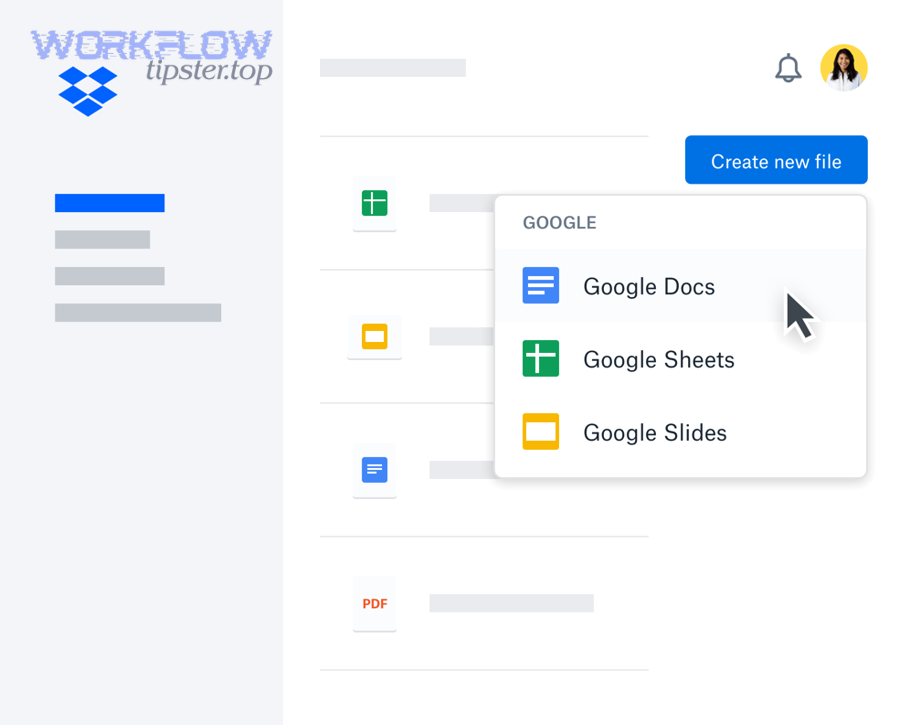
If your team wants “Dropbox to Google Docs” to work smoothly, the most reliable approach is to use the Dropbox–Google integration so people can create, organize, and share Google Docs from Dropbox while the files live in Google and appear in Dropbox as shortcuts. (help.dropbox.com)
Most searches around this keyword also hide a decision: are you trying to integrate (work across both tools) or migrate (move everything from Dropbox into Google Drive/Workspace)? Those are different outcomes, with different owners (end users vs admins) and different risks. (support.google.com)
If you’re planning a larger change—like moving entire departments—Google Workspace also offers an admin-facing Data Migration Service designed to migrate content (including permissions) from a Dropbox business account into Google Workspace accounts. (support.google.com)
Finally, many teams want “Dropbox to Google Docs” to mean automation, like generating a Doc when a file lands in a Dropbox folder or routing drafts through approvals. Introduce a new idea: once the integration path is clear, you can layer in workflow automation without turning your document system into a messy “almost-sync.” (zapier.com)
What does “Dropbox to Google Workspace Docs” mean for teams—integration, sync, or migration?
“Dropbox to Google Workspace Docs” is a team workflow choice: integration helps you create and manage Google Docs from Dropbox, “sync” usually means consistent organization rather than true two-way mirroring, and migration is a one-time move of Dropbox content into Google Drive/Workspace. (help.dropbox.com)
Next, to avoid the most common failure—choosing the wrong method—separate these three meanings before you touch settings or move files.
A practical way to think about it is: integration = work, migration = move, sync = expectation management. When teams skip this step, they often end up with duplicate folders, broken ownership, and confusing access rules.
Here’s the decision logic your team can use:
- Choose integration if your team likes Dropbox as the organizing hub (folders, navigation, internal habits) but prefers Google Docs for real-time editing and collaboration.
- Choose migration if leadership wants Google Drive/Workspace to become the system of record and Dropbox is being phased out.
- Choose “standardized organization” if the real problem is inconsistent folder structure, naming, and permissions—not the tools themselves.
To make this even more concrete, the table below compares what you get when you interpret “Dropbox to Google Docs” in each of the three popular ways.
| Interpretation | Best for | Where the Google Doc “lives” | What shows up in Dropbox | Primary owner |
|---|---|---|---|---|
| Integration | Create/edit Docs while organizing in Dropbox | Google account/Workspace | Shortcut to the Google file | Team leads + end users |
| Migration | Move Dropbox content into Google Workspace | Google Drive/Workspace | Often nothing (post-move) | Google Workspace admin |
| “Sync” (practical) | Keep structure consistent across tools | Usually one chosen system | Depends on your policy | Ops/IT + team leads |
What is the difference between integrating Docs in Dropbox vs migrating Dropbox files to Google Drive?
Integration wins in day-to-day collaboration, migration is best for platform consolidation, and “sync” only works when you choose a single source of truth. (help.dropbox.com)
Specifically, integration keeps your team’s Dropbox habits intact (folders, organization), while Google Docs remains the live editing surface. Migration, on the other hand, is about changing where your organization stores and governs files—often for cost, compliance, or standardization.
In real workflows:
- Integration is reversible and incremental (pilot a folder, expand gradually).
- Migration is operationally heavy (scope, permissions mapping, reporting, change management).
Which approach fits your team’s goal: create/edit Docs, keep folders aligned, or move everything?
There are 3 main paths based on the outcome your team wants: (1) create/edit Docs from Dropbox, (2) align organization across tools, or (3) migrate everything into Workspace. (help.dropbox.com)
Then, match the path to your constraint:
- Path 1: Create/Edit Docs from Dropbox
Use the Dropbox integration with Google so users can create Docs/Sheets/Slides in Dropbox and collaborate in Google. - Path 2: Align Organization
Choose a “home” system (Dropbox or Drive) and use shortcuts/links + strict naming conventions instead of chasing true two-way sync. - Path 3: Migrate Everything
Use admin-grade migration to reduce risk and preserve permissions at scale.
A good rule: if the project has a deadline, legal risk, or many departments, treat it as migration planning—not a casual “sync.”
Can you create and manage Google Docs directly inside Dropbox for team collaboration?
Yes—your team can create and manage Google Docs in Dropbox because (1) it reduces app switching, (2) keeps Dropbox folder organization familiar, and (3) still uses Google’s real-time collaboration features in Docs. (help.dropbox.com)
To begin, “Yes” only stays “Yes” when you understand where the document is actually stored and how permissions flow across systems.
Dropbox’s own guidance is clear: when you create Google Docs (or Sheets/Slides) from Dropbox, the files save to your Google account and Dropbox organizes shortcuts to those Google files. (help.dropbox.com)
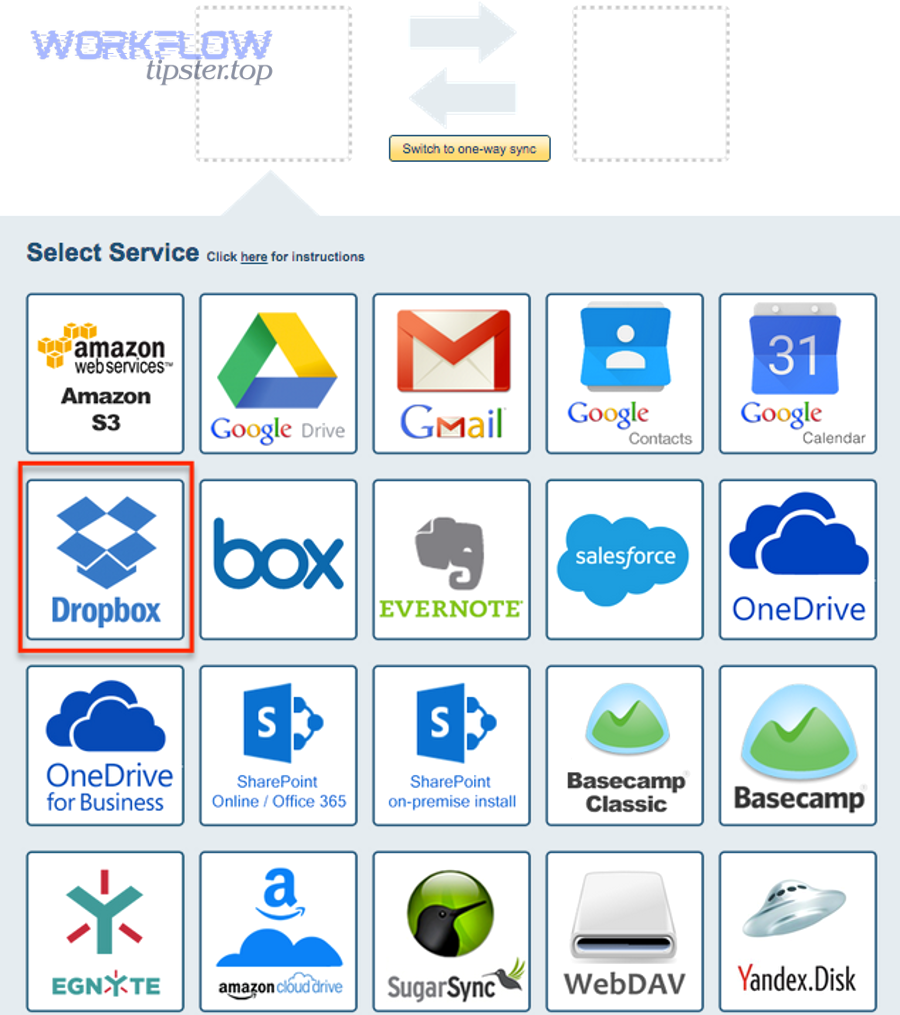
How do Google Docs created from Dropbox get stored—and what is a “shortcut” in Dropbox?
Google Docs created from Dropbox are stored in Google, and a Dropbox “shortcut” is a pointer inside your Dropbox folder structure that opens the Google file without duplicating it. (help.dropbox.com)
More specifically, this “shortcut model” is why the integration feels seamless: your team continues to browse Dropbox folders, but when someone opens a “Dropbox-contained” Google Doc, they’re really opening the Google-hosted file.
Operationally, this has big implications:
- Storage accounting: the document consumes space in Google storage, not Dropbox (though Dropbox still stores the shortcut metadata).
- Single source of truth: there is only one Doc, not a copy in each tool.
- Change history: the edit history and collaboration features remain Google-native.
If your team’s mental model is “Dropbox stores everything,” correct that early; it prevents confusion when admins later ask, “Why isn’t this file in Dropbox storage reports?”
What permissions and sharing rules matter most for teams using Dropbox + Google Docs?
The most important permissions rules are (1) identity alignment, (2) folder access expectations, and (3) link-sharing governance, because those three decide whether shortcuts open smoothly and whether collaborators can edit without “request access” loops. (help.dropbox.com)
Besides, “permissions” here has two layers:
- Dropbox layer (organization layer)
Who can see the shortcut in a Dropbox folder? Who can share the folder? - Google layer (content layer)
Who can open/edit the Doc once clicked? Is it shared to specific people, a group, or your organization?
Practical team rules that prevent churn:
- Use a consistent policy for who owns Docs (a shared Workspace account, a department owner, or the document creator). Ownership decisions become painful later during offboarding.
- Prefer Google Groups (or department groups) for recurring access. It keeps permissions manageable when people change roles.
- Decide whether “anyone with the link” sharing is allowed. If it’s allowed in Google but not in Dropbox policy, you’ll create a governance gap.
How do you connect Dropbox to Google Workspace Docs step-by-step without breaking team access?
Connecting Dropbox to Google Workspace Docs is best done with a 5-step pilot rollout—link accounts, confirm identity rules, test a pilot folder, validate sharing, then scale—so teams get Google Docs collaboration inside Dropbox without permission surprises. (help.dropbox.com)
Then, treat this like a mini-deployment, not a one-click toggle, because “it works for me” often hides “it fails for new hires or external collaborators.”
A safe, repeatable rollout looks like this:
- Choose the identity standard (Workspace account only vs allowing personal Google accounts)
- Link Dropbox and Google accounts for a small pilot group
- Create a pilot folder in Dropbox with a clear purpose (e.g., “Q1 Planning – Pilot”)
- Create one Doc from Dropbox and confirm shortcut behavior + editing permissions
- Write the team rules (naming, ownership, sharing expectations), then scale
What prerequisites should you confirm before connecting (accounts, SSO, Workspace vs personal Google)?
Before connecting, confirm (1) your team uses the same identity standard, (2) your admin policies allow third-party storage/provider connections, and (3) your shared-folder design matches your Google sharing model. (support.google.com)
More specifically, check these items:
- Identity alignment: Work email addresses should match across systems when required by policy. Google’s own guidance for using Docs with third-party storage notes that you may need the same email address and that Workspace admins can control whether third-party providers are allowed. (support.google.com)
- Admin approvals: If you’re in a regulated org, confirm the integration is permitted (and whether link-sharing must be restricted).
- Shared folders vs Shared drives: If your team relies on shared spaces, ensure your Google Drive/Workspace structure supports that collaboration model.
- External collaborators: If you work with agencies or vendors, define whether they must use Google accounts under your domain, as guests, or via link sharing.
A small but critical prerequisite: decide whether your team will treat Dropbox as the navigation layer and Google as the content layer. Once everyone agrees, adoption becomes much smoother.
How do you validate the setup with a “pilot folder” before rolling out to the whole team?
You validate the setup by running a simple 10-minute pilot script: create a Doc from Dropbox, confirm the shortcut appears, share it to an internal group, test edit rights, test comment-only, and confirm offboarding behavior for a test user. (help.dropbox.com)
To illustrate, use this checklist:
- Create one Google Doc inside the pilot Dropbox folder.
- Confirm that Dropbox shows a shortcut (not a duplicate file). (help.dropbox.com)
- Share the Doc to:
- one teammate (direct share)
- one group (department group)
- one external email (if allowed)
- Ask each person to:
- open from Dropbox
- edit one line
- add one comment
- Remove one person’s Google permission and confirm:
- the shortcut still appears in Dropbox (if they have folder access)
- the Doc access is blocked at open-time (Google permission layer)
This pilot makes hidden problems obvious, such as “Dropbox folder access exists, but Google Doc access doesn’t,” which feels like a bug to end users.
Do you need “sync” between Dropbox folders and Google Docs, or just consistent organization?
Dropbox–Google integration usually needs consistent organization, not true two-way sync, because (1) Google Docs live in Google, (2) Dropbox shows shortcuts rather than mirrored files, and (3) real sync expectations create duplicates and access conflicts. (help.dropbox.com)
However, you can still deliver the experience people mean by “sync”: I find my Docs in the same place every time, and my team always has access.
Here’s the key mindset shift: sync is a promise. If you can’t guarantee it operationally, don’t market it internally as “sync.” Market it as “Dropbox-organized Google Docs.”
What stays in Dropbox vs what stays in Google Drive when you use the integration?
With the integration, Dropbox keeps the organization (folders + shortcuts) while Google Drive/Workspace keeps the actual Docs content, collaboration features, and storage. (help.dropbox.com)
Specifically:
- Dropbox is where users browse and place the Doc “entry point.”
- Google is where:
- the Doc is stored
- the version history lives
- real-time collaboration happens
This model is a feature, not a compromise—because it prevents “split brain” documents. The trade-off is that admins must manage governance in both places: Dropbox for folder visibility and Google for content permissions.
When should you avoid “fake sync” and instead standardize on one system of record?
You should avoid “fake sync” when governance, audits, or scale matter, because standardizing on one system of record prevents (1) duplicate copies, (2) inconsistent permissions, and (3) confusion during employee offboarding. (support.google.com)
In addition, standardization is the right call if:
- You have compliance requirements that demand a single retention and eDiscovery policy.
- Your org frequently reorganizes teams (permissions change often).
- You need predictable ownership and lifecycle management of documents.
A practical rule: if the phrase “legal hold,” “retention policy,” or “audit trail” appears in your meetings, stop thinking “sync” and start thinking “system of record.”
Should your team migrate Dropbox to Google Drive, and what is the safest migration method?
Yes—your team should migrate Dropbox to Google Drive when (1) Workspace is becoming the system of record, (2) you need centralized governance and reporting, and (3) you want to preserve folder structure and permissions at scale. (support.google.com)
Next, the “safest” method is the one that matches your org size and risk: for many Workspace customers, the admin-facing Data Migration Service is designed specifically for this scenario. (support.google.com)
Migration is not just a file transfer; it’s a permission and ownership transfer. So you should define scope, ownership mapping, and rollback strategy before moving anything.
How does Google Workspace’s Data Migration Service move Dropbox files and permissions?
Google Workspace’s Data Migration Service can migrate files, folders, and associated permissions from a Dropbox business account into Google Workspace accounts through the Admin console workflow. (support.google.com)
More specifically, Google’s guidance frames it as an admin console process: you plan the migration, connect the source (Dropbox business), define scope, and run the job while monitoring progress with reporting. (support.google.com)
A useful operational sequence:
- Plan: decide which users/team folders are in-scope, and confirm naming/Drive structure rules.
- Migrate: run the service and watch logs to catch failures early.
- Launch: lock down where new work should be created (post-migration policy) so you don’t keep generating new Dropbox content.
One subtle but important point: migrations typically copy into the destination, and your organization decides later what to deprecate or archive in the source. That reduces risk because you can validate the destination before you cut over.
What is the best migration option for your scenario (small team vs enterprise)?
Admin migration wins for enterprise governance, manual export/import works for small teams, and third-party migration tools fit complex edge cases where mapping and transformations matter most. (support.google.com)
To better understand the trade-offs, compare by three criteria: scale, permission fidelity, and reporting.
- Small team (light governance, low risk)
Manual approaches can work if you have limited permissions complexity and a clear cutover date. - Mid-to-large org (permission complexity, audit needs)
Use admin-grade migration so permissions and ownership don’t collapse into “everyone owns everything.” - Complex org (multiple domains, large shared structures, strict compliance)
Consider specialized tools if you need advanced mapping, staged cutovers, or transformation rules.
Even if you choose an enterprise migration approach, you still need user enablement: “Where do I create new Docs tomorrow?” is the question that decides whether migration sticks.
Can you automate Dropbox ↔ Google Docs workflows for teams without code?
Yes—you can automate Dropbox ↔ Google Docs workflows without code because (1) triggers can detect new Dropbox files/folders, (2) actions can create Google Docs from templates, and (3) automation reduces repetitive admin work like routing and notifications. (zapier.com)
Then, the most important decision is not “Can we automate?” but “Which automations reduce cycle time without creating document chaos?”
This is where teams often introduce an “Automation Integrations” layer: your core workflow stays simple (integration or migration), while automation handles repetitive steps like turning structured input into consistent Docs, generating drafts, or routing approvals.
A note on the linked phrases you asked for: this section is also where cross-tool automations often appear, such as “activecampaign to slack” alerts when a contract draft is ready, “google docs to stripe” when a billing document is approved, or “airtable to calendly” when onboarding data triggers meeting scheduling—those are adjacent patterns that use the same automation logic.
Which automations are most useful (create docs from templates, route files, notify Slack/Teams)?
There are 7 high-impact automation types teams use most, based on where friction happens: creation, standardization, routing, review, archiving, visibility, and compliance logging. (zapier.com)
Specifically, the most useful patterns are:
- Create a Google Doc from a template when a Dropbox folder appears
Example: new client folder → create “Client Brief” Doc with placeholders. - Create a Google Doc when a new Dropbox file lands in a folder
Zapier provides templates like creating Google Docs documents from new Dropbox files in folders. (zapier.com) - Auto-generate standardized docs for onboarding
Example: new hire form → generate offer checklist Doc, policy Doc, and training Doc. - Route approvals and add visibility
Example: when “Ready for review” folder changes, notify a channel and request comments. - Archive older versions
Example: when a Doc changes status, save a PDF export or snapshot for compliance. - Create tracking logs
Example: when a doc is created, log metadata to a spreadsheet or database. - Notify stakeholders at the right moment
Example: document created → ping manager; document approved → ping finance.
If you want one guardrail: automate creation and routing first, and avoid automating “copy everywhere,” which recreates the duplicate-file problem.
What are the key automation limitations you must plan for (polling delays, watched folder constraints)?
The key limitations are polling delays, watched-folder scope, and permission mismatches, because no-code tools typically check for changes on a schedule, may require specific folder selection, and cannot override your underlying Dropbox/Google permission model. (zapier.com)
More specifically:
- Polling delay: many automation triggers don’t fire instantly; they run on scheduled checks (which affects “real-time” expectations). (zapier.com)
- Watched folder constraints: if your organization has many folders, you must define which ones matter for automation; otherwise you create noise.
- Permission mismatch: automation runs as a specific connected account. If that account can’t access a folder or create Docs in the right Workspace location, the automation fails silently or produces “request access” loops.
Evidence matters here because it explains why training and governance are not optional: According to a study by the University of Makati from the College of Computing and Information Sciences, in 2025, Google Workspace was rated “Very Effective” for promoting teamwork with a mean score of 4.61, but the study also highlighted adoption and storage limitations as practical challenges. (arxiv.org)
Contextual Border: At this point, your team has the core path (integration vs migration), understands shortcuts vs storage, and can automate safely. The remaining work is advanced: governance, edge cases, and troubleshooting at scale.
What advanced issues affect Dropbox–Google Docs at scale (governance, edge cases, and troubleshooting)?
At scale, Dropbox–Google Docs workflows are most affected by governance alignment, identity edge cases, and troubleshooting discipline, because these determine whether collaboration remains predictable as teams grow, contractors rotate, and security policies tighten. (help.dropbox.com)
To better understand why scale breaks “simple setups,” look at what changes as you grow:
- More shared spaces and cross-functional projects
- More external collaborators
- More offboarding events
- More compliance requirements
When those increase, the gap between “folder visibility” (Dropbox) and “file access” (Google) becomes the #1 source of frustration—and the #1 source of accidental over-sharing if you don’t define clear rules.
Why do some users get blocked by Google Workspace vs personal Google account rules?
Users get blocked when Workspace policies restrict third-party storage usage or sharing modes, and when identity mismatches occur (work email in one tool, personal email in the other), because that breaks the permission chain and forces repeated access requests. (support.google.com)
In practice, prevention looks like:
- Require work identities for work Docs (policy + onboarding).
- Use groups for access rather than individual shares.
- Create a documented process for external collaborators (guest accounts, link policies, or dedicated vendor spaces).
How do you troubleshoot missing shortcuts, access-denied errors, or ‘can’t edit’ situations?
There are 5 main troubleshooting groups: shortcut visibility, Google permission, ownership, link scope, and automation identity. (help.dropbox.com)
Specifically, run this checklist in order:
- Is the shortcut visible in Dropbox?
If no, it’s a Dropbox folder permission issue. - Does the Doc open when clicked?
If no, it’s a Google permission/identity issue. - Can the user edit or only view/comment?
If view-only, check Google sharing role and link scope. - Who owns the Doc?
Ownership often explains why edits are restricted after employee changes. - If automation created the Doc, what account created it?
Automation accounts can accidentally own documents and block others unless you plan for it.
Evidence that collaboration tools can meaningfully change outcomes (when configured and adopted) is well documented in education research: According to a study by Bangkok University’s Language Institute, in 2014, students who collaborated using Google Docs achieved higher post-test writing mean scores than face-to-face groups and reported positive attitudes toward the tool. (files.eric.ed.gov)
What governance practices reduce risk (naming, retention, audit trails, shared drive strategy)?
Risk drops when you standardize naming, ownership, sharing roles, retention boundaries, and where “final” documents live, because these five rules prevent duplicate copies and reduce permission drift over time. (support.google.com)
A governance baseline that works for most teams:
- Naming conventions: include project, date, and status (Draft/Review/Final).
- Ownership policy: define whether Docs are owned by individuals, departments, or service accounts.
- Sharing defaults: groups first, individuals second; limit public links unless required.
- Retention boundary: decide where “final records” live (often Google Drive/Workspace if you’re standardizing).
- Shared space strategy: define whether Dropbox shared folders or Google shared drives are the primary collaboration hub for each team.
When is it better to remove the integration and standardize on one platform?
It’s better to remove the integration when complexity outweighs benefit, especially if (1) governance requires one system of record, (2) users keep creating duplicates due to confusion, and (3) offboarding repeatedly breaks access and ownership. (support.google.com)
In short, the integration is ideal when Dropbox is your organizing layer and Google Docs is your collaboration layer. But if your organization is clearly moving toward a single standardized platform, a planned migration—plus strict “new work goes here” rules—will usually outperform a hybrid approach over the long run. (workspaceupdates.googleblog.com)