


Connecting Dropbox to Microsoft Teams is the fastest way to share, preview, and collaborate on Dropbox files inside Teams without forcing everyone to download and re-upload documents into a new storage system. If you follow a simple setup flow—install the Dropbox app, sign in, and verify permissions—you can post Dropbox links in chats and channels that remain a single source of truth.
Next, many readers want to know whether Dropbox can even be added to Teams in their organization—because Teams admin policies, app permissions, and the “new Teams” experience can change where the option appears. The answer is usually yes, but it depends on how your tenant allows third-party apps and whether users are permitted to install them.
Then, once Dropbox is connected, the practical question becomes: how do you actually share files in a way that teammates can open instantly—especially across chats vs channels—without broken links, duplicate copies, or confusing permission prompts. The core is choosing the right sharing method (link vs upload), setting link scope correctly, and using channel organization features like tabs.
Introduce a new idea: after the basics work, you can significantly reduce friction by adding governance rules, troubleshooting common sign-in or preview issues, and standardizing a “link-first” workflow—so the integration stays reliable as your Teams grows.
What does it mean to “connect and integrate Dropbox to Microsoft Teams”?
Connecting and integrating Dropbox to Microsoft Teams is a cloud-storage integration that links your Dropbox account to Teams so you can search, share, and preview Dropbox content in conversations while files remain stored and permissioned in Dropbox.
To better understand what “integration” changes (and what it doesn’t), start by separating everyday collaboration features from migration concepts.
What can you do in Teams after you connect Dropbox?
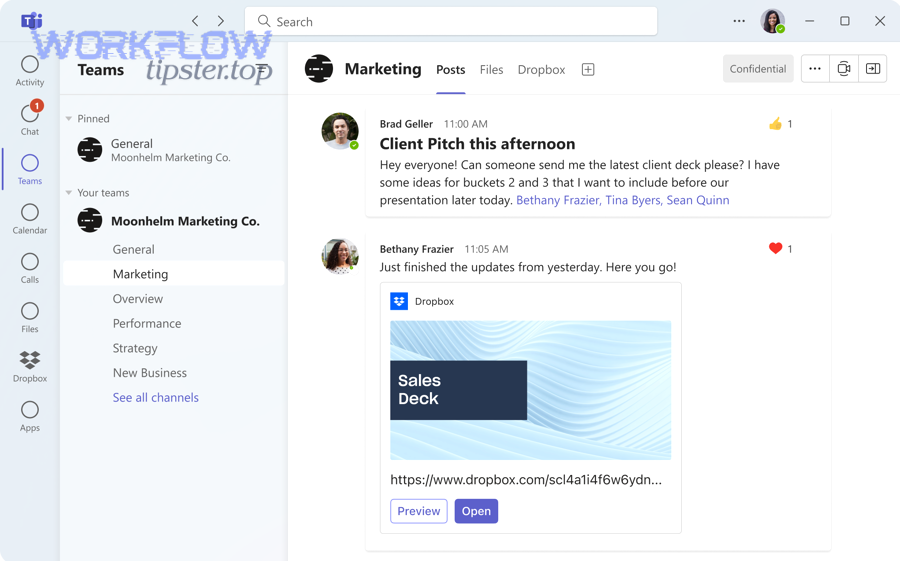
You can search, share, preview, and collaborate on Dropbox files directly in Teams—mainly by posting Dropbox links that open the right file version with the right access controls.
Specifically, the integration turns Teams into a collaboration “surface,” while Dropbox remains the system that controls storage, versions, and link permissions.
- Share from chat or channel context: Post a Dropbox link in a 1:1 chat, group chat, or channel so everyone sees the same file reference (not separate copies).
- Preview common file types: Many organizations rely on quick previews so teammates decide whether they need to open the file fully.
- Reduce “where is the file?” confusion: Teams becomes the conversation layer; Dropbox becomes the content layer.
- Keep version history centralized: When you link to a file instead of uploading a copy, edits happen against one authoritative file.
A useful way to frame this is: Teams holds the discussion; Dropbox holds the document. Once you adopt that mental model, most sharing decisions become obvious—link when you want a single source of truth, upload only when you intentionally want a detached copy.
How is “Dropbox in Teams” different from “migrating Dropbox to Microsoft 365”?
Dropbox wins for “keep files in Dropbox and collaborate from Teams,” while migration is best when your goal is to move storage into SharePoint/OneDrive for long-term Microsoft-native governance and retention.
However, the difference is not cosmetic—it changes where files live, who governs permissions, and what “sharing” actually means.
Dropbox in Teams (integration):
- Files remain in Dropbox
- Permissions are enforced by Dropbox sharing settings
- Teams messages contain Dropbox links
- Best for teams that already rely on Dropbox workflows but want Teams as the communication hub
Migration to Microsoft 365 (SharePoint/OneDrive):
- Files move to SharePoint/OneDrive
- Permissions are governed by Microsoft 365 policies
- Teams “Files” experiences become more native
- Best for organizations standardizing everything inside Microsoft’s storage ecosystem
In other words, integration = connect; migration = move. If you only want Dropbox files to be usable inside Teams, you usually want integration—because migration is a project, not a toggle.
Can you add Dropbox to Microsoft Teams?
Yes, you can add Dropbox to Microsoft Teams in most environments because Teams supports third-party apps, Dropbox provides an official Teams integration, and users can connect accounts through a secure sign-in flow—assuming your admin policies allow it.
Then, the key is verifying who is allowed to add the app and where Teams exposes third-party storage in your version.
Do you need a Teams admin to enable Dropbox?
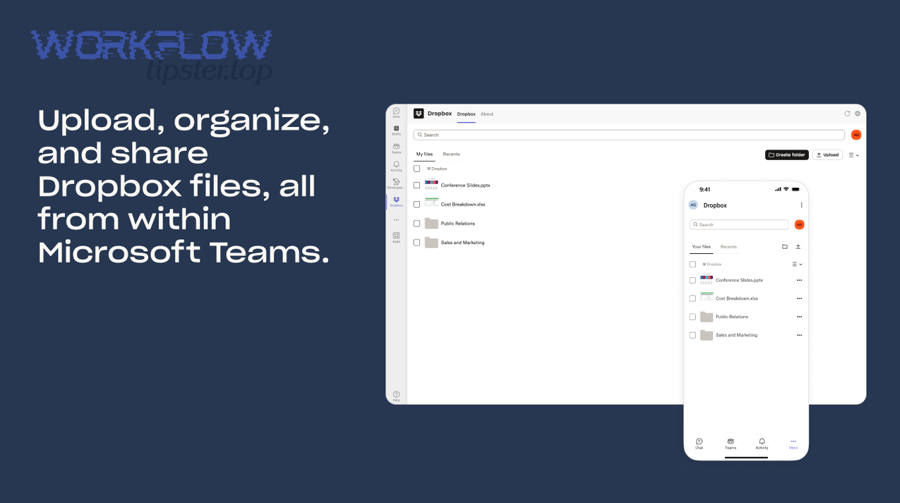
It depends—some tenants allow users to install the Dropbox app themselves, while others require a Teams admin to approve or deploy it—because app permission policies control which third-party tools appear in Teams.
More specifically, you’ll run into one of these two realities:
- User-install allowed: You can add Dropbox from the Teams app store, sign in, and start sharing.
- Admin-managed apps: You can see Dropbox but can’t install it (or you can’t see it at all) until an admin enables it.
If you’re blocked, the fix is usually not “try again,” but “change the policy.” The practical move is to ask your admin to confirm:
- Third-party apps are allowed
- Dropbox is allowed in the app permission policy
- Users are allowed to add apps (or Dropbox is pinned/deployed centrally)
What prerequisites must be true before connecting?
There are 6 prerequisites to connect Dropbox to Microsoft Teams: (1) a Teams account, (2) a Dropbox account, (3) permission to add apps, (4) an allowed app policy, (5) browser/auth access for sign-in, and (6) appropriate Dropbox sharing permissions.
Below, these prerequisites prevent the most common “it installed but doesn’t work” situations.
Account and access prerequisites
- You can sign into Microsoft Teams on the correct tenant (work/school vs personal context matters).
- You can sign into the correct Dropbox account (personal vs business/team account).
Teams environment prerequisites
- Your organization allows third-party apps (or specifically allows Dropbox).
- Your Teams experience is up to date, because some UI paths differ across versions.
Security and network prerequisites
- Your environment allows the authentication window or redirect flow used for sign-in.
- Conditional access/SSO policies are configured so Dropbox sign-in can complete.
Dropbox permission prerequisites
- You can access the files you plan to share.
- Your organization’s Dropbox sharing policies permit the link scope you intend to use (team-only vs anyone-with-link, etc.).
When these prerequisites are met, the rest of the setup becomes a straightforward how-to, not a troubleshooting session.
How do you connect Dropbox to Microsoft Teams step by step?
You connect Dropbox to Microsoft Teams by installing the Dropbox app and completing a 6-step sign-in and permissions flow that enables Dropbox search, link sharing, and previews inside Teams conversations.
To begin, decide whether you’re connecting as an end user or rolling out as an admin, because the steps look similar but the control points differ.
What are the end-user steps to connect Dropbox inside Teams?
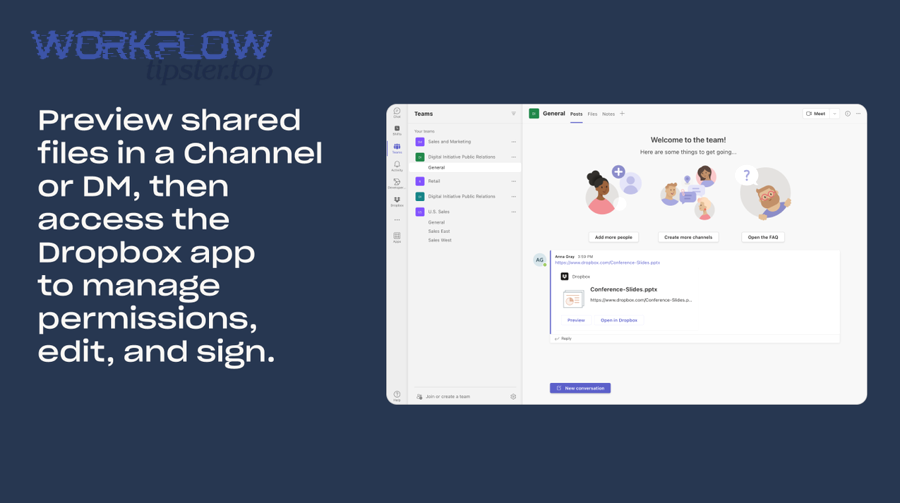
There are 6 main end-user steps to connect Dropbox inside Teams: find the Dropbox app, add it, sign in, grant permissions, test a share, and verify teammate access.
Specifically, follow this sequence to avoid partial connections that later break previews or sharing.
- Open the Teams app store (Apps) and search for Dropbox.
- Add/install Dropbox in Teams (you may see “Add,” “Open,” or “Install” depending on your client).
- Sign in to Dropbox when prompted (choose the correct account).
- Approve the permissions (this lets Teams interact with Dropbox content you have access to).
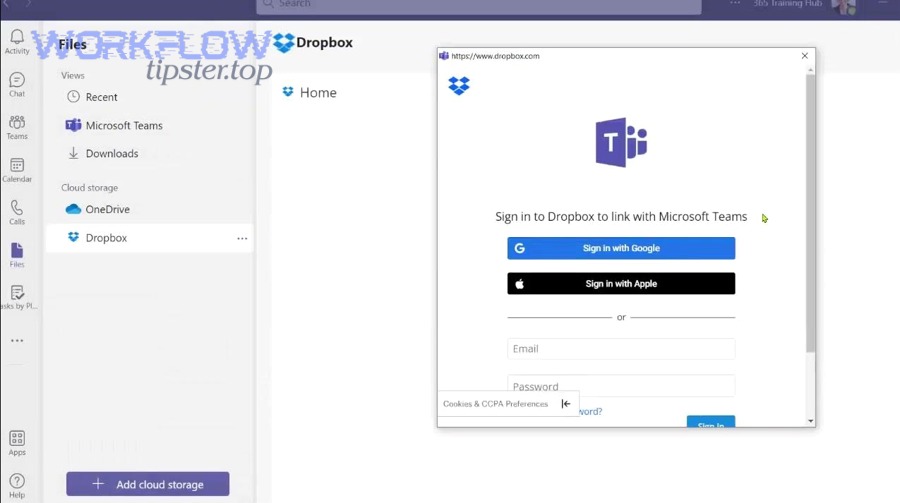
- Test a share in chat: paste a Dropbox link to a file you own or can access.
- Verify access: ask a teammate to open the link; confirm they don’t hit a permission wall.
Practical caution: If the file opens for you but not for others, that’s not a Teams problem—it’s a Dropbox sharing scope problem. Fix the link permissions at the source and re-share the correct link.
What are the admin steps to deploy/allow Dropbox for everyone?
There are 5 main admin steps to deploy Dropbox for Teams: allow the app, assign the policy, optionally pin it, document expected behavior, and pilot before broad rollout.
Moreover, the admin’s job is less “click install” and more “make it predictable at scale.”
- Allow Dropbox in Teams app policies (ensure it’s not blocked).
- Assign the policy to the correct user groups (departments, regions, or pilots).
- Pin Dropbox to the Teams sidebar or make it discoverable (optional but reduces user friction).
- Create a short internal guide .
- Pilot with a representative group (include guests, mobile users, and cross-team channels).
A simple pilot is valuable because remote and hybrid collaboration can become less connected when tool usage is inconsistent. According to a study by UC Berkeley’s Haas School of Business, in 2021, company-wide remote work was associated with employees spending about 25% less time collaborating across groups, making intentional collaboration structures more important.
How do you share Dropbox files in Teams (chat and channels)?
You share Dropbox files in Teams most effectively by using Dropbox links (not re-uploaded copies) in a 3-step pattern—choose the right file, set link access, and post the link in the right Teams context—so everyone works from one source of truth.
Then, the big decision is whether you’re sharing in a chat (fast, direct) or a channel (organized, persistent).
What’s the best way to share a Dropbox file in Teams?
The best way to share a Dropbox file in Teams is to paste a permissioned Dropbox share link in the relevant chat or channel so recipients open the same file version with the correct access level.
For example, a “team-only” link is ideal for internal collaboration, while “specific people” links are safer for sensitive files.
Use this practical checklist before you hit send:
- Confirm file ownership or access: You must be able to open the file yourself in Dropbox.
- Set the link scope intentionally: team-only, specific people, or restricted.
- Name the file clearly before sharing: names become the “mental index” in Teams threads.
- Add one sentence of context: what you need from others (review, edit, approve) and by when.
If your team frequently asks “which version is current,” you are probably uploading copies instead of linking. Switching to link-first sharing is the fastest fix.
Dropbox link sharing vs uploading a file to Teams—what’s better and why?
Dropbox link sharing wins for single-source-of-truth versioning, uploading is best for quick disposable copies, and “link + channel tab” is optimal for ongoing team collaboration because it combines immediacy with structure.
However, the right choice depends on governance, editing expectations, and how often the file will change.
To make the decision easy, this table contains the practical differences that matter in day-to-day work.
| Criteria | Share a Dropbox Link | Upload a Copy to Teams |
|---|---|---|
| Version control | Strong (one file in Dropbox) | Weak (creates duplicates) |
| Permission model | Dropbox permissions apply | Teams/SharePoint permissions apply |
| Best for | Ongoing collaboration, living docs | One-off sharing, quick reference |
| Risk of broken access | Medium (if link scope is wrong) | Low for internal Teams members, higher for guests |
| Storage duplication | Low | High |
A useful rule: If the file will be edited again, link it. Uploading copies tends to create “thread versions,” where each message carries a different file that looks identical but isn’t.
How do you add a Dropbox folder or file as a tab in a Teams channel?
You add a Dropbox folder or file as a tab in a Teams channel by using the channel tab feature in 4 steps—open the channel, add a tab, select Dropbox, choose the folder/file, and save—so the channel has a stable, always-visible content hub.
Next, pick tab targets that match the channel’s purpose, because tabs work best when they reduce repeated sharing.
Which channel scenarios work best with a Dropbox tab?
There are 5 channel scenarios that work best with a Dropbox tab: shared project deliverables, team onboarding assets, recurring reporting folders, sales/marketing collateral libraries, and cross-functional “working sets” that people must find repeatedly.
More specifically, tabs reduce friction when the same content is referenced across weeks or months.
High-fit examples
- Project channel: Tab a “Project Deliverables” folder so the latest assets are always one click away.
- Marketing channel: Tab “Brand Assets” so people stop re-posting the same logo packs.
- Operations channel: Tab “SOPs” so new staff can self-serve documentation.
- Sales enablement channel: Tab “Pitch Decks” so reps always use current versions.
- Leadership updates channel: Tab “Weekly Metrics” for consistent reporting.
The tab strategy works because it complements Teams’ conversational flow: chats and posts are time-based, while tabs are structure-based. Combining both creates a balanced workspace.
Can guests and external users access Dropbox content shared in a channel?
Yes, guests and external users can access Dropbox content shared in a Teams channel if the Dropbox link scope permits it, the guest is authenticated appropriately, and your organization’s sharing policies allow external access.
However, guest access fails most often because one of those three conditions is missing.
Here are the three checks that solve most guest issues:
- Link scope: “Specific people” usually works best—invite the guest explicitly rather than using public links.
- Account alignment: Confirm whether the guest must sign in to a Dropbox account (and which email).
- Org policy: Some tenants restrict external sharing by domain; if the domain is blocked, the link won’t work.
A practical best practice is to test guest access with one “external pilot” user before you declare the integration ready for partner collaboration.
What permissions and security settings matter most for Dropbox–Teams file sharing?
There are 4 permission pillars that matter most for Dropbox–Teams file sharing—identity, link scope, folder roles, and organization policies—because these determine who can open a shared link, what they can do with the file, and whether access persists over time.
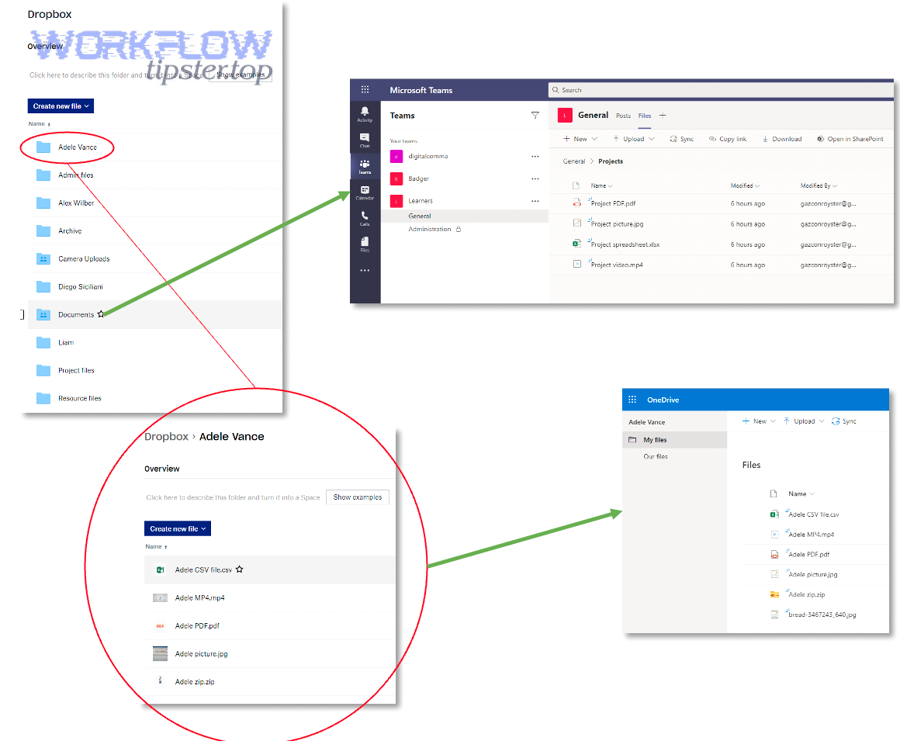
To illustrate how these pillars prevent broken links and accidental oversharing, treat permissions as part of your workflow—not a last-minute checkbox.
What are the common permission configurations (and when to use each)?
There are 4 common permission configurations: team-only links, specific-people links, shared-folder membership access, and public/anyone links—based on how broadly you want to distribute access.
In addition, each configuration fits a different risk level.
1) Team-only links (internal default)
- Best for: internal teams, standard projects
- Benefit: fast access for the right audience
- Risk: can still overshare if the “team” is large
2) Specific-people links (sensitive collaboration)
- Best for: confidential docs, HR/legal, partner reviews
- Benefit: strongest control without friction
- Risk: requires correct email identity and invites
3) Shared-folder membership (ongoing teams)
- Best for: long-running programs and departments
- Benefit: stable access and clearer governance
- Risk: requires membership hygiene (remove ex-members)
4) Anyone/public links (rarely recommended)
- Best for: public resources you truly intend to publish
- Benefit: zero friction for viewers
- Risk: high—accidental exposure and uncontrolled distribution
In modern work, distractions and interruptions already cost time; unclear access adds another layer of friction. Research summarized from UC Irvine has found that it can take over 20 minutes to fully return to a task after an interruption—so reducing “access request loops” is a productivity win when done safely.
Team-wide access vs “specific people” access—what’s safer for Teams collaboration?
Team-wide access wins for speed, “specific people” is best for security, and shared-folder membership is optimal for ongoing teams because it balances stable access with role-based control.
Meanwhile, the safest choice depends on two criteria: sensitivity of content and volatility of membership.
A simple decision rule you can adopt:
- Choose team-wide when the content is low risk and membership is stable.
- Choose specific people when the content is sensitive or when you’re collaborating with external partners.
- Choose shared folders when the same group will collaborate repeatedly over time.
If you want a governance-friendly default, set “team-wide” as the normal pattern and reserve “specific people” for exceptions—then document those exceptions clearly.
What are the most common problems when integrating Dropbox with Teams—and how do you fix them?
There are 7 common Dropbox–Teams integration problems—sign-in failures, wrong account connections, missing app availability, permission errors, preview failures, tab loading issues, and broken links—and each can be fixed by tracing the symptom back to either policy, identity, or link scope.
Below, use a symptom-first checklist so you don’t waste time “reinstalling everything” when only one setting is wrong.
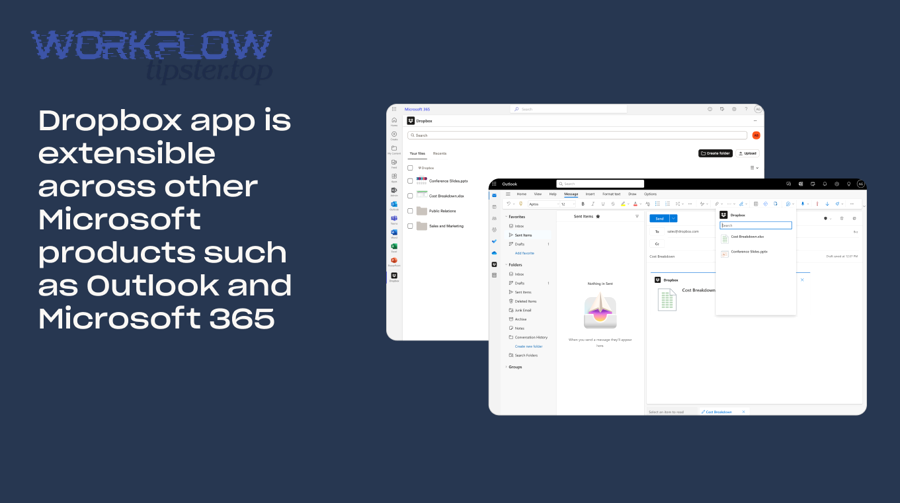
Why can’t you sign in to Dropbox from Teams?
You usually can’t sign in to Dropbox from Teams because third-party apps are blocked, the OAuth/SSO flow is interrupted, or your security policies (MFA/conditional access) prevent the authentication handshake from completing.
More specifically, fix sign-in by checking the following in order:
- Policy check: Is Dropbox allowed in Teams app policies?
- Client check: Are pop-ups/redirects allowed for the sign-in window?
- Identity check: Are you signing into the intended Dropbox account?
- Security check: Does your environment require SSO or specific authentication methods?
If you’re in an enterprise environment, the “best fix” is often administrative: enable Dropbox in the appropriate policy and publish a short sign-in guide.
Why can’t teammates open a Dropbox link posted in Teams?
Teammates can’t open a Dropbox link in Teams most often because the link scope is too narrow, they’re signed into the wrong Dropbox identity, or external sharing restrictions block their domain.
However, you can solve most issues with three quick checks.
Check 1: Link scope
- If the link is “Only you,” nobody else can open it.
- If the link is “Specific people,” verify the person’s exact email identity.
- If the link is “Team,” confirm the teammate is in that team.
Check 2: Identity alignment
- Teammates may be signed into a different Dropbox account in their browser.
- Ask them to open in a private window or confirm which account is active.
Check 3: Org restrictions
- Some organizations block external sharing or limit it to approved domains.
- If the teammate is external, confirm the partner domain is allowed.
A practical Teams habit: when you share a link, add a short note like “Access: team-only” or “Invited: john@partner.com” so troubleshooting is instant if someone hits an access wall.
Why don’t previews or tabs load correctly?
Previews or tabs don’t load correctly because of unsupported file types, network/content restrictions, client version issues, or authentication sessions expiring between Teams and Dropbox.
Especially in larger organizations, preview issues are often the result of security hardening—so the fix is aligning user experience with policy.
- Test a different file type (a simple PDF or DOCX) to rule out format limitations.
- Open the link in a browser to confirm the file itself is accessible.
- Re-authenticate if your session expired—sign out/in to refresh tokens.
- Check client updates (some integration behaviors differ by Teams version).
- Validate network rules if embedded previews are blocked by security policy.
Evidence matters because tool reliability affects collaboration. According to a working paper from Stanford Graduate School of Business on a large-scale work-from-home experiment, home-based workers increased productivity by 13%, highlighting how stable digital workflows can support performance when people rely on remote collaboration.
How can you optimize Dropbox–Teams workflows for speed, governance, and fewer broken links?
You can optimize Dropbox–Teams workflows with 5 practices—link-first sharing, standardized permissions, channel tab hubs, a lightweight governance checklist, and a pilot-based rollout—so Teams conversations stay fast while Dropbox content stays consistent and accessible.
Next, treat optimization as a “workflow design” problem, not a “feature hunt,” because consistency beats cleverness at scale.
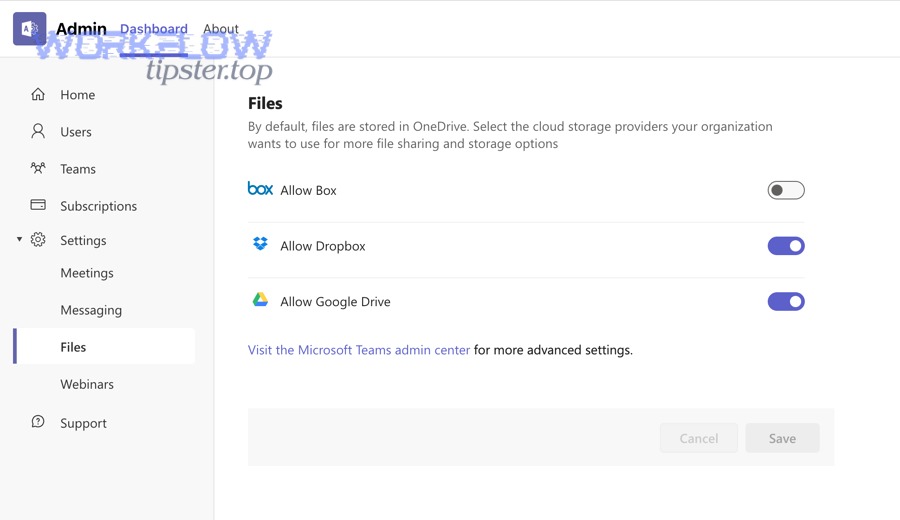
What “best-practice” workflows reduce duplication and confusion in Teams?
The best-practice workflows that reduce duplication and confusion are link-first sharing, a single “source folder” per project, a predictable naming convention, and a rule for when uploads are allowed.
To illustrate, here’s a simple workflow blueprint many teams adopt successfully:
- One project, one Dropbox folder: Treat it as the canonical home for deliverables.
- Link-first in Teams: Post links instead of uploading copies.
- Pin the folder as a channel tab: Make the content hub always visible.
- Name files with intent: include date/version only when necessary; avoid “final_final2.”
- Use a lightweight change log: a short comment in Teams when major versions change.
This is also where you can naturally connect broader process topics. Many teams standardize this approach across Automation Integrations—so Dropbox-to-Teams becomes part of a consistent “toolchain” mindset rather than a one-off configuration.
When should you restrict sharing instead of broadening access?
You should restrict sharing instead of broadening access when files are sensitive, external collaboration is involved, membership changes frequently, or compliance requirements demand tighter control—because open access creates long-tail risks that are hard to audit later.
However, restriction does not have to mean friction if you choose the right controlled method.
- HR, legal, finance documents (default to specific people)
- Partner collaboration (specific people + explicit invites)
- Pre-launch materials (time-bound access; remove access after launch)
- High-risk data (limit download/reshare where your policy allows)
A helpful mental model is a simple antonym pairing: share broadly for speed, restrict precisely for safety. You can keep collaboration smooth by standardizing how you restrict (specific people links + consistent identity rules) instead of improvising.
What admin governance controls should you document for long-term stability?
The governance controls you should document are allowed-app policy, installation rights, approved sharing scopes, guest rules, support ownership, and a periodic access review—because undocumented rules turn into inconsistent behavior and recurring “why can’t I open this?” tickets.
Moreover, governance works best when it’s short, visible, and tied to real workflow decisions.
- App policy: Dropbox allowed and assigned to the correct user groups
- Installation model: user self-install vs centrally deployed
- Sharing defaults: recommended link scope (team-only) and exceptions (specific people)
- Guest guidance: how partners should authenticate and request access
- Support routing: who owns issues—IT, collaboration team, or Dropbox admins
- Review cadence: quarterly check for link-sharing practices and membership hygiene
If your org uses additional integrations for workflow automation, document how “handoffs” happen (e.g., when a file in Dropbox triggers a Teams notification). The same thinking applies to other integrations you may already run, such as google docs to stripe, airtable to datadog, or airtable to sendgrid—the tools differ, but governance patterns repeat.
What edge cases should you test in a pilot before rolling out org-wide?
You should test 6 edge cases in a pilot—guest access, mobile clients, SSO/MFA sign-in, conditional access networks, cross-team channels, and large/complex file types—because these reveal the real-world failure points that don’t show up in a simple internal demo.
In short, a pilot is where you turn “it works for me” into “it works for everyone.”
- Guest scenario: external partner opens a link and requests access successfully
- Mobile scenario: iOS/Android users can preview and open links reliably
- Security scenario: SSO/MFA does not break the sign-in flow
- Network scenario: VPN/office network differences don’t block previews
- Channel scenario: tabs work in channels where multiple stakeholders collaborate
- File scenario: common formats (PDF, Office) and large files behave predictably