


To set up Dropbox Sign (HelloSign) to Dropbox auto-save sync for teams, connect your Dropbox and Dropbox Sign accounts and choose where signed files should save—then confirm completed documents automatically return to that Dropbox location so your team can access the final version without manual downloads. ([help.dropbox.com](https://help.dropbox.com/integrations/dropbox-sign-dropbox-integration?))
Next, you’ll want to validate the “team readiness” pieces—who owns the connection, whether the destination is a shared team folder, and what permissions are required so auto-saved files don’t silently fail or land somewhere only one person can see.
Then, you should define a folder structure and naming convention that scales across teammates and templates, so auto-saved files remain searchable, auditable, and free from duplicate/overwrite confusion as volume increases.
Introduce a new idea: once your core sync is working, you can decide whether the native integration is enough—or whether your team needs more control via alternative Automation Integrations (like routing rules, API/webhooks, or cross-app workflows) for advanced governance and exception handling.
What does “Dropbox Sign to Dropbox auto-save sync” mean for teams?
Dropbox Sign to Dropbox auto-save sync for teams means signed documents automatically save back into Dropbox (in the chosen location) after completion, so teammates can find finalized files in a consistent shared workflow instead of relying on manual exports. ([help.dropbox.com](https://help.dropbox.com/integrations/dropbox-sign-dropbox-integration?))
To better understand why this matters for teams, focus on the “end state”: a completed signature request produces a final, shareable artifact in Dropbox that matches your team’s folder governance and access rules. When teams standardize this flow, they reduce lost files, reduce handoffs, and maintain a cleaner audit trail across departments.
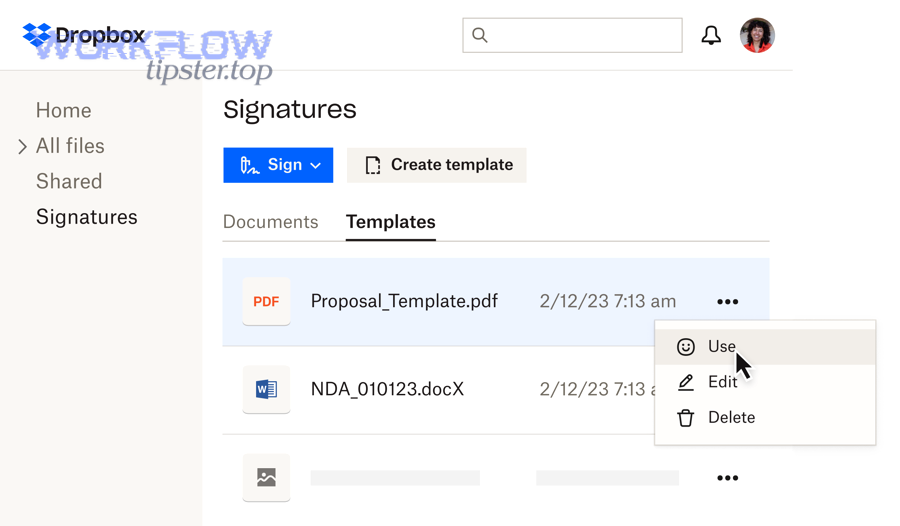
In practice, the integration lets you send a file for signature from Dropbox, complete the signing process, and receive the signed output back into Dropbox automatically. Dropbox’s help documentation explicitly notes that signed files save back to your Dropbox account in the location you chose. ([help.dropbox.com](https://help.dropbox.com/integrations/dropbox-sign-dropbox-integration?))
What exactly gets saved back to Dropbox when a document is completed?
Completed signature workflows typically save the signed document back into Dropbox, and teams often treat the signed PDF as the primary record because it is the artifact most people search, share, and archive as “final.” ([help.dropbox.com](https://help.dropbox.com/integrations/dropbox-sign-dropbox-integration?))
Specifically, you should plan for what “done” looks like inside your Dropbox environment:
- Signed document (final copy): The primary output your team uses for downstream work (handoffs, approvals, storage, client delivery).
- Completion confirmation workflow: Dropbox notes that you and signers receive email confirmations when signed files are complete, which can support internal tracking. ([help.dropbox.com](https://help.dropbox.com/integrations/dropbox-sign-dropbox-integration?))
- Record integrity strategy: Your team should decide whether to store additional supporting artifacts (like audit trails/certificates) alongside the signed file, depending on your compliance needs and internal policy.
More importantly, treat “what gets saved” as an operational standard, not a personal preference. When different teammates store different artifact sets, teams lose trust in the folder as the single source of truth.
Is Dropbox Sign (HelloSign) the same product entity in this workflow?
Yes—Dropbox Sign and HelloSign refer to the same core eSignature product entity in this workflow, so teams can use “Dropbox Sign (HelloSign)” once for clarity and then keep terminology consistent as “Dropbox Sign” to avoid confusion in internal documentation.
In addition, Dropbox’s own integration documentation describes the “Dropbox and Dropbox Sign integration” as a unified flow for sending and signing without leaving Dropbox, reinforcing that the “Dropbox Sign” name is the correct operational label in team processes. ([help.dropbox.com](https://help.dropbox.com/integrations/dropbox-sign-dropbox-integration?))
Do you need admin access or specific permissions to enable auto-save sync for a team?
Yes, you typically need the right Dropbox Sign account access plus correct Dropbox folder permissions because team auto-save depends on (1) account linking/authorization, (2) destination folder write access, and (3) consistent ownership so the integration doesn’t break when a single user changes roles.
Then, once you accept that permissions are the most common failure point, you can design a simple governance model: define who is allowed to connect accounts, which shared folders are approved destinations, and how access changes are handled when someone leaves the team.
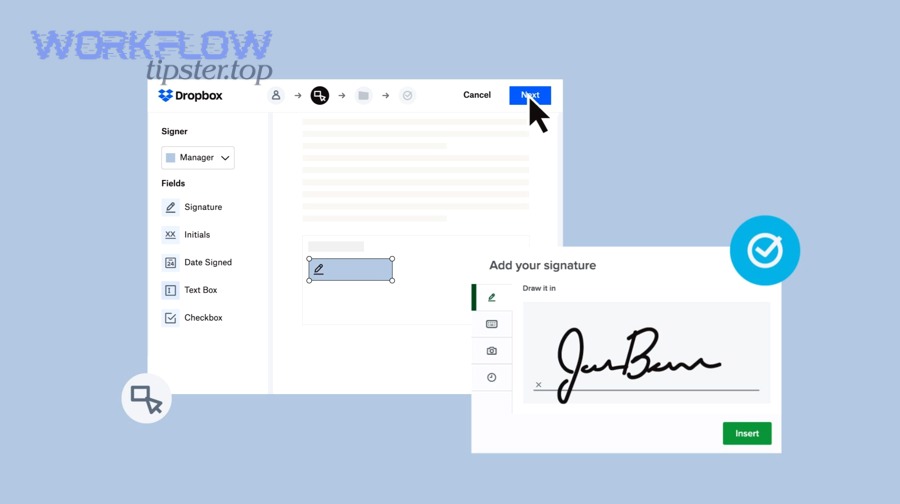
Operationally, Dropbox describes that sending for signature through Dropbox prompts users to connect Dropbox and Dropbox Sign accounts, which implies an authorization layer that must remain valid for the integration to function reliably. ([help.dropbox.com](https://help.dropbox.com/integrations/dropbox-sign-dropbox-integration?))
Which Dropbox permissions are required for the destination folder to receive signed files?
The destination folder must allow the connected identity to save files, which generally means the account performing the save needs write-level access (not view-only) to the target shared folder or team space destination.
Specifically, teams should confirm three practical permission checks before rollout:
- Write access to the destination folder: If your team uses shared folders, ensure the integration-owning user is not restricted or “view only.”
- Destination visibility for teammates: If the folder is intended as the shared “final repository,” confirm the relevant group members can view it.
- Folder policy alignment: If your organization uses restricted folders, verify that automation-created files are permitted in that location (some enterprises block external apps in sensitive paths).
Besides folder permissions, remember that Dropbox itself can experience syncing restrictions (firewalls, network limits, device time settings) that affect file availability across devices, so teams should verify their environment is healthy when diagnosing “I can’t see the saved file.” ([help.dropbox.com](https://help.dropbox.com/sync/files-not-syncing?))
Which Dropbox Sign roles should own the integration setup in a team environment?
Teams should assign integration ownership to a stable operational role (often an admin or operations lead) because the integration relies on account authorization, and a high-churn owner increases the risk of broken sync, missing outputs, or misrouted saves. ([help.dropbox.com](https://help.dropbox.com/integrations/dropbox-sign-dropbox-integration?))
For example, a good ownership pattern looks like this:
- Primary owner: A team admin/ops account that remains active regardless of employee turnover.
- Backup owner: A second authorized account that can reconnect/repair the integration if the primary is unavailable.
- Document owners: Teammates who create requests and select the correct destination folder according to policy.
Moreover, if your team is on a limited plan, plan governance becomes even more important because transaction limits can surprise teams during rollout (for example, Dropbox notes a limited free plan defaults to three document transactions per month). ([help.dropbox.com](https://help.dropbox.com/integrations/dropbox-sign-dropbox-integration?))
How do you set up Dropbox Sign to auto-save signed documents back to Dropbox?
The simplest method is to connect Dropbox and Dropbox Sign, send a file for signature from Dropbox, choose the save location, and confirm the completed signed file automatically saves back into that Dropbox destination—so the workflow produces a predictable “final” artifact without manual downloads. ([help.dropbox.com](https://help.dropbox.com/integrations/dropbox-sign-dropbox-integration?))
Next, treat setup as a controlled launch: run one template-driven test, validate destination behavior, and only then standardize the team’s folder conventions and operating steps.
Dropbox’s help guidance describes the core flow clearly: the integration lets you send files for eSignature without leaving Dropbox, and completed signed files automatically save back to Dropbox in the location you chose. ([help.dropbox.com](https://help.dropbox.com/integrations/dropbox-sign-dropbox-integration?))
How do you connect Dropbox Sign to a Dropbox account securely (without breaking team access)?
Connect the accounts using the team-approved Dropbox identity, because the integration authorization ties saving behavior to that identity—and using a personal account can silently route “final” documents into a private space no one else can access. ([help.dropbox.com](https://help.dropbox.com/integrations/dropbox-sign-dropbox-integration?))
To illustrate a secure, team-safe connection approach:
- Use the correct email/account pairing: Dropbox notes that a free Dropbox Sign account may be created with the Dropbox email if one doesn’t exist, and if an existing Dropbox Sign account matches, it will connect—so teams should confirm they’re connecting the intended business identity. ([help.dropbox.com](https://help.dropbox.com/integrations/dropbox-sign-dropbox-integration?))
- Document the owner: Record which account owns the integration and where credentials are managed (especially important in regulated teams).
- Set a “reconnect playbook”: If the integration breaks, your team should know who reauthorizes it and how you validate restoration (test request + confirm destination file).
More importantly, if someone deletes a signed file from one system, Dropbox notes it may still exist in the other system, which affects how you design “source of truth” and retention behaviors. ([help.dropbox.com](https://help.dropbox.com/integrations/dropbox-sign-dropbox-integration?))
How do you choose the right auto-save destination folder for shared team workflows?
The best destination folder is the one your team already treats as the “final agreement repository,” because auto-save works best when it aligns with established retrieval habits and access groups rather than creating yet another parallel storage pattern.
However, teams often need to compare destination strategies before committing. The following table contains practical destination models and what they optimize for, so you can choose a structure that matches your team’s retrieval and governance needs.
| Destination model | Best for | Main risk | Mitigation |
|---|---|---|---|
| Per-client folder | Sales/CS teams managing many client agreements | Inconsistent naming and scattered subfolders | Standard naming template + consistent subfolder taxonomy |
| Per-template folder | Ops/legal teams using standardized templates | Harder to browse by client | Add client name + date in filename; optional index sheet |
| Per-department folder | Large orgs with strict access boundaries | Silos and duplicate copies across departments | Central “Final Contracts” with restricted subfolders |
In addition, Dropbox emphasizes that signed files save back to Dropbox in the location chosen for that file, so the destination decision is not cosmetic—it directly defines where your team will look for final signed documents. ([help.dropbox.com](https://help.dropbox.com/integrations/dropbox-sign-dropbox-integration?))
How can you verify auto-save sync is working before rolling it out to the whole team?
You can verify auto-save sync by running a short test: send one document for signature from Dropbox, complete it with a test signer, and confirm the signed output appears in the exact Dropbox folder you selected—visible to the expected team members. ([help.dropbox.com](https://help.dropbox.com/integrations/dropbox-sign-dropbox-integration?))
Then, use a lightweight validation checklist so your team catches issues early:
- Artifact check: Confirm the signed document exists in the destination folder and is readable.
- Access check: Confirm at least two roles can see it (owner + typical teammate).
- Notification check: Confirm completion notifications arrive (useful for monitoring and handoffs). ([help.dropbox.com](https://help.dropbox.com/integrations/dropbox-sign-dropbox-integration?))
- Deletion behavior check: Understand what happens if someone deletes the Dropbox copy or the Dropbox Sign copy, since Dropbox notes the file may remain saved on the other service. ([help.dropbox.com](https://help.dropbox.com/integrations/dropbox-sign-dropbox-integration?))
What folder structure and naming conventions prevent duplicates and confusion in Dropbox?
Teams prevent duplicates and confusion by using a single destination taxonomy plus a predictable filename pattern that includes key identifiers (client/project, document type, date, and status), because consistent naming reduces overwrite risk and accelerates search for “the final signed version.”
In addition, once you accept that auto-save increases volume, you should design structure for scale: assume hundreds (or thousands) of signed outputs per year and plan for how humans will find documents without remembering who sent them.
Dropbox Sign’s Dropbox integration makes saving signed documents automatic, which is great—but automation also amplifies disorder if your storage conventions are inconsistent. ([help.dropbox.com](https://help.dropbox.com/integrations/dropbox-sign-dropbox-integration?))
Which folder taxonomy works best for teams: client-based, project-based, or template-based?
Client-based taxonomy wins for retrieval by relationship, project-based taxonomy is best for delivery workflows, and template-based taxonomy is optimal for standardized operations—so the “best” choice depends on whether your team searches by who (client), what (project), or how (template).
However, the taxonomy should match your team’s dominant search behavior. Use this practical selection method:
- If sales/CS searches by account first: Use client-based folders, then subfolders by year or contract type.
- If delivery teams search by engagement: Use project-based folders, then “Contracts / SOW / Amendments” subfolders.
- If ops/legal runs standardized packets: Use template-based folders, then subfolders per department or region.
More specifically, align the destination with access boundaries. If you store signed documents in shared folders, confirm the same groups who need the output are also the groups allowed to access the destination.
What should a “team-proof” filename include to support search and audit?
A team-proof filename should include at least four fields—(1) counterparty/client, (2) document type, (3) effective or signing date, and (4) status/version—because those fields support fast search, reduce duplicates, and make audits easier when humans don’t remember who sent the request.
Then, standardize a template your team can follow without thinking. For example:
- [Client] – [DocType] – [YYYY-MM-DD] – Signed
- [ProjectCode] – [DocType] – [SignerLastName] – [YYYY-MM-DD]
- [Dept] – [TemplateName] – [Client] – Final – [YYYY-MM-DD]
Besides search, naming also reduces accidental overwrites. If two teammates send “NDA.pdf” and both auto-save into the same folder, you’ve created a collision risk. Unique naming is the simplest prevention.
Why isn’t Dropbox Sign saving signed files to Dropbox—and how do you fix it?
When Dropbox Sign isn’t saving signed files to Dropbox, the most common causes are (1) expired or mismatched account authorization, (2) wrong or inaccessible destination folder, and (3) Dropbox sync/environment issues—so you fix it by checking connection status, folder permissions, and Dropbox sync health in that order. ([help.dropbox.com](https://help.dropbox.com/integrations/dropbox-sign-dropbox-integration?))
Next, treat troubleshooting like a funnel: start with the simplest checks (permissions and destination), then move to deeper checks (reconnect, policy restrictions, device/network sync constraints).
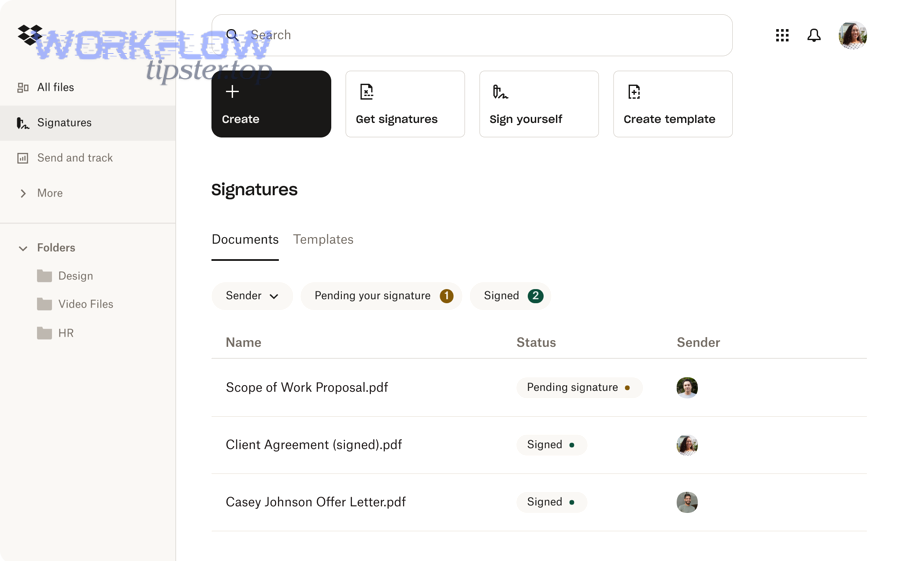
Dropbox’s own documentation confirms the intended behavior: signed files should automatically save back to Dropbox in the location you chose. So if that isn’t happening, something is breaking along the path from completion → save destination. ([help.dropbox.com](https://help.dropbox.com/integrations/dropbox-sign-dropbox-integration?))
Is the integration connected but still not syncing—should you reauthorize or reconnect?
Yes, you should reauthorize or reconnect if the integration is “connected” in name but results don’t appear, because authorization tokens can expire or become invalid after account changes, security updates, or role transitions—leading to silent failures that look like “sync just stopped.” ([help.dropbox.com](https://help.dropbox.com/integrations/dropbox-sign-dropbox-integration?))
Then, run a structured reset cycle:
- Confirm the correct account is connected: Ensure the Dropbox identity matches the team owner identity you intended to use. ([help.dropbox.com](https://help.dropbox.com/integrations/dropbox-sign-dropbox-integration?))
- Disconnect/reconnect as the owner: Re-establish authorization through the supported connection flow.
- Test with one small document: Validate that the signed output appears in Dropbox again.
In addition, remember that Dropbox Sign supports cloud storage integrations broadly, so “integration management” is a real subsystem—your team should treat it as operational infrastructure rather than a one-time click. ([help.dropbox.com](https://help.dropbox.com/integrations/cloud-storage-autosave-dropbox-sign?))
Are signed files being saved to the wrong Dropbox folder—how do you locate and correct the destination?
Yes, wrong-folder saves happen when different teammates choose different destinations or when the default destination is unclear, so you correct it by standardizing the approved destination and validating that each request uses that same folder before sending.
Specifically, use a “destination confirmation habit” before you click send:
- Confirm the folder path is the team-approved folder: Avoid personal “My Files” paths if the output must be shared.
- Confirm the folder is shared with the right group: Your destination should match the people who need to access signed outputs.
- Confirm the naming convention matches your standards: This reduces duplicate confusion even if multiple people share the folder.
More importantly, Dropbox notes the signed file saves back to Dropbox in the location chosen for that file, so your destination choice is the controlling variable—treat it as part of the process checklist, not a casual preference. ([help.dropbox.com](https://help.dropbox.com/integrations/dropbox-sign-dropbox-integration?))
Do duplicates or version conflicts happen—and how do you prevent them?
Yes, duplicates and version conflicts happen when multiple requests save into the same folder with similar filenames, but you prevent them with (1) unique naming fields, (2) subfolders per client/project, and (3) a defined overwrite/version policy that your team follows consistently.
However, the easiest prevention is to assume collisions will occur and design for them:
- Make filenames unique by design: Add date + client + doc type at minimum.
- Use subfolders for high-volume templates: A single “Signed NDAs” folder can explode quickly; split by year or client segment.
- Adopt a “final-only” rule: If drafts exist, keep them in a separate “Drafts” folder to reduce confusion.
Evidence matters most when teams justify process changes. According to a study by Université de Montréal from the Département de Radiologie, in 2003, electronic signature implementation reduced median time from transcription to final signature from 11 days to 3 days for abdominal ultrasound reports and from 10 days to 5 days for chest radiographs. ([ncbi.nlm.nih.gov](https://www.ncbi.nlm.nih.gov/pubmed/14669067))
When should teams use alternatives to the native Dropbox Sign → Dropbox sync?
Teams should use alternatives when they need more control than native auto-save provides—such as conditional routing, compliance retention rules, multi-app workflows, or robust monitoring—because advanced automation often requires triggers, metadata-based decisions, and fallbacks beyond a simple “save back to Dropbox.” ([help.dropbox.com](https://help.dropbox.com/integrations/cloud-storage-autosave-dropbox-sign?))
Next, if your workflow touches multiple systems (CRM, forms, spreadsheets, ticketing), you can extend the value by pairing Dropbox Sign outputs with Automation Integrations that move data and files to the right downstream tools—while still keeping Dropbox as the canonical file repository.
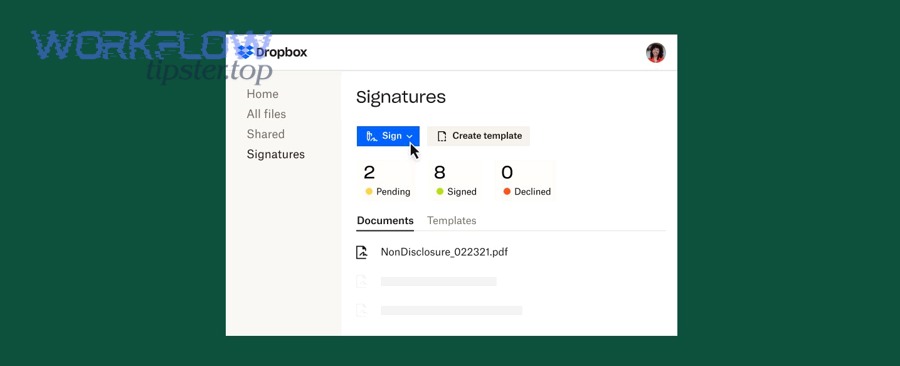
Dropbox Sign supports integrations with multiple cloud storage providers, which signals a broader integration ecosystem; teams that need orchestration across apps can build on that concept rather than stopping at basic storage sync. ([help.dropbox.com](https://help.dropbox.com/integrations/cloud-storage-autosave-dropbox-sign?))
Is manual download a better fallback than auto-save for high-control workflows?
Manual download can be better as a fallback when your workflow has exceptions (special approvals, redlines, strict handling rules) because humans can verify destination, naming, and access at the moment of export—reducing the risk of automated misrouting for sensitive documents.
However, manual steps should be used deliberately, not accidentally. Use manual fallback when:
- Document sensitivity is unusually high: You need a human to confirm storage location and permissions.
- Destination rules are complex: The correct folder depends on conditions not encoded in the native workflow.
- You are in incident recovery mode: Auto-save is temporarily unreliable, and you need guaranteed delivery.
More specifically, your team can combine manual fallback with Dropbox’s retention and version history capabilities to reduce the risk of losing the “true final” file if multiple copies appear.
Do you need API/webhooks for multi-team routing or compliance retention?
Yes, you need API/webhooks when you must automatically route signed outputs based on metadata (team, region, client tier), enforce retention rules, or trigger downstream actions the moment a signature completes—because these capabilities require event-based automation beyond basic cloud storage sync.
Then, once you adopt an event-driven approach, you can automate outcomes like:
- Route to the correct team folder automatically: For example, sales vs procurement vs HR destinations.
- Notify the right channel or ticket queue: Trigger task creation for onboarding, billing, or provisioning.
- Write an index record: Log signing metadata to a sheet or database for reporting and auditing.
For example, teams often pair signed document completion with form workflows such as google forms to hubspot (lead capture → agreement sent) or google forms to google sheets (intake → tracker) to reduce manual re-entry while keeping Dropbox as the file store of record.
How can you design least-privilege access while still keeping documents searchable in Dropbox?
You can design least-privilege access by restricting who can edit or delete signed files while still allowing view access to the teams that need to reference them, because separation of duties reduces risk without sacrificing discoverability.
Specifically, apply a layered folder model:
- Top-level “Final Agreements” folder: View access for broad stakeholders; edit/delete restricted to a smaller group.
- Restricted subfolders: Sensitive agreements (HR, legal disputes, regulated contracts) stored with tighter access.
- Standard naming for search: Even when access is tight, consistent filenames improve retrieval for authorized users.
Moreover, if end users complain “I can’t find the file,” verify whether the issue is permissions or sync. Dropbox provides a troubleshooting path for files not syncing that highlights network and system constraints that can prevent timely visibility. ([help.dropbox.com](https://help.dropbox.com/sync/files-not-syncing?))
What is the best “failsafe” architecture if syncing intermittently fails?
The best failsafe architecture is a layered approach: keep native auto-save as the default, add routine monitoring and periodic audits, and maintain a secondary export path (manual or automated) for exceptions—because redundancy prevents one broken link from stopping document delivery.
To begin, implement three failsafe layers:
- Layer 1: Standard operating checks — destination folder confirmation, naming standard, and a quick post-completion verification.
- Layer 2: Monitoring + audit — weekly sampling of completed requests to ensure every signed output is in the expected folder.
- Layer 3: Recovery path — clear steps to reauthorize, resend, or manually export a completed signed document when automation fails.
In addition, if your team builds broader Automation Integrations around signed-document events (notifications, CRM updates, intake flows), treat those automations as part of your resilience strategy rather than an optional add-on—because controlled automation often reduces the human error rate during high-volume operations.