


A google chat webhook 404 not found error usually means your request reached Google Chat, but the specific webhook resource you’re targeting doesn’t exist in that exact space anymore—so the fastest fix is to verify the webhook URL (space + key + token), then regenerate the webhook if any part is stale or mismatched.
Next, you’ll want to diagnose why the “requested entity was not found” happened—whether it’s a copied URL issue, a deleted/rotated webhook, a space mismatch, or a thread/reply parameter mistake—so you can stop repeating the same failure across environments and automations.
Then, validate each URL component and your request shape (method, headers, JSON body, and optional thread parameters) so you can separate true 404 “entity missing” from request-shape problems that look similar but map to different HTTP errors.
Introduce a new idea: once you can reliably fix the 404, you can prevent it by treating webhook URLs like secrets with lifecycle controls, adding guardrails that distinguish 404 from adjacent failures such as 400, 401/403, and rate limits—before incidents reach production.
Is a 404 “Requested entity was not found” usually caused by the webhook URL being wrong?
Yes—a google chat webhook 404 not found is usually caused by an incorrect or stale webhook URL for three common reasons: you’re posting to the wrong space path, the webhook was deleted/rotated so its token no longer maps to a real entity, or the copied URL was truncated/modified during storage or templating.
To better understand why that happens, it helps to treat “404” as a resource identity failure rather than a “server is down” failure—so you can test the URL’s identity before you debug payload formatting.
Reason 1: The space in the URL doesn’t match the space that owns the webhook. Incoming webhooks are registered inside a single Chat space, and the URL is bound to that space. If you copy a webhook URL from Space A and accidentally use it in Space B (or in a different environment), Google Chat can’t resolve that “entity” in the destination context, so the request returns 404.
Reason 2: The webhook entity no longer exists. Webhooks get removed when someone deletes the webhook entry in the space, when an admin policy disables incoming webhooks, or when an integration rotates secrets and your stored value becomes obsolete. If your automation is still sending to the old URL, you’re effectively calling a resource that’s gone.
Reason 3: The URL was altered by tooling. This shows up when the URL is stored in YAML/JSON with escaping issues, copied from a UI that wraps lines, sanitized by a secret manager template, or “normalized” by a proxy. Even a single missing character in the key or token can point to a different (non-existent) resource identity, which manifests as 404.
In practice, the fastest “sanity test” is: regenerate a fresh webhook in the same space, compare the new URL character-by-character with what your system is using, and see what changed. This works because URL accuracy is the foundation of identity; and mistakes in typed or copied identifiers are common enough that researchers have studied real-world typo patterns at scale. According to a study by Stony Brook University from the Department of Computer Science, in 2015, researchers found that 95% of the 500 most popular domains they investigated were actively targeted by typosquatters—demonstrating how small string deviations are systematically exploitable and frequently occur in practice.
What exactly is a Google Chat incoming webhook, and what does “requested entity” refer to?
A Google Chat incoming webhook is a one-way HTTP endpoint that lets an external system post messages into a specific Chat space, and “requested entity” refers to the specific webhook-backed resource (bound to that space and URL credentials) that Google Chat expects to find when it resolves your request.
Specifically, once you map “entity” to “the webhook resource behind this exact URL,” the 404 becomes much less mysterious—and you can debug it like an identity-resolution problem instead of guessing at payload fields.
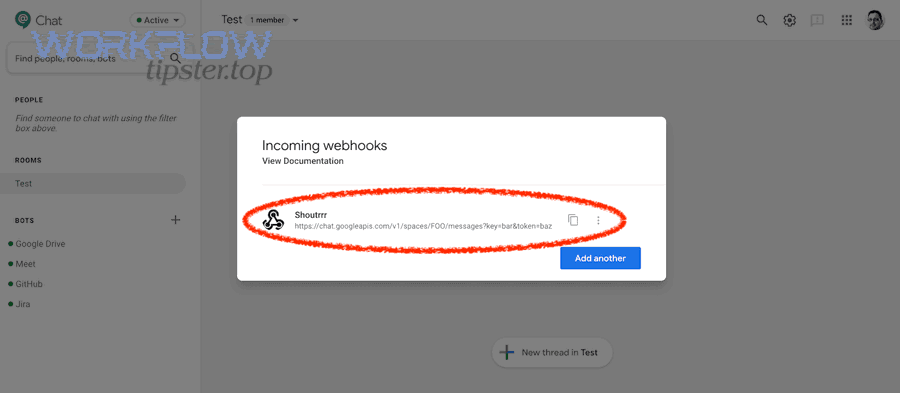
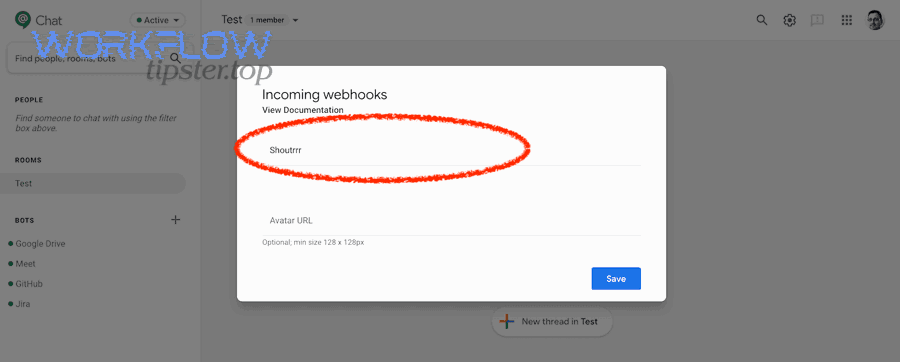
What the webhook is (in plain developer terms). A webhook URL is like a scoped, pre-authorized door into one Chat space. Your monitoring tool, CI/CD pipeline, or script calls that URL, and Chat posts the message to the space. Google’s documentation describes this as asynchronous, one-way notifications into a Chat space, where users receive messages but don’t “talk back” to the webhook like a conversational bot.
What “requested entity” is. When you send POST to a URL like:
https://chat.googleapis.com/v1/spaces/SPACE_ID/messages?key=KEY&token=TOKEN
Google Chat tries to resolve the path (spaces/SPACE_ID/messages) plus the query identity (key + token) to a real webhook registration that still exists. If it can’t map that combination to an existing webhook entity, it responds with 404 “requested entity was not found.”
Why this differs from auth/permission errors. With incoming webhooks, you typically don’t use OAuth headers. The URL itself carries the scoped authorization via key/token. So a broken or mismatched URL tends to look like 404 (entity not found) rather than a classic OAuth failure—unless you’re calling the Chat API with OAuth instead of an incoming webhook flow (which is a different integration model).
Where this sits inside “google chat troubleshooting.” In a proper incident playbook, “404 requested entity” sits in the “identity & routing” layer: URL correctness, space binding, webhook existence, and request endpoint shape—before you spend time on message formatting or rate limiting.
What are the top causes of Google Chat webhook 404 errors, and how do you diagnose each one?
There are 6 main causes of Google Chat webhook 404 errors—(1) wrong space in URL, (2) deleted/rotated webhook, (3) malformed URL encoding, (4) wrong endpoint or method, (5) thread/reply parameters pointing to invalid thread context, and (6) environment/config drift—diagnosed by checking URL identity first, then request shape, then thread behavior.
More specifically, you’ll fix 404 faster if you diagnose in descending likelihood: URL identity → endpoint/method → thread options → deployment/config drift.
1) Is the space ID or space path wrong (posting to the wrong space)?
Yes—if the webhook URL’s spaces/… segment doesn’t match the space where the webhook was created, Chat can’t resolve the webhook entity in that space context, so it returns 404; you can confirm this by generating a fresh webhook in the target space and comparing the entire URL string.
Then, verify that your system didn’t accidentally swap environments (dev/prod) or reuse a template variable. A common failure is “SPACE_ID in config is correct, but webhook URL actually belongs to a different space because it was copied from a different room.”
- Diagnosis: Create a new incoming webhook in the same intended space; compare the prefix up to /v1/spaces/….
- Fix: Replace the stored URL; invalidate old secrets; update all deployments that reference it.
2) Was the webhook deleted, disabled by policy, or rotated (stale token)?
Yes—a removed or disabled webhook means the token no longer maps to a real entity, which produces the same “requested entity was not found” 404; you diagnose this by testing a brand-new webhook in the same space and seeing the 404 disappear immediately.
Besides deletion, organization policy can block incoming webhooks. If policy changes were made recently, the “webhook exists” assumption can silently break.
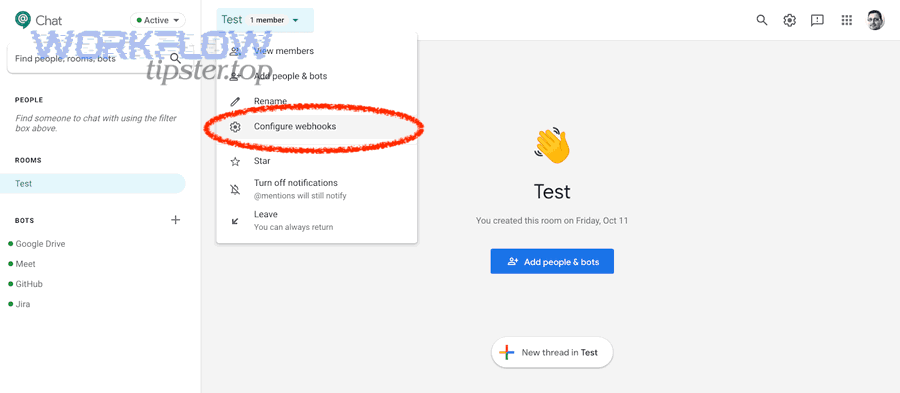
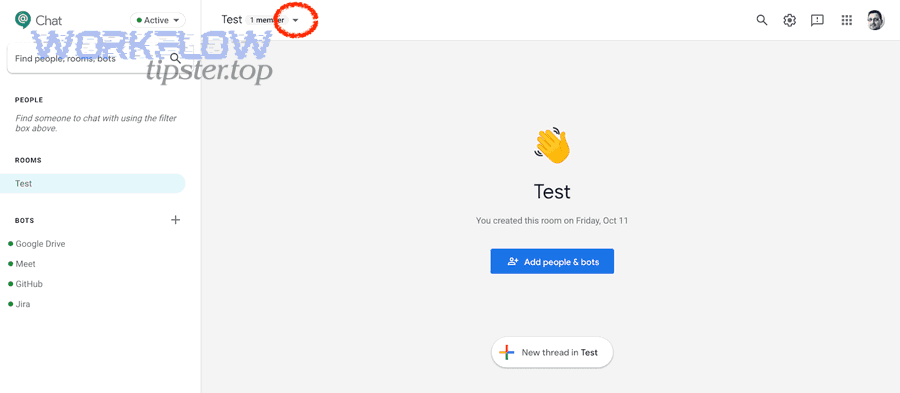
- Diagnosis: Ask a space admin to open space settings → webhooks and confirm the webhook entry exists.
- Fix: Recreate the webhook, and store it in a managed secret store with versioning.
3) Is the webhook URL malformed (encoding, truncation, or whitespace)?
Yes—if your webhook URL contains hidden whitespace, was line-wrapped, or had & or ? incorrectly escaped, Google Chat may parse a different key/token pair (or none), which resolves to a non-existent entity and yields 404; you diagnose by logging the exact final URL string at runtime.
Specifically, watch for these subtle corruptions:
- Trailing spaces after token=…
- Escaped ampersands stored as & inside config that gets double-escaped
- Templating that strips characters like _ or –
- URL copied from a UI with invisible Unicode characters
Fix: Store the webhook URL as an opaque secret value; never rebuild it from partial strings unless you also validate the reconstructed output byte-for-byte.
4) Are you calling the wrong endpoint or HTTP method?
Yes—if you send the request to the wrong path (for example, not targeting the webhook’s messages endpoint) or use a method other than POST, you can trigger 404-style responses; you diagnose by comparing your request target to the documented webhook pattern and verifying you POST to the webhook URL exactly.
In many teams, this mixes up with generic “google chat webhook 400 bad request” debugging because both appear during integration changes. The clean separation is: 404 usually means “resource identity can’t be found,” while 400 usually means “resource found, but request invalid.” Keep that split in your logs.
5) Is thread/reply behavior making the target entity invalid in context?
Sometimes—incoming webhooks can start new threads or reply to existing ones using threadKey, but misusing reply options or assuming a thread key is universally reusable can surface as a 404 “requested entity” in certain space/thread states; you diagnose by removing thread parameters and testing a plain new-message post first.
If the plain post works but the threaded post fails, you’ve narrowed the problem to thread context rather than webhook identity.
6) Is environment/config drift causing the request to hit the wrong URL at runtime?
Yes—the most frustrating 404s come from “the URL looks correct in code review, but production runtime uses a different secret version,” and you diagnose by printing a hashed fingerprint of the URL (never the full secret) along with the deployment version and environment name.
Fix: Add a startup check that validates the URL format, and fail fast if the webhook URL doesn’t match expected patterns (host, path prefix, required query keys).
How do you validate the webhook URL components (space ID, key, token) step-by-step?
You validate a Google Chat incoming webhook URL by checking 4 components—host, path (space), endpoint (messages), and query (key + token)—then running a minimal POST test without thread options to confirm the webhook entity resolves before you troubleshoot payload features.
Next, follow a strict “don’t change two variables at once” approach: validate string integrity first, then validate message delivery, then add complexity like threading.
Step 1: Confirm the host is exactly what incoming webhooks use.
- Expected: chat.googleapis.com
- Red flag: a proxy host, old host alias, or a copied URL that was “pretty-printed” by another tool
Step 2: Confirm the path matches the expected webhook pattern.
- Expected pattern: /v1/spaces/<SPACE_ID>/messages
- Red flag: missing /messages, extra segments, or posting to a Chat API resource endpoint that requires OAuth instead of webhook identity
Step 3: Confirm query parameters include both key and token.
- Expected: ?key=<…>&token=<…>
- Red flag: only one of them exists, or they were renamed by templating
Step 4: Verify the URL was not HTML-escaped in storage.
- If your system stores the URL in HTML or XML, ensure & is not permanently stored as & in a value that later gets used as a raw URL.
Step 5: Run a minimal POST test.
Send a message with only a small JSON body like {“text”:”ping”} and no thread parameters. If it still returns 404, the URL identity is wrong or stale. If it succeeds, move on to payload features and threading. Google’s webhook quickstart emphasizes this one-way design and shows webhooks posting messages into a space via the webhook URL.
Step 6: Add complexity one notch at a time.
- Add your real message text and formatting.
- Add optional parameters (only if needed).
- Add threading via threadKey last, because it introduces space-specific state.
Step 7: Record a safe runtime fingerprint.
In production, never log the full webhook URL. Instead, log:
- Environment name (prod/stage/dev)
- Space alias (a friendly label, not the secret)
- A short hash of the URL string
- HTTP status + response body snippet
This makes it obvious when your deployment is silently using the wrong secret version.
How do you fix 404 when replying in threads using an incoming webhook?
You fix 404 when replying in threads by first confirming the webhook works without threading, then using threadKey exactly as supported for webhooks, and finally avoiding assumptions that a thread key is universally valid across spaces or indefinitely valid across webhook changes.
Then, once the non-threaded post succeeds, you can focus on the thread layer—because many “mysterious 404s” are really thread-context mismatches rather than broken webhook URLs.
1) Prove the webhook identity is correct without thread parameters.
Post a normal message to the same webhook URL. If this fails with 404, stop—threading isn’t the problem. If it succeeds, continue.
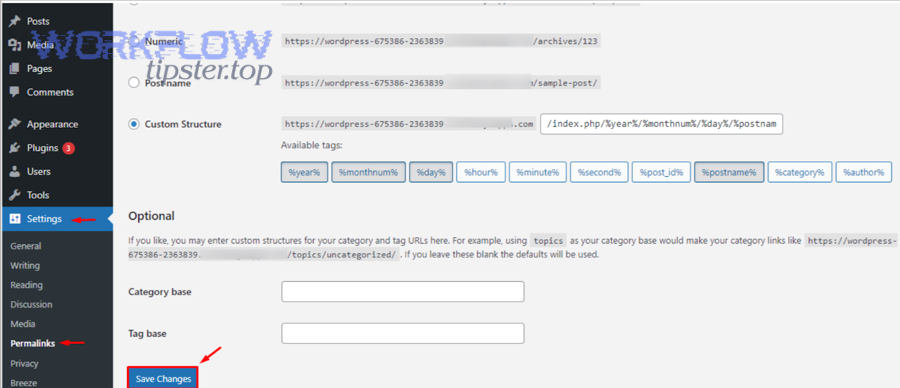
2) Use threadKey the way webhooks support it.
Google’s webhook documentation explicitly notes that webhooks can start new threads or reply to existing ones using threadKey.
Practical rules that reduce 404 risk:
- Keep threadKey stable within a space (not globally across unrelated spaces unless you’ve tested that behavior thoroughly).
- Don’t treat threadKey as a server-generated thread ID. It’s a client-chosen key that Chat uses to group messages, and edge cases can appear depending on space settings and historical thread state.
- Test thread creation first (same threadKey, new thread) before testing replies to existing deep threads.
3) If a specific threadKey fails, confirm it’s not a space-specific edge case.
Developers have reported cases where a particular thread key returns 404 in one space even though it works in others, while changing the thread key makes the request succeed—suggesting thread state or space configuration can matter.
When you see this pattern:
- Try a brand-new threadKey in the same space to verify threaded posting works at all.
- If new threadKey works, isolate whether the old threadKey is “poisoned” by historic state (for example, created under a different webhook or integration path).
4) Avoid mixing Chat API threading options with webhook-only assumptions.
The Google Chat API also supports threads via thread.threadKey when creating messages through the API, and it distinguishes between app/user authentication flows.
If your system mixes “incoming webhook posting” with “Chat API posting,” ensure you are not accidentally sending API-only fields or relying on OAuth-based access while calling a webhook URL (or vice versa). That confusion often produces a different class of errors like google chat permission denied in OAuth flows, while webhooks primarily fail on URL identity and request shape.
5) Establish a safe fallback behavior.
If threaded reply fails, choose a deterministic fallback:
- Fallback A: post a new message (new thread) and include a link/reference to the intended thread context.
- Fallback B: retry once without threading and alert your team that thread behavior failed for that space/key.
This prevents silent alert loss—often more damaging than the thread reply itself.
What is the fastest “404-to-root-cause” troubleshooting checklist developers can follow?
There are 9 fastest checks to go from 404 to root cause: verify runtime URL string, confirm space binding, confirm webhook exists, compare against a newly generated webhook, test minimal POST, remove thread parameters, validate endpoint/method, check secret/version drift, and classify neighboring errors (400/403/429) separately before retrying.
To illustrate, this checklist is designed to minimize time-to-signal by testing identity first and only then expanding into payload and threading.
This table contains a practical “404-to-root-cause” flow so you can map each observation to the most likely fix without guessing.
| Check | What you look for | If it fails | Most likely fix |
|---|---|---|---|
| 1) Log safe URL fingerprint | Hash matches expected secret version | Hash differs in prod vs config | Fix secret version drift |
| 2) Verify host/path | /v1/spaces/…/messages | Different endpoint | Use correct webhook URL |
| 3) Verify key + token present | Both query params exist | Missing/escaped params | Store URL as opaque secret |
| 4) Regenerate webhook | New webhook works | New webhook also fails | Policy/space configuration issue |
| 5) Minimal POST test | {“text”:”ping”} | Still 404 | URL identity is wrong/stale |
| 6) Remove threading | No threadKey | Threaded fails only | Fix threadKey usage / fallback |
| 7) Classify nearby errors | 400 vs 403 vs 429 | Mixed error handling | Separate retry logic per status |
Checklist details (do them in order):
- Capture the exact runtime URL string (safely hashed) and confirm it matches the intended environment.
- Confirm the space context: the webhook must belong to the same space you expect to post into.
- Confirm the webhook still exists in space settings; if unknown, recreate it.
- Compare old vs new URL character-by-character to detect corruption or rotation.
- Run a minimal POST with only {“text”:”ping”}; no extras.
- If minimal succeeds, add your real payload and test again.
- If payload succeeds, add threadKey last; threaded failures are a separate branch.
- If you see 400 instead, treat it as request-shape (classic google chat webhook 400 bad request territory).
- If you see permission errors in OAuth flows, split the playbook because google chat permission denied belongs to Chat API authentication and membership, not incoming webhook identity.
Evidence: According to a study by Stony Brook University from the Department of Computer Science, in 2015, researchers reported that 95% of the popular domains they investigated were actively targeted by typosquatters—reinforcing why string-accurate identifiers (like webhook URLs, keys, and tokens) must be validated before deeper debugging.
How do you prevent Google Chat webhook failures and distinguish 404 from similar errors in production?
You prevent webhook failures by implementing lifecycle controls (secret versioning, rotation playbooks, and validation checks) and by distinguishing 404 identity failures from 400 invalid requests, permission/auth failures, and rate/limit issues—so your system retries only when retrying is logically correct.
In addition, prevention is about designing your integration so a single broken webhook URL doesn’t silently drop alerts across teams.
1) Treat webhook URLs as secrets with ownership and versioning.
- Store in a secret manager with version history and access controls.
- Tag each secret with: space name, environment, owner, creation date, and rotation policy.
- Never paste webhook URLs into tickets or logs.
2) Add a startup validator (fail fast).
Before sending any real messages, validate:
- Host equals chat.googleapis.com
- Path contains /v1/spaces/ and ends with /messages
- Query includes key and token
This prevents subtle corruption from surfacing as random 404s mid-incident.
3) Implement response-classified handling (don’t retry everything).
This table contains a “status-to-action” policy so your automation behaves correctly under stress.
| Status | Meaning (in practice) | What to do |
|---|---|---|
| 404 | Webhook entity not found (wrong/stale URL) | Stop retries; rotate webhook; alert owner |
| 400 | Invalid request shape (payload/JSON) | Fix payload builder; add schema checks |
| 401/403 | Auth/permission issues (often Chat API flows) | Check membership/scopes; don’t treat as webhook URL issue |
| 429 | Rate limiting / quota | Backoff + jitter; batch messages |
4) Build a safe “space health” monitor for webhooks.
- Send a daily low-noise “heartbeat” message to a dedicated test space using the same code path.
- If it fails with 404, you know the webhook is stale before a real incident hits.
5) Create a rotation playbook that preserves continuity.
Rotation should not be “replace the URL and hope.” Make it deterministic:
- Create a new webhook in the same space.
- Deploy new secret version alongside old (dual-publish briefly if your system supports it).
- Switch traffic to the new webhook.
- Invalidate the old webhook and remove it from the space settings.
6) Avoid confusing pagination/record problems with webhook delivery.
Operationally, teams often bundle unrelated failures together—like google chat pagination missing records in upstream systems that generate notifications—then misdiagnose delivery as “Chat is broken.” Keep observability layered: upstream data correctness vs webhook delivery vs Chat UI display.
7) Anchor your implementation to the documented capabilities.
Google’s webhook quickstart highlights that webhooks send one-way notifications to spaces and can start or reply to threads using threadKey, which should guide your design boundaries and error handling.